
ADVERTISEMENTREMOVE AD

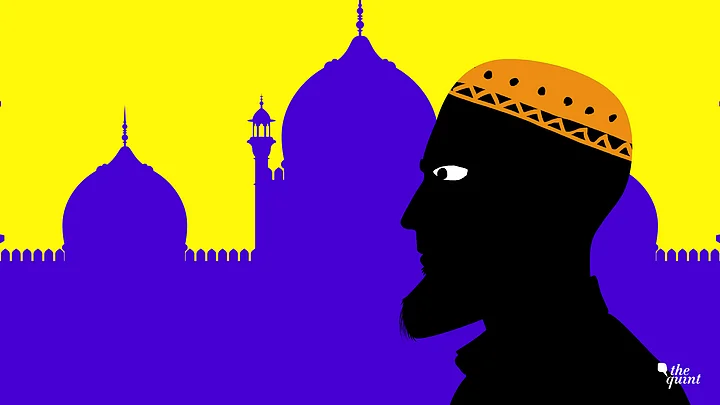
Mosque Demolition, Namaz FIRs, Journos Beaten: Are Laws Failing Indian Muslims?

Does the law protect Muslim citizens with the same urgency with which it acts against them?

Published
story-hero-img
i
Aa
Aa
Small
Aa
Medium
Aa
Large

Log toot jaate hain ek ghar banane mein, tum taras nahin khaate bastiyaan jalane mein.” (People face ruination in just making a home and you feel no remorse setting ablaze entire settlements.)
—Bashir Badar

Justice Atul Sreedharan opened his Faimuddeen vs State of Uttar Pradesh opinion with this couplet. The case concerned threatened action against a family’s properties following criminal proceedings. He called punitive demolition a “retributive exercise of executive discretion”.

People also build homes for worship. Temples, mosques, churches and gurdwaras give communities places to practise their belief and belong.

On 5 September, a mosque inside the Saharanpur Collectorate complex was demolished. Its caretakers say it had existed for more than a century. The administration calls it an unauthorised occupation of government land.

Even if the State could recover the land, what authorised it to destroy the mosque with such urgency?

ADVERTISEMENTREMOVE AD

What Did Saharanpur Mosque Order Permit?

The administration said a government rest house became a religious structure. The management relied on its claimed pre-1911 existence, Waqf registration, municipal records and a sub-post office that reportedly paid rent since 1960.

These claims require the records. Neither age nor Waqf registration necessarily defeats a valid government title. The State can recover public property from an unauthorised occupant.

The City Magistrate passed an eviction order in July under the Uttar Pradesh Public Premises (Eviction of Unauthorised Occupants) Act, 1972. The management appealed. On 2 September, the District Judge dismissed the appeal. Three days later, the mosque was demolished.

According to The Indian Expressexamination of the orders, the appellate decision upheld eviction but did not itself direct demolition. The City Magistrate reportedly maintains that eviction required removal of the structure.

Was an order to vacate also authority enough to raze the building? Could possession have been secured while the management approached the High Court? “Court-backed” cannot enlarge the operative order.

An intended challenge does not automatically suspend enforcement. But demolition is irreversible. A place of worship cannot be restored by a later finding that the administration exceeded its authority.

In its 2024 judgment on arbitrary demolitions, the Supreme Court required notice, reasons, time for challenge and documentation. Exceptions include court-ordered demolitions and certain structures in public places, so application here depends on the record. Yet its warning speaks to Saharanpur: “Heavens would not fall on the authorities if they hold their hands for some period.”

What demanded destruction within three days? The answer must come from the order and statute, not the finality created by the bulldozer.

A Mosque is Property, but it is Not Merely Property

Articles 25 and 26 do not exempt religious buildings from property laws. A community cannot obtain another’s land by worshipping upon it. But the State cannot ignore the religious consequence of its enforcement method.

For the administration, the dispute concerns a survey number. For a worshipper, it concerns the place where generations stood together in prayer. One description concerns ownership; the other explains the loss. Constitutional government must be capable of seeing both.

The Places of Worship Act, 1991 may not decide the title dispute. It preserves the religious character of places of worship as it stood on 15 August 1947 and prohibits conversion, subject to exceptions. In the Ayodhya judgment, the Supreme Court treated it as an assurance that independent India would protect every community’s places of worship.

Saharanpur does not enter an empty constitutional landscape. In 2024, Amnesty International documented what it described as 128 punitive demolitions of Muslim properties across five states during three months of 2022.

Governments maintained that they were enforcing land and municipal laws. Against this background, the Supreme Court later warned against arbitrary “pick and choose” demolitions and prescribed nationwide safeguards. This history does not prove discrimination in Saharanpur. It explains why the action’s authority and timing demand close scrutiny.

The same difficulty appears in M Ismail Faruqui vs Union of India, whose majority observed that namaz may be offered anywhere. As MR Shamshad argues, the ability to pray elsewhere does not replace a shared religious institution. Even Faruqui, while upholding the possibility of acquiring religious property, stated that a mosque has the same status as places of worship belonging to other religions.

Moradabad reveals a further contradiction: what happens when a Muslim actually prays “elsewhere”?

When Does Namaz Become a Nuisance?

Haji Mohammad Usman, a Samajwadi Party district vice-president, offered namaz near his parked vehicle at Moradabad’s Circuit House. After a video circulated and a Hindu-right organisation objected, a Public Works Department official alleged obstruction of the entry and exit passage. Police registered an FIR under BNS Sections 285 and 292, which concern obstruction or danger in a public way and public nuisance. Usman says he prayed in the parking area and obstructed nobody.

Did the conduct satisfy the offences invoked? Was this a passage? Did anyone try to use it? Was movement impeded by the vehicle or Usman’s presence, or was offence taken at visible prayer?

A peaceful prayer can obstruct a road, just as a speech or celebration can. Article 25 grants no right to prevent public movement. But namaz cannot itself supply proof of nuisance. The prior public objections do not prove that the official complaint was manufactured; they make independent application of mind essential.

The State regularly accommodates other religious uses of public space. During the Kanwar Yatra, administrations reserve road space, divert traffic and deploy police. Such accommodation is proper. A mass pilgrimage differs from one person’s prayer, but it shows that religious use of public space can be managed without treating the practice itself as criminal.

Why was an FIR necessary? Was Usman asked to move? If a mosque may be removed because namaz can occur elsewhere, while namaz elsewhere attracts criminal suspicion, where does freedom of worship live?

ADVERTISEMENTREMOVE AD

When the Complaint is Against the Police

Journalists Shaheen Khan and Nafisa Khan allege that Delhi Police personnel detained and assaulted them while they covered an event in Saket. Shaheen says the violence intensified after officers discovered their Muslim identity. Police deny assault and allege obstruction of a VVIP route and an altercation. Even if the scooter obstructed the route, that cannot answer what allegedly happened inside the station. A parking violation authorises neither physical punishment nor religious abuse.

Reported injuries do not establish who caused them; they require investigation. In a Newslaundry interview published on 4 September, Shaheen said she remained outside the station until about 3:30 am seeking an FIR. Police accepted her complaint, she alleged, but did not register one that night.

An allegation of obstruction activated criminal process against Usman. Women alleging violence by officers reportedly struggled into the early morning to have their complaint acted upon.

An FIR is not a finding of guilt. In Lalita Kumari vs Government of Uttar Pradesh, the Supreme Court held that it must be registered when information discloses a cognizable offence. The BNSS permits a limited preliminary inquiry in a defined category of cases, with senior approval and a time limit; it cannot become an indefinite waiting room because the proposed accused wears a uniform.

When police are accused, who controls the evidence? CCTV recordings, medical records, station diaries and duty rosters must be preserved, and the inquiry, insulated from implicated officers. The Supreme Court’s directions in Paramvir Singh Saini vs Baljit Singh require police-station CCTV precisely because events inside cannot depend only on those controlling the station.

Because Shaheen and Nafisa were working as journalists, the allegations also engage press freedom. Reporters cannot scrutinise political power if approaching it exposes them to violence or identity-based abuse.

Equal Citizenship Requires Equal Protection

These incidents involve different laws and contested facts; they do not prove a coordinated policy. Their connection lies in how a Muslim citizen encounters power: demolition of a mosque, criminal process over prayer, and reported difficulty activating that process against police officers.

Article 14 promises equality before law and equal protection of the laws. The State cannot fulfil it merely by applying penal provisions to minorities. It must extend protection, accommodation and access to remedies with equal seriousness.

Majoritarianism may become institutional without appearing in a discriminatory statute. It operates through choices: which religious activity receives accommodation; which prayer becomes a nuisance; which old structure demands immediate demolition; and which complainant waits outside a police station until morning.

The accommodation extended to Hindu worship is not the constitutional problem; it demonstrates what a plural State is capable of extending. The question is whether the same spirit governs Muslim religious life.

Bashir Badr’s couplet restores what official labels remove from sight. Behind an “unauthorised structure” may stand generations of prayer. Behind a “public nuisance” may stand a person quietly bowing before God. Behind a “parking dispute” may stand injured women asking the police to investigate their own officers.

These protections are owed to everyone.

Religious freedom cannot mean that a mosque is dispensable because Muslims may pray elsewhere, while prayer elsewhere is treated as a problem. Equal protection cannot mean that the law moves promptly against a Muslim but hesitates when a Muslim asks for its protection.

The Constitution does not require minorities to disappear for peace. It promises every citizen the right to belong, to worship without suspicion and to approach the law without fearing that a prayer, profession or Muslim name will be held against them.

(Sahil Hussain Choudhury is an advocate and constitutional law researcher based in New Delhi. Sayed Salim Ahmed is an advocate practising before the Gauhati High Court. This is an opinion piece and the views expressed are the author's own. The Quint does not endorse or is responsible for them.)

Speaking truth to power requires allies like you.
Become a Member
Monthly
6-Monthly
Annual
Check Member Benefits
×
×