
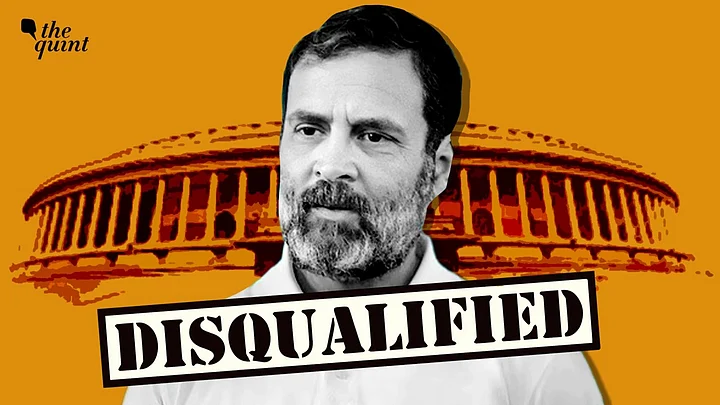
On 23 March, a Magistrate’s court in Surat convicted Rahul Gandhi of defamation. He was sentenced to the maximum permissible punishment of two years in prison but the sentence was suspended for a month to allow an appeal. On the very next day, the Lok Sabha Secretariat notified Gandhi’s disqualification. Even though the court suspended the sentence for a period of 30 days, enabling Gandhi to file an appeal, a mere conviction was deemed sufficient to attract the disqualification under section 8(3) of the Representation of People Act, 1951 (RPA).
The merits of Gandhi’s conviction aside, was the Lok Sabha Secretariat justified in disqualifying him from the Lok Sabha in this instance?
Under Section 8 of the RPA, which deals with disqualification due to conviction, two separate kinds of offences are envisaged. The first kind is where mere conviction is enough to attract disqualification, such as any offence under the Prevention of Corruption Act, 1988.
The second kind is where conviction results in a sentence of not less than two years. For the second kind, it is the length of the sentence and not a mere conviction that becomes a ground for disqualification.