
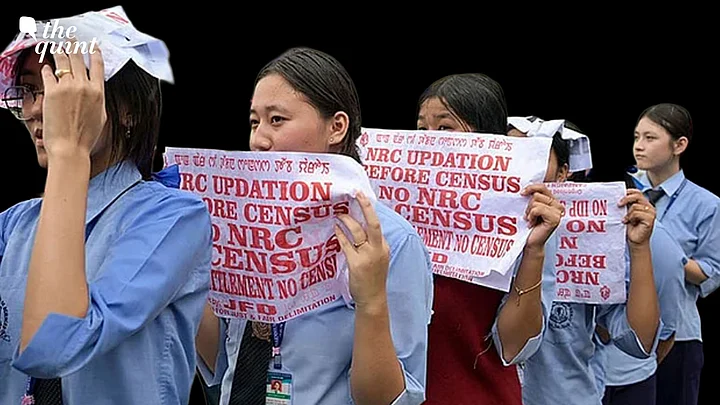
In Manipur, where the violence of 2023 remains unresolved and fresh conflict has emerged in 2026, the Census was put on hold a day before house-listing was to begin. On 31 August, the Union government deferred the exercise after a meeting chaired by Union Home Minister Amit Shah considered demands for a National Register of Citizens (NRC) to precede it. The decision has given an administrative exercise greater political significance: before Manipur conducts a fresh population count, it is being asked to determine who belongs.
The demand for an NRC is not new: 14 civil society organisations (CSOs) representing Meitei and Naga interests have called for it to precede the Census and delimitation, while sections of the campaign have proposed 1951 as the reference point.
Manipur shares a porous international boundary with Myanmar, and migration across it has long been a political concern. Amid the ongoing conflict, the demographic consequences continue to unfold, giving population change an even sharper political meaning.
On 2 September, the Manipur Assembly renewed its demand for an NRC before the Census, although a proposal to specify 1951 as the base year was not included in the final resolution.
But there is a question beneath the debate that deserves equal attention: what does a population number actually tell us?