
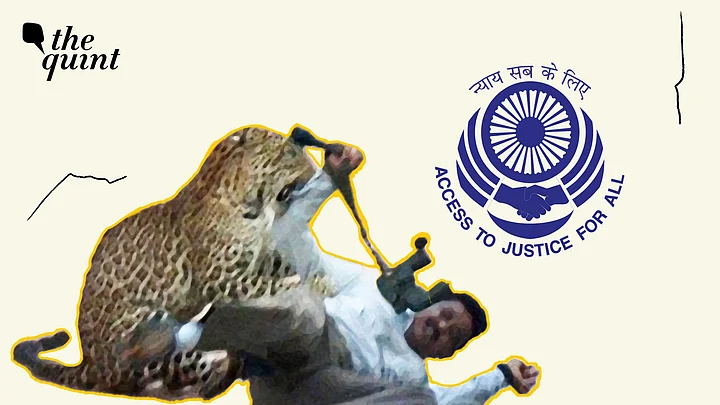
Wildlife preservation in India runs on rather weird principles. Here wild animals have more rights than human beings. Dangerous animals including tigers, lions, bears, elephants, pigs etc. are free to roam the country and do, deliberately or by accident, what they are built to do: attack people and livestock or destroys homes and crops.
The Wild Life (Protection) Act, 1972 provides that wild animals are the property of the State (section 39) and are protected against hunting-without-permit on every inch of the country. Even driving them away needs a permit as “hunting”, as per this law, also includes “driving” animals away and “every attempt to do so”.
Only government authorities have the power to prevent potential dangers to the public, but they rarely act timely and effectively because they are not obliged by law to do so. They may occasionally order the capture of a tiger or a leopard that has developed a fancy for human flesh but do virtually nothing to protect livestock, homes and crops.
In fact, even authorities have no power to interfere with some common crop-raiders, like elephants and blackbucks, because they are in Schedule I of the Act.
Meanwhile, victims of human-animal conflict, whose numbers are in the thousands, are often left in the lurch. For instance, a new 2025 study has shown that less than one percent of losses caused by wild animals in Maharashtra have been compensated. It is with the view to aid the rehabilitation of such victims that the National Legal Services Authority (NALSA) has launched a new scheme, which can potentially force a rethink of our current approach to conservation of wildlife and wilderness.