
For fifteen years I taught a course in public policy and disadvantaged people in India’s premier business school the Indian Institute of Management, Ahmedabad. My class each year would have a fair sprinkling of overseas exchange students, including often some from France.
I would use the example of the hijab to explain the difference between the French and the Indian notions of secularism. I explained my understanding of India’s secularism as being not the absence of faith, but equal respect for every faith (including the absence of faith).
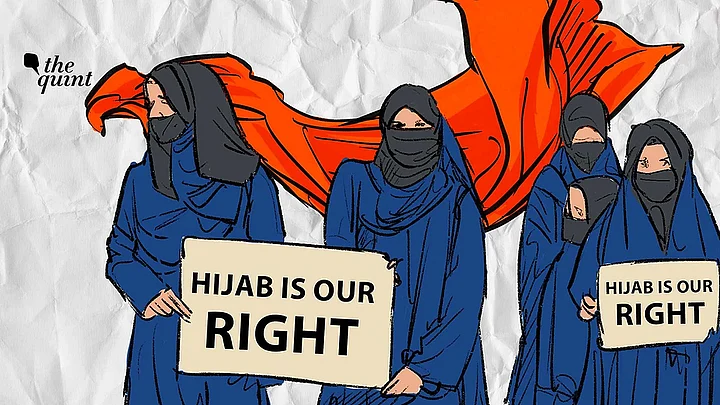
In France, the secular principle is often interpreted to bar a woman from wearing a hijab in her classroom. In India, I said it is the reverse. Our commitment to secularism would demand from us that we defend her right to wear a hijab, even if we choose not to wear one.
And then the hijab controversy broke out in Bharatiya Janata Party-ruled Karnataka. The court rulings and public discourse that followed, even in liberal circles, did not always affirm what I understood to be our secular duty, namely to unconditionally defend the right of women who chose to veil their heads and faces. And then in Iran, women rose in an inspiring struggle of burning their veils.