
For years, the Bharatiya Janata Party (BJP) under Narendra Modi's leadership has been described by political commentators as an election machine: disciplined, well-funded, digitally savvy, and well-endorsed by the Hindu nationalist organisation Rashtriya Swayamsevak Sangh (RSS)’s cadre. On 4 May, with the West Bengal election results, where the BJP won a comfortable majority of 207 out of 294 seats, the reputation proved unfailing once again.
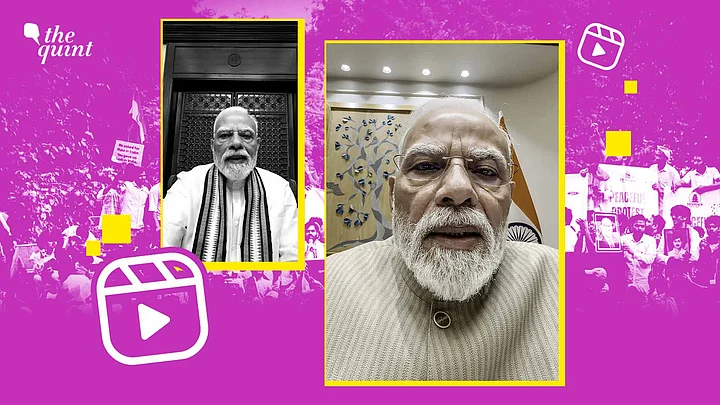
Yet, within months, the Modi government, for the first time, appeared defensive on the NEET paper leak issue and shifted from silence on non-accountability to public communication in response to the Cockroach Janta Party (CJP)-led youth movement. Especially after the disturbing visuals of 20 July, when peaceful protesters were inhumanely beaten by the Delhi Police. PM Modi, on 23 July, first broke his silence on the NEET examination leak via X, and later, in a late-night Instagram video, acknowledged the pain of students while promising tougher legislation and a fast-track court.
The video wasn’t an apology, but it indicated an unusual defensive shift in language from ‘mitron’ to ‘friends’ by the Prime Minister and his party, who have been accustomed to controlling the political narrative for the past 12 years.