On 12 April, US President Donald Trump put out a poster on Truth Social, depicting a Jesus Christ-like image of himself comforting a sick man. There was an American flag in the background as well as a dove and US military servicemen.
Trump was compelled to pull down the post because the poster raised a furore.
Five days later, in a congressional hearing, Rep Mark Takano confronted US Health Secretary Robert F Kennedy and raised questions about Trump’s mental condition. Kennedy clarified, in a later part of the hearing about the poster, thus: “He [Trump] was sending a message of brute force and violence to the mullahs to incentivise them to change... but also sending a message of love and compassion to the Iranian people. So, you can look at it and say, 'Oh, it's insane that he'd make this kind of threat.’ But he's a dealmaker."
Kennedy went on to add that Trump was “very, very sane”.
The problem is that these mixed messages may have been valid for Trump—the real estate magnate, but they certainly are not for the highest level diplomacy dealing with war and peace.
Mixed Messaging as Strategy
What is needed from the holder of the most powerful executive office in the world are clear and consistent diplomatic positions. What Trump revels in is just the opposite.
From the beginning of the Iran war, it is this diplomatic style which has left the world confused. That has caused worldwide uncertainty and contributed to global economic distress. It has also led the hydrocarbons and stock markets to move up and down like a yo-yo.
If Trump’s deliberately erratic diplomacy has been one reason of global grief since the start of the war, another has been Iran’s tradition of diplomatic brinkmanship.
This drives their diplomatic counterparts almost to distraction. Diplomats of Vilayat-e-Faqih Iran also often show a disdain for the conventions of international diplomacy.
At the same time, they expect that their interlocutors and diplomatic counterparts will not practice brinkmanship while adhering to standard diplomatic norms. They are unhappy if their diplomatic opposite numbers like themselves become evasive and equivocal.
Asymmetry in Diplomatic Expectations
Once both sides in diplomatic negotiations become evasive, equivocal, and full of bluster, the process becomes a game of chicken. That game has been going on in the negotiations between Trump and Iran. The first round of the game was prior to the first US-Iran Islamabad talks on 11-12 April.
Now, a second and more dangerous round of the game is in progress. The first round did not prevent the Islamabad meeting from taking place. Nor is it likely to hinder a second meeting between the sides at Islamabad scheduled to be held on 22 April in Islamabad. However, this game of chicken has the world on edge—and is causing turbulence in the markets. This was demonstrated prior to the first round and is being witnessed now too.
Iran's and the US' objections before the first round arose from differing interpretations of the ceasefire. Israel’s stand, supported by the US, was that Lebanon was not covered in the ceasefire.
Iran, with Pakistan’s support, asserted that it was Israel that continued to fiercely bomb Lebanon. Iran threatened not to send its delegation but finally did so. It was only four days after the first Islamabad talks broke down that Trump cracked the whip on Israel and got a ceasefire between Lebanon and Israel. At that stage, he said that he had prohibited Israel from bombing Lebanon.
Ceasefire Disputes and Escalation
The US also preferred that Iran lift its chokehold on the Strait of Hormuz. Obviously, Iran could not be expected to throw away its most important card. Trump, however, did not let the Strait of Hormuz come in the way of the first round of the Islamabad talks.
The failure of the Islamabad talks led Trump to seek to increase pressure on Iran. To do so, he announced a naval blockade of the Iranian ports and shoreline beginning on 13 April. Iran's chokehold on the Strait of Hormuz continued. With these double chokes, the game of chicken took a turn when the US Navy boarded an Iranian flag container vessel and disabled its propulsion system because it was attempting to break the blockade. Iran called it ‘piracy’—and reiterated its demand that the US should lift the blockade.
Meanwhile, Iranian Foreign Minister Abbas Araghchi announced that Iran would open the Strait of Hormuz. He was criticised by Iranian hardliners. This was indicative that there is an absence of a final decision-maker in Tehran. The strait was again closed by Iran when Trump stated that the blockade would continue till Iran agreed to a deal.
In a telephone call to Trump, his ‘favourite’ Field Marshal Asim Munir reportedly advised him that the blockade was an impediment in the negotiations. Reports claimed that he had told Munir that he would consider his advice, but later, Trump denied that Munir had advised him on the blockade.
The chances now are that the second Islamabad meeting will take place with both the blockade and Iran’s closure of the Strait of Hormuz going on.
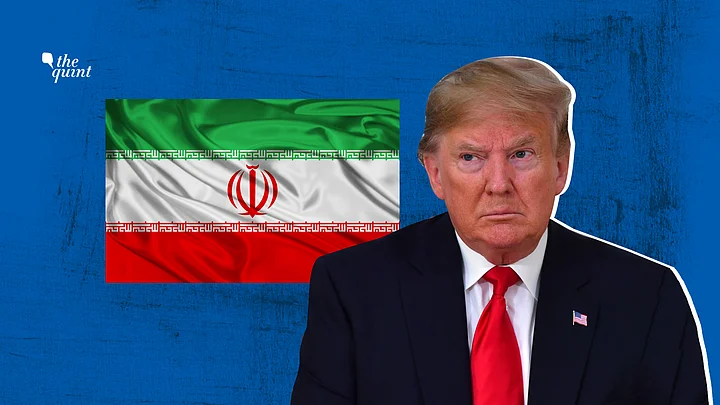
The world suffers as Trump and Iran play out their game of chicken.
(The writer is a former Secretary [West], Ministry of External Affairs. He can be reached @VivekKatju. This is an opinion piece, and the views expressed above are the author’s own. The Quint neither endorses nor is responsible for the same.)