
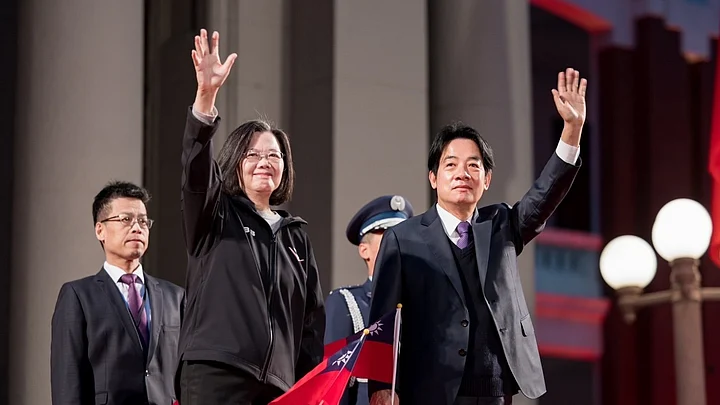
In the 27-year chronicle of Taiwan's democracy, a pattern had emerged: no single party won three consecutive presidential terms. This historical trend has been upended by the victory of Lai Ching-te, the incumbent Vice President, who shall succeed President Tsai Ing-wen, marking a third term for the Democratic Progressive Party (DPP).
Lai's win, capturing over 40 per cent of the vote and defeating Kuomintang's (KMT) Huo Yu-ih and Ko Wen-je of Taiwan’s People’s Party (TPP), may not only be the most critical result of Taiwan's eighth democratic presidential election on 13 January, but it also stands out in a year witnessing over 60 national elections globally.
As President Tsai Ing-wen's eight-year tenure concludes, due to constitutional term limits, the stage was set for a new leader. Amidst the domestic play and global gaze, the elections were framed within a stark dichotomy: a choice between war and peace, predominantly shaped by each candidate's policy towards China. This policy has become the fulcrum of both domestic concerns and international interests.