
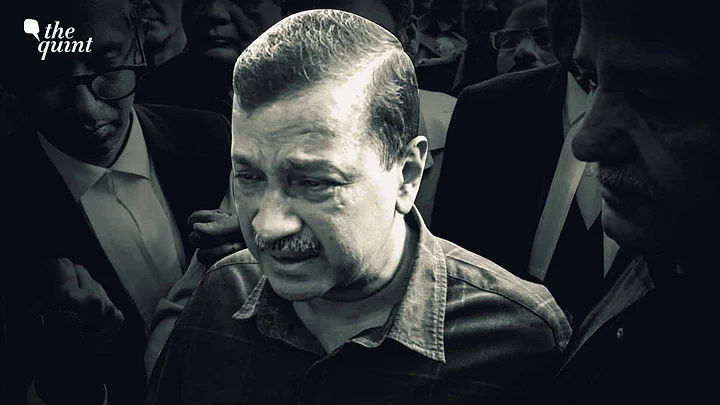
The landmark Delhi CBI special court verdict throwing out the so-called Delhi Excise scam case at the very outset is set to have ramifications for the iron grip with which the Modi government has ruled the country for the past twelve years.
What appeared to be a rather quiet Friday morning—perfectly in tune with a holiday week and the approaching festival of Holi—was suddenly jolted into frenetic activity by a special court verdict clearing all 23 accused, including former Delhi Chief Minister Arvind Kejriwal and his deputy Manish Sisodia, of all charges that had led to months of imprisonment and, ultimately, a heavy political price in last year’s Delhi elections.
Court Rejects Case at Threshold
The 598-page court verdict, which found the case not even fit to proceed for a trial, came as a vindication of the Aam Aadmi Party's (AAP) consistent stand that the case was a conspiracy to send its top party leadership to jail, in a bid to sully the image of Arvind Kejriwal and his colleagues, and use their absence to break the party.
The verdict has stunned both of the AAP’s principal political rivals — the Bharatiya Janata Party (BJP) and the Congress.
While the BJP largely adopted a wait-and-watch approach and hinted that the trial court verdict cannot be treated as final and the last word is yet to come, the Congress reacted sharply, suggesting the ruling reflected an AAP–BJP understanding.
This stance appeared to isolate the grand old party from several allies, many of whom welcomed the verdict and criticised what they described as vindictive politics by the BJP.
Blow to Investigative Agencies’ Credibility
The verdict has also severely dented the reputation of central investigative agencies, which have long faced a volley of allegations from the opposition that they function with political motivations, compromising professional integrity to serve those in power. The court’s remarks on the CBI have forced the country’s premier investigative agency onto the defensive.
Although the CBI has already moved the Delhi High Court challenging the discharge order and seeking to have adverse observations against it expunged, restoring its once-formidable reputation is likely to take considerable time.
The court, in its verdict, has ruled loud and clear that there was no quid pro quo, no attempt to benefit any entity or individual, and no evidence linking either the then Chief Minister or Deputy Chief Minister to wrongdoing of any kind.
A Mirror to Media and Investigators
Though the legal battle will linger on for years, the trial court verdict has delivered a big blow to investigations conducted by the CBI and ED over nearly three years, during which dozens were questioned, raids were conducted at more than a hundred locations, and almost every key figure in the AAP was examined or arrested.
The verdict also holds up a mirror to the media. There is a longstanding trend in our country of reporting what the investigators tell the media on record or through sources. A plain reading of the elaborate verdict shows that the court has ruled there was no material to proceed either against Kejriwal or Sisodia, that policy formulation was legal, that accused individuals were pressured to turn approvers and implicate them; and that investigators failed to conduct a professional probe.
An important message from the court to the CBI is that, “Investigative agencies are not political instruments. Criminal law cannot be twisted to convert allegations into prosecution for political reasons."
It went further, observing that “Public servants discharging official duties cannot be prosecuted on inadmissible hearsay, particularly when investigation yields no material against them.”
Political Fallout and What Lies Ahead
Politically, the verdict has provided a fresh lease of life to the AAP leadership, which had been facing rough weather since Vinay Kumar Saxena took over as the Delhi Lieutenant Governor in May 2022.
He, along with former Delhi Chief Secretary Naresh Kumar, played a central role in triggering the excise case — ensuring a CBI probe and, critics argue, contributing to the administrative paralysis of the Delhi government, a sequence that ultimately coincided with the BJP’s victory in last year’s Assembly elections.
It is exactly after a year that AAP is back in the media spotlight and public discourse. With the Punjab Assembly elections less than a year away, followed by Gujarat, the judgment provides Kejriwal and his team with an opportunity to stage a political comeback.
How much India’s youngest political party ultimately benefits from this unexpected courtroom victory will depend on how it navigates the next phase of its political journey.
(The author is a former BBC and Hindustan Times journalist, who has covered judiciary related matters for a long time. This is an opinion piece, and the views expressed are the author’s own. The Quint neither endorses nor is responsible for them.)
