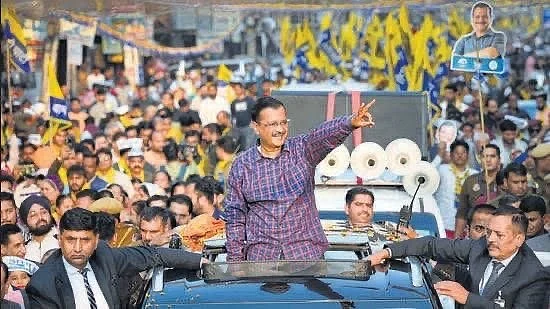
On 27 February 2026, a Delhi court discharged former Chief Minister Arvind Kejriwal, former Deputy Chief Minister Manish Sisodia, and 21 others in the Central Bureau of Investigation’s excise policy case. The court found no material evidence to support the prosecution’s allegations of corruption or conspiracy in the now-scrapped 2021–22 Delhi liquor policy. All accused were released from the case, and the court ordered a departmental inquiry against the investigating officer.
According to Live Law, Special Judge Jitendra Singh stated that the CBI’s voluminous chargesheet contained significant gaps and lacked support from witness statements or evidence. The court criticised the agency for implicating Arvind Kejriwal and Manish Sisodia without cogent material, noting that the chargesheet included misleading averments and internal contradictions undermining the alleged conspiracy theory.
As reported by Siasat, the court held that no prima facie case was established against any of the 23 accused. The judge observed that the prosecution’s narrative relied heavily on approver statements, which were used to fill investigative gaps, and warned that such conduct could violate constitutional principles if allowed to form the basis of criminal prosecution.
Coverage revealed that the court’s order followed a series of arrests and bail denials for opposition leaders, including Arvind Kejriwal and Manish Sisodia, who spent significant periods in jail before being granted relief by the Supreme Court. The court’s ruling concluded that there was no overarching conspiracy or criminal intent in the formulation of the excise policy.
As highlighted by Hindustan Times, Arvind Kejriwal became emotional after the verdict, stating, “I am not corrupt. The court has said that Kejriwal and Manish Sisodia are kattar imaandaar (completely honest).” Manish Sisodia was present and consoled Kejriwal during the media interaction.
Legal arguments presented during the trial were detailed in reporting, with the defence asserting that there was no incriminating material linking Arvind Kejriwal to the alleged conspiracy. The court found that the conspiracy theory could not be sustained against a constitutional authority and that the allegations failed judicial scrutiny.
The court observed, “The chargesheet suffered from internal contradictions which strikes at the very root of the alleged conspiracy theory.”
As noted in an article by The Indian Express, the case originated from a July 2022 report by the Delhi Chief Secretary, which alleged procedural lapses and financial losses in the excise policy’s formulation. The policy, implemented in November 2021 and withdrawn in July 2022, was alleged to have facilitated undue advantages for private entities, but the court found no evidence to support these claims.
Analysis showed that the CBI’s case was based on a complaint by Lieutenant Governor VK Saxena, with subsequent investigations by both the CBI and Enforcement Directorate. The court’s discharge order applies only to the CBI case, while the ED’s money laundering case remains ongoing.
Further details emerged at the end that the court refused to take cognisance of the CBI chargesheet, citing a lack of material evidence against the accused. The court’s decision brings the CBI’s excise policy case to a close unless challenged in a higher court.
Note: This article is produced using AI-assisted tools and is based on publicly available information. It has been reviewed by The Quint's editorial team before publishing.