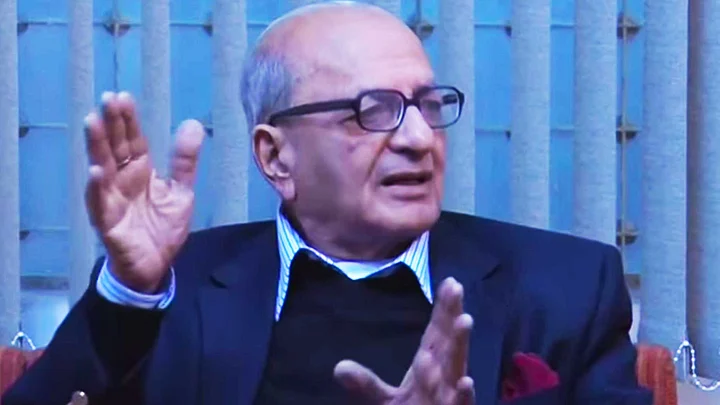
I have never known a more self-sufficient person than Inder Malhotra who passed away on 11 June in Delhi. He was everything a good human being ought to be – a loving husband, a caring father, a warm friend and above all, a journalist with a conscience.
Through his writing, he consistently strove to ensure that his country assumed the role it was meant for: greatness.
However, he did not let personal preferences betray his sense of fair judgement. He remained, till the end, a journalist with a conscience.
Inder Malhotra: Best Defence Correspondent in Independent India
Born in 1930 in Chandigarh, Inder joined the profession at a tender age. If my memory serves me right, he was barely out of his teens when he joined the United Press of India which would, in the course of time, become the United News of India (UNI).F
A few years into his career, he grew into a mature journalist. He dabbled with reporting in Hindi before he returned to English journalism.
When he joined The Statesman– one of the most reputed newspapers in post-independence India, he was one of its main political correspondents. He reported extensively on not just the Congress regime of the time but also the India-Pakistan war in 1965. So much so, that he earned himself the distinction of being India’s best defence correspondent since Independence.
- Over 70 years, Inder observed and reported the shaping of a new India.
- One of the best defence correspondents in Independent India.
- Known for his op-eds on India’s defeat in the 1962 China war.
- First to report a shift in India’s nuclear policy after nuclear test in China in 1964.
- Remembered for his personal and political biography of Indira Gandhi.
- Awarded with Ramnath Goenka Lifetime Achievement Award in 2013.
Politics, Government, Foreign Policy
He was among a rare crop of Indian journalists who worked with Evan Charlton, one of the last British chief editors at The Statesman. The pugnacious Malhotra rose through the ranks and went on to become the Resident Editor of The Statesman in Delhi.
But it was his overall grasp of not just politics but also of government and foreign policy that catapulted him to fame at the The Times of India, where he worked alongside other great journalists such as Girilal Jain and Sham Lal. Between 1965 and 1978, Inder was also The Guardian’s India correspondent.
A Dedication to the Truth
Although he eventually became a syndicated columnist later in his career, Inder remained till the end, a brilliant chronicler with an unhesitating dedication to the truth.
He will always be remembered for his biography of Indira Gandhi, which was published in 1989. It has been described as an “invaluable personal account” that is “submerged in extensive political detail.”