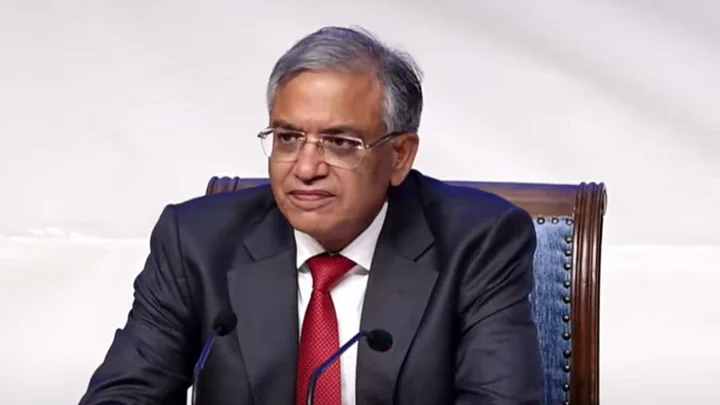
On 6 April 2026, Rajya Sabha Chairman CP Radhakrishnan and Lok Sabha Speaker Om Birla rejected notices submitted by Opposition Members of Parliament seeking the removal of Chief Election Commissioner Gyanesh Kumar.
The notices, filed on 12 March 2026, were signed by 63 Rajya Sabha and 130 Lok Sabha MPs, surpassing the minimum requirements for such motions. No specific reasons for the rejection were provided in the official communications.
According to Scroll, the Opposition, led by the Trinamool Congress, accused Gyanesh Kumar of partisan conduct and alleged abuse of constitutional authority.
The notices also cited obstruction of investigations into electoral fraud and concerns over the special intensive revision of electoral rolls in several states and Union Territories.
As reported by Hindustan Times, the Rajya Sabha and Lok Sabha secretariats issued bulletins stating that the presiding officers exercised their powers under Section 3 of the Judges (Inquiry) Act, 1968, after a “careful and objective assessment of all relevant aspects and issues involved.”
The bulletins confirmed that the motions were refused admission, but did not elaborate on the grounds for rejection.
As highlighted by Siasat, this was the first instance in Indian parliamentary history where a motion was moved to remove a sitting Chief Election Commissioner.
The Opposition’s 10-page notice listed seven charges, including alleged partisan conduct, proved misbehaviour, and mass disenfranchisement of voters. The rejection, described as “tersely worded,” drew immediate criticism from Opposition leaders.
As noted in an article by Maktoob Media, the Trinamool Congress played a leading role in mobilising support for the impeachment motion. The required threshold for such a motion—100 Lok Sabha MPs or 50 Rajya Sabha MPs—was exceeded in both Houses.
Despite this, the presiding officers declined to admit the motion, citing their discretionary powers under the Judges (Inquiry) Act.
“Notice to remove CEC Vanish Kumar by Rajya Sabha MPs rejected. Reason? NO REASON GIVEN. The BJP keep mocking our great Parliament. SHAME,” stated Trinamool Congress floor leader Derek O’Brien, as quoted in multiple reports.
Further details confirmed that Congress MP Abhishek Singhvi raised the issue in the Rajya Sabha, seeking clarity on the status of the Opposition’s notice after 19 days had passed since its submission.
The official bulletin from the Rajya Sabha stated that the Chairman had refused to admit the notice after due consideration, in accordance with constitutional and statutory provisions governing the removal of the Chief Election Commissioner.
Procedurally, coverage revealed that the removal of the Chief Election Commissioner follows the same process as that for judges of the Supreme Court and High Courts.
An impeachment motion must be admitted in both Houses, followed by an investigation by a three-member committee, and requires a two-thirds majority in Parliament for removal.
“We know what happened to the last Chairman of the Rajya Sabha who accepted a petition moved by Opposition MPs,” Congress leader Jairam Ramesh remarked, referencing previous impeachment proceedings.
Opposition leaders have consistently accused the Election Commission of acting in favour of the ruling party, while the Election Commission has denied all allegations and urged complainants to submit formal affidavits as reporting indicated.
Note: This article is produced using AI-assisted tools and is based on publicly available information. It has been reviewed by The Quint's editorial team before publishing.