‘We Are Indians’: Sunali Khatun’s Story of ‘Forced‘ Deportation to Bangladesh
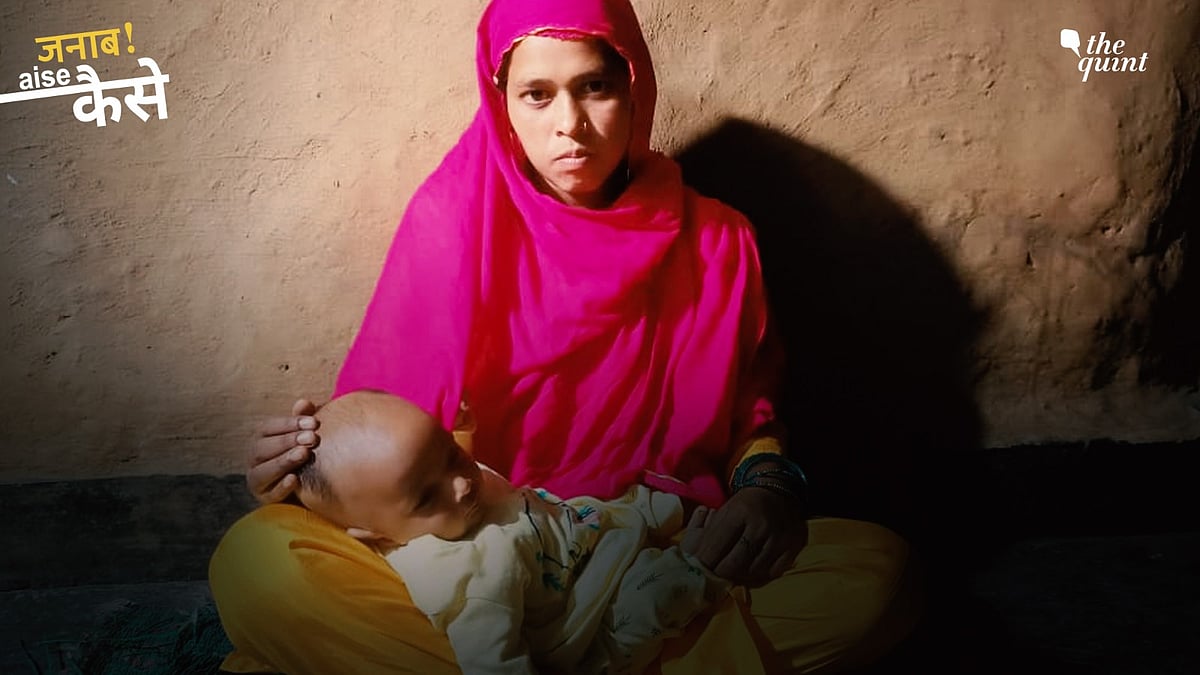
The story of Sunali Khatun, a resident of Birbhum in West Bengal, sounds like something out of a horror film.
advertisement
Can an Indian citizen be blindfolded and pushed across the border into another country in the middle of the night? The story of Sunali Khatun, a resident of Birbhum in West Bengal, sounds like something out of a horror film but it is a bitter reality from June 2025.
Sunali claims that in June 2025, she, her husband, their minor son, and three others were forcibly sent from India to Bangladesh.
Although Sunali and her eight-year-old son returned to India in December 2025 following the Supreme Court’s intervention, the memory of that terrifying experience still leaves her shaken.
Blindfolded and ‘Forcibly Deported’
Sunali Khatun worked in Delhi as a domestic worker, doing household chores to make ends meet. On the night of 20 June 2025, at around 8:00 PM, Delhi Police detained her husband. Sunali then went to the police station with her relatives to secure his release, where they were allegedly asked to produce their identity documents.
Sunali claims she had her Aadhaar card, PAN card, ration card, and even her parents’ identity documents from 2002. Despite this, she says the police declared the documents “fake” and detained all of them.
Sunali recalls:
Left in a Forest, Threatened at Gunpoint
Sunali claims they were eventually dropped in a dense forest. At the time, she was one month pregnant and accompanied by her eight-year-old son.
“We folded our hands and pleaded with them not to leave us there. We told them we had a child with us. But they threatened to shoot us if we turned back,” she says.
After wandering for several days and crossing a small river, they reached a village where they were told they were in Bangladesh. Soon after, Bangladeshi police allegedly arrested them for illegally crossing the border.
Sunali and the others were lodged in a jail in Chapai Nawabganj, Bangladesh, where they spent 101 days. During this period, Sunali was pregnant, but she says no special consideration was given to her condition.
“We kept saying we were Indian citizens, but no one listened,” she recalls.
Court Intervention and Return
Mofijul, a member of TMC MP Samirul Islam’s team, remained actively involved in the case. He said Bangladeshi courts were hesitant to grant bail because the detainees did not have local addresses. Letters were also sent to the Indian Embassy, but there was initially no concrete response.
Meanwhile, Delhi Police challenged a High Court order in the Supreme Court, further complicating the legal battle.
Following the Supreme Court’s firm intervention, Sunali and her son were able to return to India. On 3 December 2025, the Supreme Court directed that Sunali Khatun be brought back to India on humanitarian grounds.
However, Sunali’s husband, Danish Sheikh, and the others who were deported with her remain stranded in Bangladesh.
After returning to India, Sunali gave birth to a child in January 2026. But the child’s father is still fighting a legal battle to return home.
“My child now looks for his father. Festivals have passed, but he hasn’t come home. Our only fault was that we spoke Bengali, and we were assumed to be Bangladeshi,” Sunali says.
Fear, Poverty, and an Uncertain Future
Today, Sunali lives in her village in Birbhum, dependent on her brother. The family’s financial condition is extremely fragile, and the children’s education has been disrupted.
When asked if she would return to Delhi, she firmly refuses.
“I don’t have the courage to go back there. What happened to us is something we will never forget,” she says.