Making Sense of Shubman Gill’s Omission From India’s 2026 T20 World Cup Squad
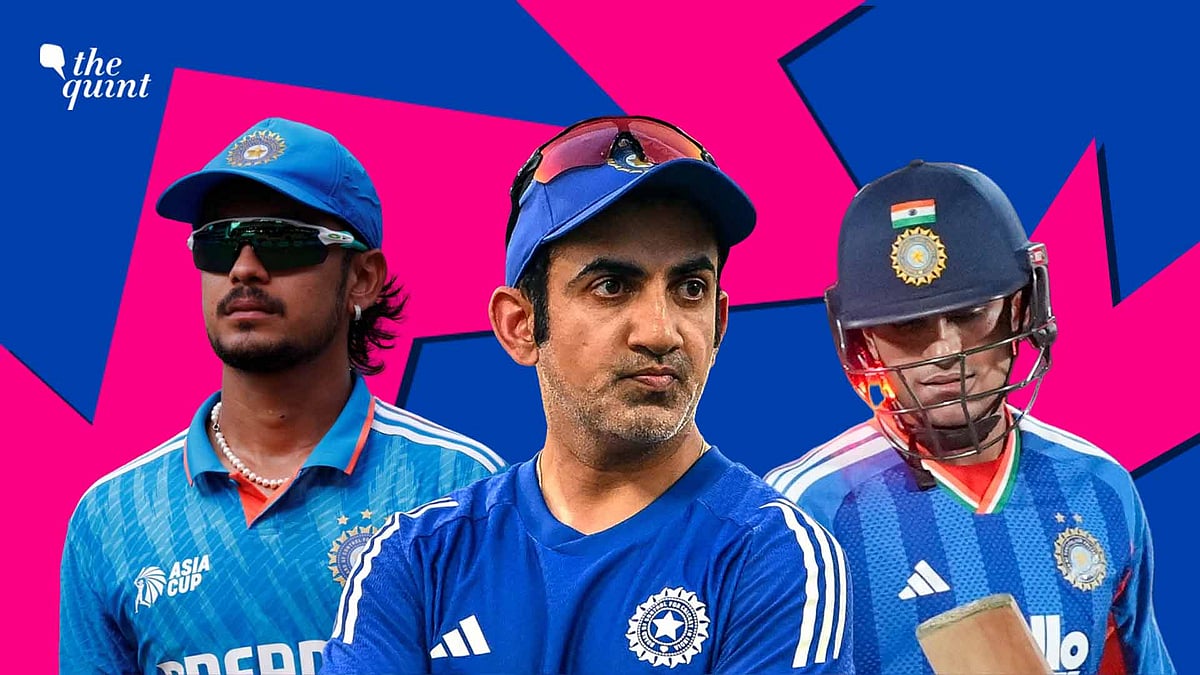
Till yesterday, Shubman Gill was India's T20I vice-captain. Today, he finds himself dropped from the team entirely.
advertisement
Life comes at you fast. Cricket comes at you faster.
Ajit Agakar, Chairman of the men’s selection committee, had announced about Gill’s return in a press conference ahead of the Asia Cup, whilst also confirming that he will deputise Shubman Gill.
He had said:
Vice-Captain Dropped
Yet, before even the turn of the year, ahead of India’s next multi-nation assignment — the 2026 ICC Men’s T20 World Cup — Shubman Gill not only had his vice-captaincy responsibilities alleviated, but was dropped entirely from the 15-member squad that was announced today.
The famous “someone has to miss out” line was invoked by Agarkar yet again. The last time it was, Shreyas Iyer was the protagonist. Now, it is Shubman Gill.
The explanation furnished by Agarkar was not concealed by complex and clichéd jargon. He stated the obvious — Gill, simply, had not scored enough runs to warrant a place in the T20 World Cup squad.
Alongside Gill, Jitesh Sharma has also had his time in the T20 squad cut short, with Ishan Kishan being rewarded for his performance in the recently concluded Syed Mushtaq Ali Trophy. Rinku Singh, who could consider himself unlucky for missing out on the trio to the West Indies and USA in 2024, has finally found his place in the team.
There are a couple of contrasting ways to analyse the call made by selectors.
One could make a case for the decision being counterintuitive to the combination that had earned India major success. And that argument will have its weight.
And Gill had featured in 11 of those 16 victories. Per the logic of overarching results trumping individual contributions, Gill might have found his place in the team unthreatened.
India Was Winning, but Shubman Gill Wasn’t Doing Much
But the selectors chose to prioritise the latter. What do we find there?
That Gill, in the 15 matches that he has played since making his comeback into the Indian team, has scored merely 291 runs, at an average of 24.25 and a strike rate of 137.26. None of those 15 innings saw him scoring a half-century,
In the last four months, Gill’s T20I average is the fourth-lowest among opening batters who have played a minimum of 10 matches.
Worst T20I averages as an opener since Asia Gup (Gill’s T20 return):
1. Dharma Kesuma — 17.37
2. Saim Ayub — 22.60
3. John Bangura — 23.00
4. Shubman Gill — 24.25
5. Sulaimon Runsewe — 27.00
For a team that otherwise is moulding itself to perfect the art of destructive batting, as highlighted by India’s last exhibition of 231 against South Africa, Gill’s strike rate of under 130 stood in direct and striking contradiction to the template.
Worst T20I strike rate by a top 7 batter from a top 8 team (since Asia Cup, minimum 10 matches):
1. Salman Ali Agha — 100.54
2. Kusal Mendis — 114.75
3. Jason Holder — 115.62
4. Saim Ayub — 123.47
5. Suryakumar Yadav — 126.07
6. Sahibzada Farhan — 127.05
7. Fakhar Zaman — 128.00
8. Tilak Varma — 128.50
9. Shubman Gill — 137.26
He also, unfortunately, finds his place on many more lists where one rather would not want to be included.
Fewest runs as an opener from a top 8 team in 2025 (minimum 10 matches):
1. Tim Robinson (New Zealand) — 190
2. Reeza Hendricks (South Africa) — 226
3. Alick Athanaze (West Indies) — 251
4. Devon Conway (New Zealand) — 267
5. Shubman Gill (India) — 291
Sanju Samson Likely to Be Abhishek Sharma’s Opening Partner
So, who is likely to replace Gill in the playing XI?
Sanju Samson, who, since 2024, has scored 454 runs as an opener in 15 matches — 163 more than Gill, despite getting fewer opportunities. Samson also fits hand-in-glove with the batting template of the team, having accumulated those 454 runs at a strike rate of 181.60.
Highest strike rate by an opener from a top 8 team since 2024 (minimum 10 matches):
1. Abhishek Sharma — 190.40
2. Sanju Samson — 181.60
3. Finn Allen — 177.81
4. Jos Buttler — 175.69
5. Shai Hope — 170.38
Ishan Kishan Rewarded For SMAT Brilliance
And the alternate to Samson?
Though, he scored 517 runs in the Syed Mushtaq Ali Trophy, at an average of 57.44 and a strike rate of 197.32, while also leading Jharkhand to their maiden title. There have been numerous debates on why domestic cricket is not used as a parameter for selection, and hence, on that rare occasion when it is, it could be perceived as a positive change.
Perhaps, the ‘leadership qualities’ that Agarkar once saw in Gill, were seen in Kishan too. And, hence, course-correction was inevitable.
It is never too late to course-correct.
India's 2026 ICC Men's T20 World Cup Squad: Suryakumar Yadav (captain), Abhishek Sharma, Sanju Samson (wicketkeeper), Tilak Varma, Hardik Pandya, Shivam Dube, Axar Patel (vice captain), Rinku Singh, Jasprit Bumrah, Harshit Rana, Arshdeep Singh, Kuldeep Yadav, Varun Chakaravarthy, Washington Sundar, Ishan Kishan (wicketkeeper).