
Why Telangana Remains BJP's Toughest Southern Test, Despite Parliamentary Gains
Nitin Nabin's Telangana visit highlights the gap between BJP's national appeal and state ambitions.
advertisement
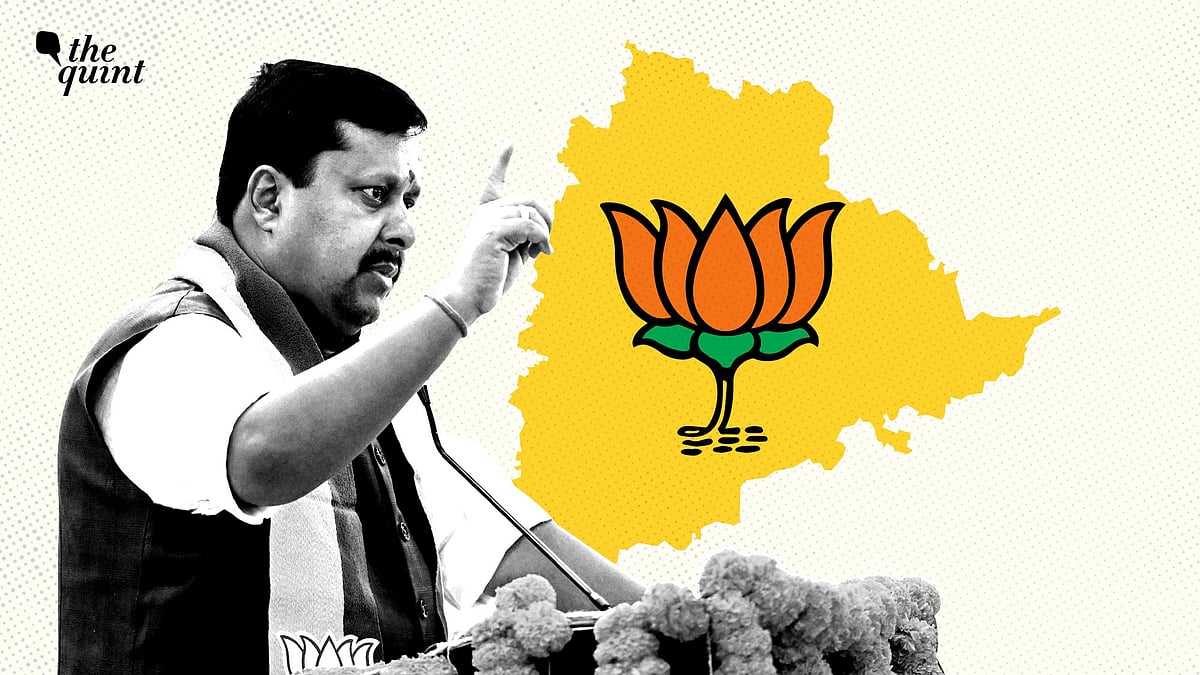
The Bharatiya Janata Party (BJP) launched its ‘Mission Telangana’, with the three-day visit of the party’s national president Nitin Nabin. In a grand posturing, Nitin Nabin asserted Telangana will soon turn saffron. However, Telangana Bharatiya Janata Party (BJP) presents a curious paradox.
After winning West Bengal, Assam recently and Orissa earlier, the BJP’s eastward expansion is rather complete. Now the saffron party has launched its ‘Mission South’. With a dismal show in Tamil Nadu and lacklustre performance in Kerala, the BJP is now investing heavily in Telangana, ruled by its arch-rival Congress.
The BJP commands a formidable presence during Lok Sabha elections but appears to flounder as soon as the contest shifts to the state level. Nitin Nabin has also reportedly highlighted this political paradox and pulled up the state leadership in this regard. Despite prime positioning and significant resources, the party remains trapped in a cycle of internal discord and strategic missteps when it comes to Telangana.
The Statistical Disconnect
The most striking symptom of the Telangana BJP’s malaise is the vast gulf between its electoral performances in Lok Sabha versus Assembly elections. In 2019, the party secured approximately 20 percent of the vote share and 4 Lok Sabha seats. Yet, in the preceding 2018 Assembly elections, it was reduced to a mere 7 percent vote share and a single seat.
This 20 percentage point evaporation of support suggests that while the Telangana voter trusts the BJP for national leadership under Narendra Modi, they do not view the local leadership as a credible alternative for state governance.
As Prime Minister Narendra Modi himself reportedly pointed out to state MPs, the BJP’s modest journey in the 1980s began with two seats, one of which came from Telangana (Hanamkonda) and other from Gujarat. But, decades later, Gujarat has become a fortress, while Telangana remains a perpetual work in progress.
The Borrowed Leadership Dilemma
Central to the party’s internal friction is the tension between the ideological purists and borrowed leaders. The sudden replacement of Bandi Sanjay, a grassroots leader associated with aggressive Hindutva, with the more seasoned G Kishan Reddy, and eventually the appointment of N Ramchander Rao, signalled a lack of consistency in the strategic choice of leadership who can lead the party at the hustings.
Purists feel side lined by newcomers, leading to public spats and a lack of coordination. Instances of leaders holding parallel press conferences or skipping key organisational reviews are common, reflecting a breakdown in party discipline that was once the BJP’s hallmark.
Hindutva Meets Telangana Identity
Telangana’s political terrain is uniquely shaped by Telangana Pride (Astitvam). The BJP has struggled to reconcile its national Hindutva narrative with local sentiment. While leaders like Bandi Sanjay emphasise religious polarisation, others like Eatala Rajender argue that caste and religion dynamics do not work the same way in Telangana as they do in the Hindi heartland.
Furthermore, the party often appears culturally tone-deaf. Prime Minister Modi’s recent Hyderabad visit, where he spent significant time with Andhra leaders like Chandrababu Naidu and Pawan Kalyan but limited time with local BJP stalwarts, inadvertently fed a narrative of neglect or small-brother status for Telangana. In a state born out of a movement for self-respect, such optics are politically expensive
The BJP's relationship with Andhra-centric parties like the TDP and Janasena remains a risky gamble. While an alliance might offer an arithmetic advantage in urban pockets like Hyderabad region, it risks reviving the Andhra domination sentiment that the BRS skilfully exploits. The party's flip-flops teaming up with Janasena in one election only to declare a solo fight in the next leaves the cadre confused and the voter sceptical.
The Opposition BJP Couldn't Capture
Following the 2023 Assembly verdict, especially after a remarkable performance in 2024 Lok Sabha elections in the state where it confined the BRS to a distant third, the BJP had a golden opportunity to seize the primary opposition mantle from a weakened BRS. However, local body results show that the BRS remains the more resilient challenger to the ruling Congress, while the BJP remains a distant third.
The perception that the BJP has a soft corner or a secret pact with the BRS further eroded its credibility as a relentless fighter.
The Missing Coalition
While the party promised to make a BC (Backward Class) leader the Chief Minister, its organisational appointments (like the replacement of BC leader Bandi Sanjay with Kishan Reddy) undermined that promise. The party’s attempt at social engineering such as reaching out to the Madiga community through the categorisation issue is seen as a late-stage tactical move rather than a long term grassroots strategy, leaving many social groups still aligned with Congress or BRS.
What ails the Telangana BJP is not a lack of opportunity, but a lack of unity, strategic deficit and local rootedness. To transition from a national election phenomenon to a state power player, the party needs more than just the Modi Factor. It requires a cohesive local leadership that can champion Telangana specific developmental and cultural aspirations without being overshadowed by its own national or neighbouring state interests. Until it resolves its internal identity crisis, the Lotus may continue to bloom in the Lok Sabha, only to wilt in the Assembly.
Nitin Nabin’s visit did precious little to overcome these structural fault lines and strategic deficits.
(Prof K Nageshwar is a senior political analyst, faculty member of Osmania University, and a former MLC.This is an opinion piece and the views expressed are the author’s own. The Quint neither endorses nor is responsible for them.)
- Access to all paywalled content on site
- Ad-free experience across The Quint
- Early previews of our Special Projects
Published: undefined