
Kingmakers, Never Kings: Pawan Kalyan and Andhra Pradesh's Kapu Conundrum
Even as parties scramble to co-opt Kapu leaders, the community’s quest for political dominance remains unfulfilled.
advertisement
The alleged lockup death of Sai Krishna in Vijayawada recently triggered yet another round of polarised campaign by the YSR Congress Party and the Telugu Desam Party (TDP)-Janasena combine to mobilise the support of the Kapu community voters.
In the lexicon of Indian politics, "social engineering" is often a polite euphemism for the calculated mobilisation of caste. In the southern state of Andhra Pradesh, this engineering has historically been dominated by two formidable groups: the Reddys and the Kammas. Despite their numerical minority—Reddys at approximately eight percent and Kammas at five percent—the chief minister’s office has rotated between them for decades.
Yet, in the complex tapestry of Andhra Pradesh’s social engineering, one community holds the key to the treasury but rarely sits on the throne.
With the YSR Congress recently convening a meeting of Kapu leaders to introspect after their 2024 electoral drubbing, the "Kapu factor" is again at the heart of the state's political discourse.
The central paradox of Andhra politics, however, is that a community with such significant "numerical significance" and "mass popularity" remains politically marginalised from the highest office. Even as political parties scramble to co-opt Kapu leaders, the community’s quest for political dominance remains unfulfilled.
Economic Roots Of Political Discontent
The Kapu community, alongside Reddys and Kammas, form the backbone of the state’s agricultural landscape. However, as the economy shifted from agrarian roots to urban-centric growth, the Kapus found themselves on the periphery. Research by scholars like Vignesh Karthik highlights that Kapus did not reap the benefits of the state’s economic transformation as effectively as their Kamma and Reddy counterparts. This economic stalling has fuelled a deep-seated "social and political aspiration" that has yet to find a stable home.
The community’s journey for self-assertion began in earnest with Vangaveeti Mohana Ranga, whose legacy as a champion of Kapu consolidation remains a potent political symbol. However, the subsequent decades have been defined more by "co-option" than independent dominance.
The Congress Party, for instance, successfully brought in film stars and leaders like Dasari Narayana Rao and later Chiranjeevi, whose Praja Rajyam Party (PRP) secured a massive 16 percent vote share in 2009 before merging into the Congress fold.
This pattern of "merging and co-opting" has been a recurring theme. The dominant parties—Congress, TDP, and now YSRCP—have masterfully integrated Kapu leaders into their ranks to utilise the community as a "winning edge" rather than a leading force.
The Pawan Kalyan Experiment
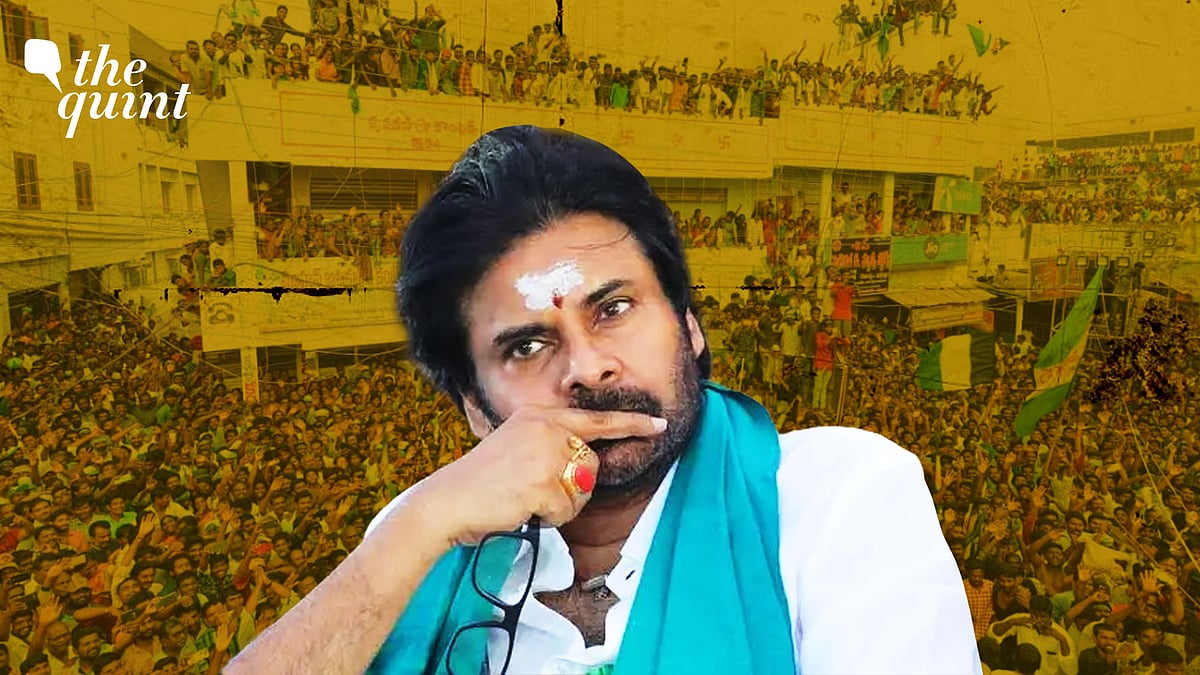
The most recent iteration of this struggle is embodied by Pawan Kalyan and his Jana Sena Party. In 2019, despite Pawan Kalyan's immense charisma, the Kapu vote was fragmented between the TDP and YSRCP, leading to a dismal performance for his party. Recognising that a solitary Kapu-led front struggled to break the polarised Kamma-Reddy landscape, Kalyan pivoted in 2024.
By forming a political alliance with the TDP and Bharatiya Janata Party (BJP), Kalyan acted as the game changer or the "Man of the Match."
His strategy prevented the anti-incumbency vote from splitting, leading to a 100 percent strike rate for Jana Sena in the seats it contested, while the National Democratic Alliance (NDA) registered an unprecedented mandate by winning 164 out of 175 seats in the 2024 Assembly elections. However, this success underscores the community’s ongoing dilemma: while they were the "architects" of the coalition's landslide victory, the Chief Minister’s chair remains with the TDP.
In Andhra Pradesh, no Kapu leader has yet successfully built a "broad social coalition" that champions not just Kapu interests, but also those of the "politically marginalised" Backward Classes (BCs), Dalits, minorities and even sections of Upper Castes. Instead, Kapu leaders have often been content with being a "winning combination" for others.
Beyond a Swing Vote
As the YSRCP attempts to woo back the community and the TDP seeks to maintain its "unnatural social coalition" of Kammas and Kapus intact, the community’s dissatisfaction persists. They remain the "deciding factor" but not the "dominant group."
For the Kapus to move from the kingmaker to the king, they must evolve beyond being a "swing vote" for established parties. Until a leader can synthesise the community's numerical strength with a wider inclusive platform, the "Kapu conundrum" will continue to define the volatile and vibrant theatre of Andhra politics.
(Prof K Nageshwar is a senior political analyst, faculty member of Osmania University, and a former MLC. This is an opinion piece, and the views expressed are the author’s own. The Quint neither endorses nor is responsible for them.)
- Access to all paywalled content on site
- Ad-free experience across The Quint
- Early previews of our Special Projects
Published: undefined