
What Lies Behind the Latest India-Nepal Border Controversy
Nepal's quest to seek intervention of China and the UK reeks of mischief, writes Brig Kuldip Singh (Retd).
advertisement
Nepal’s Balen (Balendra) Shah, appointed prime minister in March 2026 after his party's landslide victory in the general election, triggered a transnational political storm in his first address to the Federal Parliament on 31 May.
"You will be surprised to know…I have learnt recently, only after becoming PM….India has not only encroached Nepali territory, but Nepal has also encroached Indian territory in many places,” he said. Acknowledging that the border dispute over Lipulekh, Limpiyadhura, and Kalapani areas represented a sore point in Indo-Nepal bilateral ties, he added that both nations should seek the help of historians, surveyors and experts and "study the facts and sit together as friends and resolve the issue."
His further claim that Kathmandu had already taken up the matter with China and the United Kingdom, since the issue dated back to Britain’s withdrawal from the region in the 1940s, only deepened the controversy..
Nepal’s Ministry of Foreign Affairs then ‘clarified’ that the PM’s claim referred only to issues arising from "cross-border occupation" and encroachment in the No-Man's Land along the border with India, from shifting of river boundaries—and weren’t an official amendment of Nepal’s territorial claims. Two former Nepalese ambassadors to India, Nilambara Acharya and Deep Kumar Upadhyay, also refuted any encroachment by Nepal on Indian territory.
A Relationship Already Under Strain
India’s Ministry of External Affairs (MEA) rejected any third country's involvement in the Indo-Nepal border dispute, saying “There exist bilateral mechanisms” to resolve all issues between the two countries.
Earlier, India had cancelled Foreign Secretary Vikram Misri’s scheduled visit to Kathmandu after Prime Minister Shah allegedly insisted he would meet Indian officials only at the minister or higher level, and a dispute over Lipulekh.
New Delhi had rejected Nepal's objection to India using the Lipulekh Pass for the upcoming Kailash Mansarovar Yatra, emphasising that the pilgrimage has been ongoing since 1954 through Lipulekh, and that Kathmandu's territorial claim over Lipulekh was an "unilateral, artificial, untenable enlargement."
Interestingly, PM Shah has laid down a policy of meeting only his political counterparts, which excludes bureaucrats and foreign envoys; in May, he declined to meet US Ambassador to India, Sergio Gor, when he visited Kathmandu. Thereafter, the Bharatiya Janata Party (BJP) invited Nepal’s Rastriya Swantantra Party chairman Rabi Lamichhane, who is part of Nepal’s ruling coalition, to visit India.
The Nepal government’s spokesperson Sasmit Pokhrel, however, distanced it from Lamichhane's visit to India, saying Lamichhane was travelling in his personal capacity.
The Origins of the Border Dispute
India’s 1,751 km long open border with Nepal traverses through the states of Uttarakhand, Uttar Pradesh, Bihar, West Bengal, and Sikkim, and is guarded by the Sashastra Seema Bal (SSB), which maintains 539 Border Out-Posts (BOPs) along it.
As per Nepal, the Kali River originates at Limpiyadhura, as a consequence of which all three areas fall within Nepal's territory. India maintains that the river originates further downstream and, therefore, the said areas lie within Uttarakhand's Pithoragarh district. Kalapani holds strategic importance as its located near the India-Nepal-China tri-junction; Lipulekh, an important mountain pass in the Himalayas, serves as a route for trade as well as for Indian pilgrims travelling to Kailash Mansarovar in Tibet.
Susta, located near the Valmiki Tiger Reserve and the Gandak River, is another unresolved border issue—but this dispute stems from the river changing its course.
When Maps Became Political
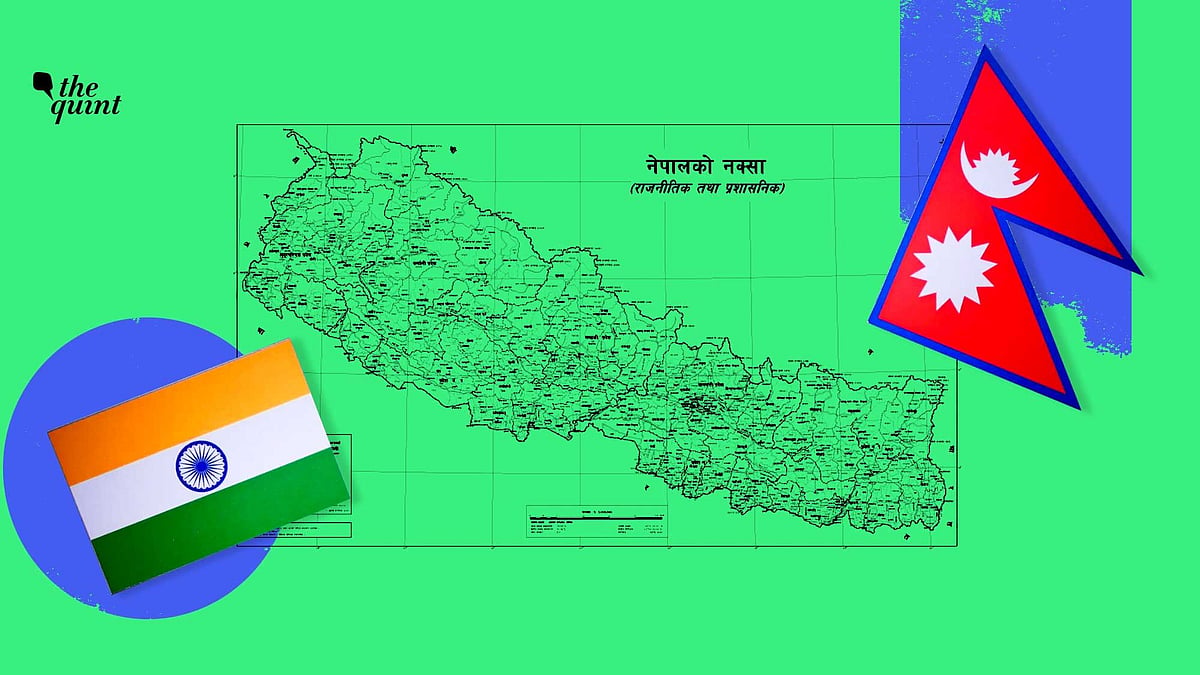
The boundary issue gained traction in 2019 after Nepal objected to a new map published by New Delhi showing Kalapani as Indian territory. In May 2020, India inaugurated a road connecting Dharchula to Lipulekh. Nepal objected, stating the road passed through its territory and then published a new political map showing Kalapani, Lipulekh, and Limpiyadhura within its borders.
In June 2020, Nepal's Parliament approved a constitutional amendment incorporating this revised map into its national emblem. India rejected that revised map, labelling it as ‘unilateral action not founded in historical facts and evidence’.
Many of the contemporary disputes are the legacy of borders drawn indiscriminately by imperial/colonial powers and which ignored geography and ethnic distributions. Precedence informs that military-enforced border settlements rarely produce enduring peace, whereas boundary resolution(s) involving “some-give-and-some-take” usually preserve international relationship(s), reduce conflict and engender long-term stability.
Yet, one thing is clear—neither China nor the United Kingdom have any locus standi in this dispute between India and Nepal. Kathmandu's quest to seek intervention of these two nations reeks of mischief. India is doing the sagacious thing by engaging Nepal diplomatically in a bi-lateral dialogue to resolve the lingering disagreements.
(Kuldip Singh is a retired Brigadier from the Indian Army. This is an opinion piece and the views expressed above are the author’s own. The Quint neither endorses nor is responsible for the same.)
- Access to all paywalled content on site
- Ad-free experience across The Quint
- Early previews of our Special Projects
Published: undefined