
The Trouble With Turning Vande Mataram Into a Loyalty Test
The decision to limit the singing of Vande Mataram was not appeasement—it was pragmatism, writes Shuma Raha.
advertisement
In December last year, Prime Minister Narendra Modi had declared in Parliament that a grave “injustice” had been meted out to Vande Mataram, India’s national song, by Jawaharlal Nehru and the Congress.
He said that Nehru and his cohorts had truncated Bankim Chandra Chattopadhyay’s patriotic poem, limiting its use to just two stanzas to appease Muslim leaders like Muhammad Ali Jinnah, and that that this was a betrayal of Vande Mataram’s glorious history and its storied role in the country’s freedom movement.
The move is problematic on several counts, not least because it seems like one more iteration of the political strategy of taking pieces of India’s history and refracting them through a contentious and divisive prism.
A Song Steeped in the Freedom Struggle
There is no doubt that Vande Mataram is rooted in a noble and shining past, a past hallowed by the blood of our martyrs, the sacrifice of our freedom fighters.
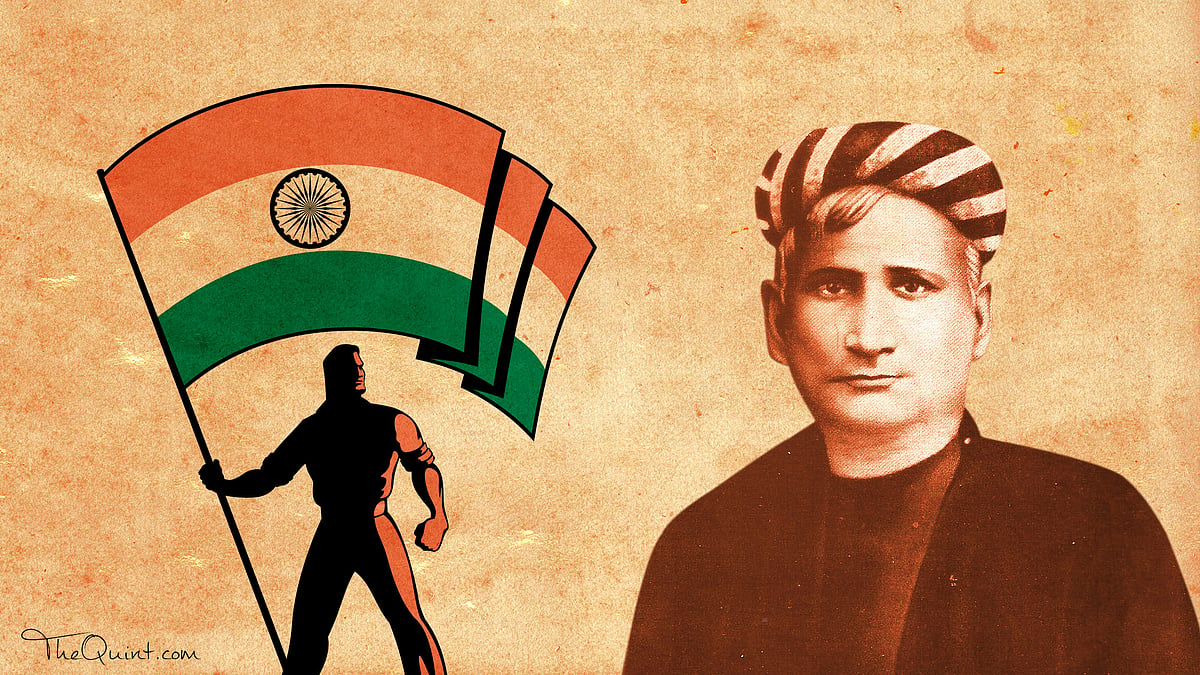
Written in a mix of Sanskrit and Bengali by Chattopadhyay in 1875, and later included in his landmark novel Anandamath (1882), the poem was set to tune by Rabindranath Tagore. And it was Tagore who sang the song at a session of the Indian National Congress in Calcutta in 1896, sparking its adoption as a rallying cry in the country’s battle for freedom from British rule.
It was the protest song of the Swadeshi movement after the partition of Bengal in 1905; it was the name of nationalist journals and newspapers founded and edited by prominent freedom fighters such as Bipin Chandra Pal, Aurobindo Ghosh, and Lala Lajpat Rai; recited by revolutionaries and pacifists alike—and banned by the British—it was a distillation of India’s new-minted nationalistic fervour and a rousing call to come together to fight for the motherland.
The Religious Imagery Problem
Let us not forget, however, that in its entirety, the song is an invocation of the motherland as a deity, specifically, a Hindu mother goddess.
While the first two stanzas celebrate the beauty, charm, and nourishing spirit of the motherland, the later stanzas contain phrases such as “Twam hi Durga dashapraharanadharini”, “Kamala kamaladalaviharini”, “Vani vidyadayini”, and in Bengali, “Tomari pratima gori mandire mandire (We build your image in every temple)”.
Be that as it may, sung in full, the references to Durga, Kamala (Lakshmi), Vani (Saraswati), and to idol-worship situate Vande Mataram firmly in a Hindu religious ethos. This would be fine if it were merely a devotional chant beloved of a particular community. But a national song must be fit to be sung by one and all. A Vande Mataram rendition that includes all six stanzas means that every Indian, no matter what their faith, must stand and pay homage to Hindu deities and Hindu religious practices.
When a lynch mob forces a non-Hindu to chant “Jai Shri Ram”, we can dismiss it as extreme and aberrant. What should we call a government which, in effect, wishes to do the same thing?
Constitutional and Historical Counterpoints
The adoption of the full Vande Mataram poem as our national song is not just deeply inappropriate. It is an egregious violation of the tenets of secularism and the right to religious freedom enshrined in the Indian Constitution.
But even before India won its freedom and the Constitution came into being, a few good men had realised that while the essence of Vande Mataram—the salutation to the glory of the motherland—must continue to be cherished as an inspirational national song, it was important not to mire it in controversy and ill-will by holding on to the bits that might alienate and antagonise parts of the population.
To that end, in 1937, a committee of the Indian National Congress comprising Nehru, Subhash Chandra Bose, Maulana Azad, and others decided that only the first two stanzas of Vande Mataram would be sung at public gatherings. And when the Constituent Assembly adopted it as the country’s national song in 1950, the tradition of dispensing with the contentious last four stanzas continued.
In his letter to Subhas Chandra Bose in 1937, Tagore wrote (in Bengali): “I freely concede that the whole of Bankim’s ‘Bande Mataram’ poem read together with its context is liable to be interpreted in ways that might wound Moslem susceptibilities, but a national song though derived from it which has spontaneously come to consist only of the first two stanzas of the original poem, need not remind us every time of the whole of it.”
He said, moreover,
Pragmatism vs Provocation
Yes, the decision to limit the singing of Vande Mataram to its first two stanzas was prompted by Jinnah and members of the Muslim League expressing their strong reservations against it.
Yes, it was a compromise. But it was not appeasement, it was pragmatism. It was respect for the sensibilities of others. It was the critical recognition of the fact that nationalism and nationhood can be achieved, and sustained, only when you take everyone along—not when you force the ideas and cultural habits of the majority down everyone’s throats.
By ordering the mandatory inclusion of all six stanzas of Vande Mataram into the national song, by insisting that it be performed before the country’s secular and inclusive national anthem, Jana Gana Mana, the government has deliberately chosen disharmony over harmony, discord over amity. It has stoked a controversy where none had existed for decades.
The “good sense” that Tagore had referred to, has once again been cast to the fore winds in the interest of a Hindu majoritarianism that seems to thrive on pettiness and provocation.
(Shuma Raha is a journalist and author. This is an opinion piece and the views expressed are the author's own. The Quint does not endorse or is responsible for them.)
- Access to all paywalled content on site
- Ad-free experience across The Quint
- Early previews of our Special Projects
Published: undefined