
India-US Ties: Marco Rubio’s Visit Offers Optics, Not Outcomes
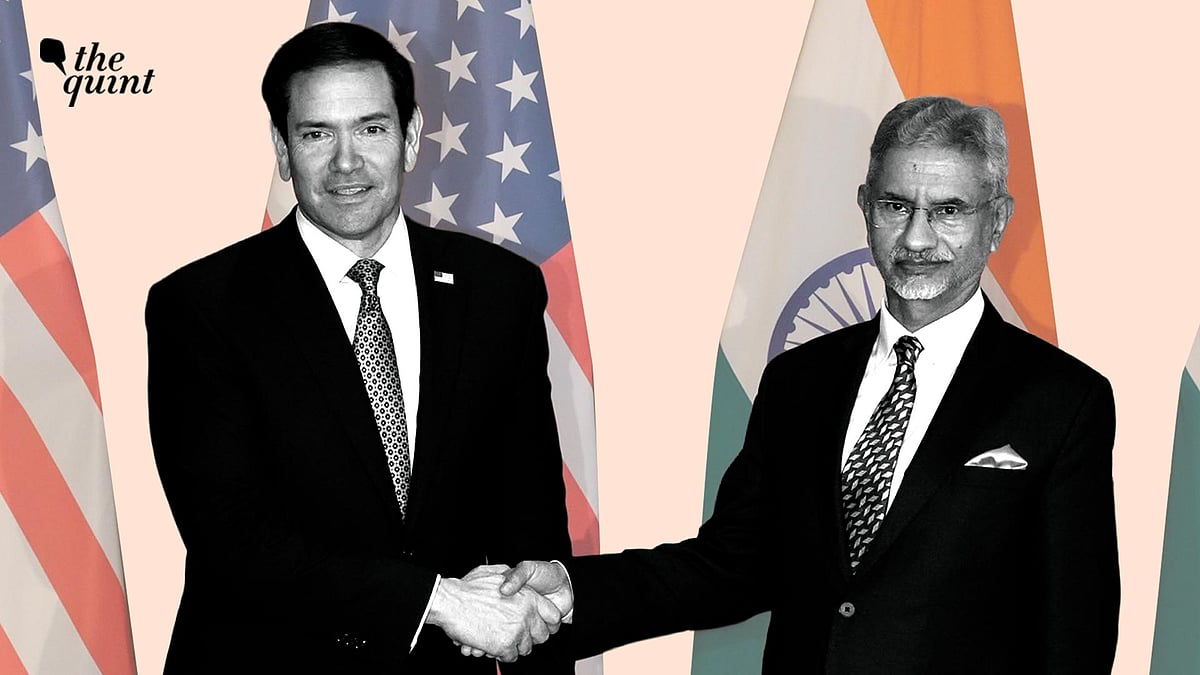
Five months since his last visit in May, Marco Rubio seemed intent on maintaining, not mending India-US relations.
advertisement
The Marco Rubio visit to Mumbai and Jamnagar was not meant to be transformative, and it wasn’t. It was primarily focused on energy, trade, and keeping the relationship from fraying further.
So while there was a high premium in managing its optics, the substance was incremental.
The primary goal of his visit seemed to be to visit the Jamnagar refinery complex and confer with the Reliance Group, which reports had said was investing in a massive refinery in Texas, the first new refinery to be built in the US in half a century.
In March, US President Donald Trump had announced the construction of a refinery in southern Texas, but so far Reliance has issued no official confirmation of the deal—and the visit by the US Secretary of State was probably aimed at cementing and finalising the scope of the Reliance commitment.
Petroleum Politics
The Rubio mission was based not just on the issue of the refinery, but driven by the fact that oil is playing a larger role in US foreign policy. Its “capture” of Venezuelan oil gave Washington dominance over the global markets and the diplomatic means of reshaping ties with Asian countries like India.
By building a parallel oil supply chain directly under US oversight in the western hemisphere, the US is also able to counter the power of the Organisation of the Petroleum Exporting Countries (OPEC).
Rubio reportedly also sought to push Reliance to refine more heavy Venezuelan crude and reduce reliance on Russian crude. The US is making an explicit pitch for more US energy exports and India has already become a major importer of US Liquefied Petroleum Gas (LPG) and Liquefied Natural Gas (LNG) and is the fifth largest exporter of crude.
In a lot of talk on diversification, what is often forgotten is that the average transit time of supplies from the US is 35-38 days, as compared to 3-5 days through Strait of Hormuz. This also means that seven to eight times more vessels are needed because of the long turnaround times.
There is also a freight premium to be paid driven by higher charter days and fuel burn, though the risk insurance is at a premium for Gulf routes at present.
India-US Ties
In his May visit to India, Rubio had gone out of his way to assuage India by saying that the US measures on tariffs and immigration were not aimed at India, but had global application. That was little comfort to India whose status has perceptibly declined in the eyes of official America.
This is best brought out by the fact that the National Security Strategy of the Trump administration issued in August 2025, barely mentions India, except in the context of business relations. The National Defence Strategy ignores it completely.
India was the collateral casualty in the Act, but it also became the collateral beneficiary when Trump, for reasons unrelated to India, decided to suspend the application of the draconian statute. But let’s be clear, it is merely suspended, not repealed, the Sword of Damocles remains in the hands of a highly erratic US President.
But being the Secretary of State, Rubio could not avoid issues such as the troubled India-US political relations. Primary among these has been the elevation of the status of Pakistan in the eyes of Washington. Rubio was plainly wrong in equating the US relationship with Pakistan with that of India with Iran. In an interview with CNBC-TV 18, he said the US had to interact with Pakistan, “much in the same way as the government of India has a relationship and meets with leaders of Iran.”
But India has no arms transfer ties with Iran, unlike Pakistan, which as a “Major Non-NATO Ally” even now gets priority delivery of US arms and other benefits. India has played no role in promoting Iran’s nuclear weapons, while Iran’s centrifuge technology came through the AQ Khan network run from Pakistan.
And, of course, he had little to say about the fact that US coercion compelled India to stop its oil imports from Iran, which is geographically the closest country to India with exportable hydrocarbons. It has also compelled India to stop work in the Chabahar port which India had developed to enhance relations with Afghanistan and Central Asia.
Maintaining, Not Mending
There was no shortage of rhetoric in Rubio’s public comments such as that India and US are the defining ties of the 21st century and that US-Pakistan ties will not come at Indian expense. But for the sake of optics, Rubio laid a wreath at the site of the 26/11 attack in which some Americans died and undertook an extensive engagement with the Mumbai (hence Indian) business elite.
What did Rubio actually achieve? Not much, going by the public record.
Rubio's visit was thus an exercise in keeping the relationship on an even keel rather than repairing it.
The business engagements and expressions of friendship provided useful optics, but they did not resolve the underlying differences over tariffs, immigration, Russian oil or Pakistan. Nor did they dispel the uncertainty created by an American administration that treats economic coercion as a normal instrument of foreign policy.
India has every reason to preserve its partnership with the US, but it would be unwise to confuse the management of a troubled relationship with its restoration. The test will not be the warmth of diplomatic statements, but will only come when Washington has an administration that is prepared to translate them into consistent and predictable policy.
(Manoj Joshi is a Distinguished Fellow, Observer Research Foundation, New Delhi. This is an opinion piece and the views expressed above are the author’s own. The Quint neither endorses nor is responsible for the same.)
- Access to all paywalled content on site
- Ad-free experience across The Quint
- Early previews of our Special Projects
Published: undefined