
What Tiruvallur's Ammonia Gas Leak Says About India's Industrial Safety System
Hundreds of workers are only a shift away from a mass casualty event. This is not a tragedy. It's a pattern.
advertisement
On the day of the tragedy, two migrant workers from Odisha—Jumani Juang and B Malothi—were reported dead. Sixty others were hospitalised.
The cause: an ammonia gas leak at Peter & Paul Seafoods in Tiruvallur, Tamil Nadu, on a Sunday. The company quietly noted that the toll would have been far higher on a working day. That single observation means hundreds of workers routinely go to a workplace where a mass casualty event is only a shift schedule away. This is not a tragedy. It is a pattern.
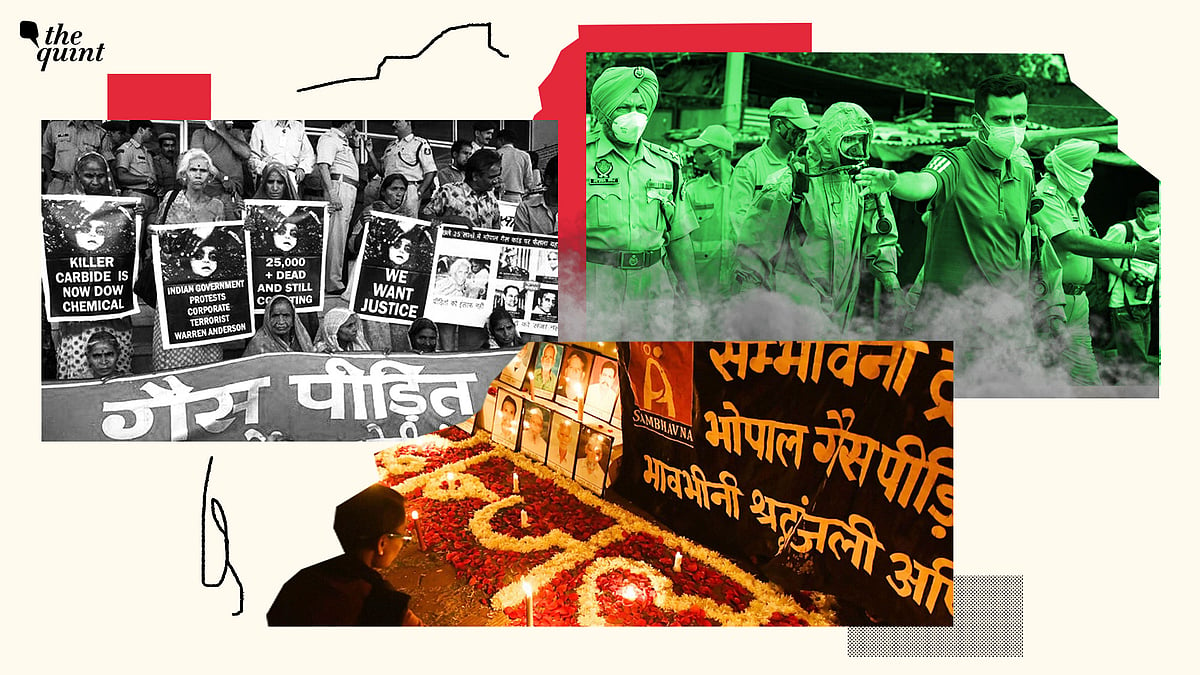
Bhopal, 1984. Jaipur, 2009. Bhilai, 2014. Vizag, 2020. Ennore, 2023. Each disaster has its own location and cause, but each ends the same way: a committee is formed, an FIR is filed, ministers express sorrow, and inspections are promised. Then the news moves on. Then it happens again.
The Architecture of Impunity
After every such incident, the first question asked is whether the law is strong enough. The Vizag gas leak of 2020 renewed public attention to industrial safety at a time when Parliament was already considering the Occupational Safety, Health and Working Conditions Code, 2020—merging 13 older labour laws, including the Factories Act of 1948, into one.
The intention was good. The new code required safety committees with worker representation and envisioned national safety standards. On paper, it looked like progress.
First, the change in the role of the inspector. Under the new code, inspectors became "inspector-cum-facilitators." The reasoning had some merit—Inspector Raj was real, and officials sometimes misused their powers to delay businesses or extract informal payments. But the solution went too far. Inspections became randomised and web-based, and companies were allowed to self-certify compliance.
The Tiruvallur case shows what this means in practice: an earlier inspection had already found that the Peter & Paul plant lacked a proper alarm system and fire hydrants—the most basic safety infrastructure imaginable. The inspection spotted the problem. But the system had no teeth to force the company to fix it. In the gap between finding and fixing, 18 people died.
Second, the code's reliance on third-party audits. The idea is that independent auditors can assess safety faster than government officials. But can an auditor truly be independent when the company being audited is also paying the bill?
Third, and most damaging, decision was to decriminalise many safety violations. Companies that fail to follow safety rules now face civil fines rather than criminal prosecution. The intention was to encourage voluntary compliance.
In practice, companies treat safety fines as a routine business cost—like electricity or rent—not as something that could send a director to prison. The Peter & Paul plant already had a case pending for safety violations before the leak. The law, as it stood, gave the company little reason to worry.
The Case For Reform
It is fair to acknowledge that these reforms were not baseless. India's ease of doing business improvements have attracted investment and created jobs. Overregulation has its own costs, and those costs also fall on workers—by suppressing formal employment and pushing activity into the unorganised sector where protections are even weaker.
More importantly, we must be honest about who bears the cost when safety is treated as optional. It is almost never the owners or managers. It is migrant workers, far from home, in the most vulnerable employment situations, with the least power to complain and the highest exposure to risk. When ease of doing business becomes ease of negligence, it is always the same people who pay with their lives.
Building A Safety Culture
The problem runs deeper than any single law. Japan's industrial safety record is strong not just because of its regulations, but because of the philosophy behind them. "Safety first" is not a poster on a wall; it is a principle that shapes every decision, and workers have genuine protection to raise concerns without fear of losing their jobs.
India's approach remains reactive. Safety is a box to tick, or at worst, a fine to absorb. Contract workers—the most exposed to danger—have the least ability to raise alarms, because their employment is also the most precarious. There is no meaningful whistleblower protection for workers who report hazards, and no reward for identifying risks before they become disasters.
Criminal liability must also be restored for safety failures that kill workers—not for paperwork errors, but for the deliberate neglect of known dangers. When an inspection finds a plant with no alarm and no fire hydrant, and that plant later kills workers in a gas leak, someone must be held criminally accountable. Right now, they are not.
Ammonia is not the villain here. It is used safely across the world every day. It does not kill on its own. What killed the 18 workers was a system that found hazards and left them unfixed, that replaced enforcement with paperwork, and that made negligence cheaper than responsibility. Ammonia did not fail those workers. Regulatory failure did.
(The author has eight years of professional experience in the Central Industrial Security Force (CISF) and the Food Corporation of India (FCI). He is an educator and writes on governance, public policy, industrial safety and administrative reforms.This is an opinion piece and the views expressed are the author’s own. The Quint neither endorses nor is responsible for them.)
- Access to all paywalled content on site
- Ad-free experience across The Quint
- Early previews of our Special Projects
Published: undefined