
The Shilpa Shinde Controversy is Bigger Than Truth vs Falsehood Narratives
Focusing on individual blame risks ignoring institutional failures incentivising public spectacle over due process.
advertisement
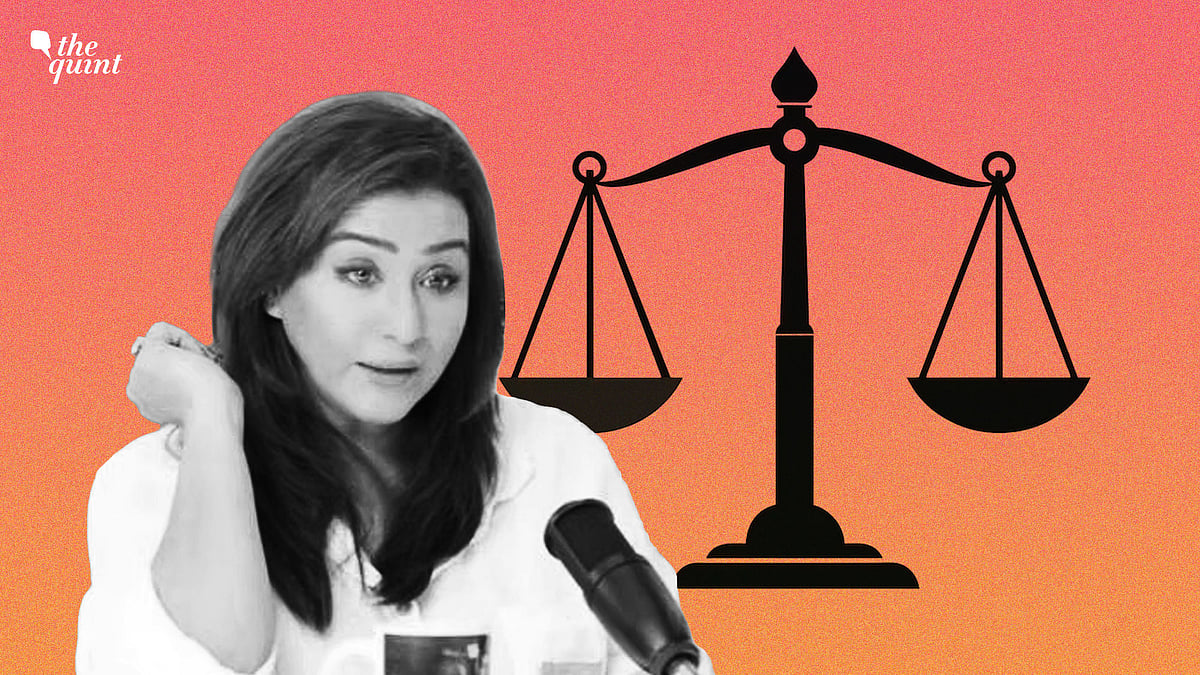
Last week, television actor Shilpa Shinde said on a podcast that the sexual harassment allegations she made against producer Sanjay Kohli between 2016 and 2017 were, in fact, false. By her own admission, she had resorted to making the allegations in order to address a contractual dispute with the producers of Bhabiji Ghar Par Hain!, a show where she, until then, had been playing the titular character.
“I had filed a sexual harassment case against my producer because I had no other option…The police directly tell you that if you want an FIR registered, you have to write serious allegations,” she said.
Outrage is Easy, the Answers are Not
All of these debates are valid conversations, but they are also, in many ways, the easiest ones to have. They focus on assigning blame after the fact rather than asking what conditions made this possible in the first place. And in doing so, they tell us how to react to this incident, but not how to prevent the next one.
What we really need to be asking is, what kind of workplace ecosystem leaves someone believing that they had “no other option” and that only a grave allegation could compel the system to act?
To be clear, if someone knowingly makes a false accusation of sexual harassment, that is a serious act with very real consequences. It can damage reputations, derail lives, and make already difficult conversations about workplace abuse even more fraught. Nothing about broken institutions erases individual responsibility. Especially so, because false allegations, as we very well know, are routinely weaponised to cast suspicion on genuine survivors because of our collective tendency to misuse anecdotes as statistics.
But acknowledging accountability and examining incentives are not mutually exclusive. In fact, failing to do the latter risks missing the deeper story entirely. We understand this principle in almost every other context. When a healthcare system is inaccessible, people turn to quacks. When legal systems move too slowly, vigilantism gains appeal. When bureaucracies become impossible to navigate, people find shortcuts that may be unethical or even illegal.
These responses may not be justified, of course, but they continue to exist because bad systems distort incentives.
Individual Blame vs Systemic Failures
The entertainment industry has long been criticised for opaque power structures, informal hierarchies, and uneven mechanisms for resolving disputes. Careers often depend on reputation, relationships, and access to influential decision-makers. In such an environment, workers can come to believe that ordinary grievances barely register, while public scandals force action. A contractual dispute may languish for months, but an allegation that dominates headlines compels employers, police, industry bodies, and the public to pay attention almost overnight. Whether or not that perception is accurate, it is a dangerous one for any workplace culture to foster.
If people come to believe that institutional channels are ineffective and that only reputational catastrophe can produce accountability, then the failure is larger than any one individual. The most troubling possibility raised by this episode is not simply that someone may have made a false allegation, but that public spectacle has become a more effective currency than institutional redress.
When systems fail to distinguish between contractual disputes, workplace conflicts, and allegations of abuse, they inadvertently create incentives to frame every grievance in the language most likely to command headlines. That is unhealthy for everyone involved. It trivialises genuine harm, escalates conflicts that might otherwise be resolved differently, and erodes trust in mechanisms designed to protect workers.
When Shinde first made her allegations, many were eager to reach certainty. Now that she has said they were false, many have reached an entirely different certainty that this proves women routinely fabricate sexual harassment complaints or that movements like #MeToo have gone too far.
Neither conclusion holds.
The True or False Dilemma
One alleged false complaint demonstrates that false complaints can exist. It does not establish that they are common, any more than a wrongful conviction proves that most convictions are wrongful. Yet, our collective instinct is to seize upon vivid anecdotes and transform them into sweeping narratives that confirm our existing beliefs.
We are uncomfortable with ambiguity. Every controversy must produce a hero and a villain, every allegation must either validate or invalidate an entire social movement, and every confession must become ammunition in an ideological battle. But justice rarely operates in absolutes.
That is why the current calls for accountability should not stop with demands for action against one person.
If industry associations are rightly concerned about preserving trust in workplace grievance mechanisms, they should also ask whether those mechanisms are robust enough to prevent disputes from escalating into public crises in the first place. Do workers believe they have credible avenues to resolve contractual conflicts? Do they trust that complaints of harassment will be investigated fairly? Are there systems that distinguish between different kinds of workplace disputes before reputations become collateral damage?
Those questions are less sensational than celebrity controversies, but they are ultimately far more consequential.
And if we reduce the Shilpa Shinde controversy to another round of arguments about whether women lie or men are unfairly accused, we’ll have learned very little from this episode.
(DevRupa Rakshit is a queer, autistic individual, ARTivist and independent multimedia journalist based in Bengaluru. This is an opinion piece and the views expressed above are the author’s own. The Quint neither endorses nor is responsible for the same.)
- Access to all paywalled content on site
- Ad-free experience across The Quint
- Early previews of our Special Projects
Published: undefined