
Russia-Ukraine Peace Talks: India's Diplomatic Access Isn't the Same as Leverage
Zelenskyy’s call to Modi shows India’s engagement is being noticed, but the test is turning access into influence.
advertisement
After a two-day session, the trilateral Russia-Ukraine-US talks concluded in Abu Dhabi on 11 November that saw no breakthroughs.
This is the first such meeting since February when the earlier diplomatic process stalled following the outbreak of the Iran war. The American side is represented by President Donald Trump's two principal negotiators—Steve Witkoff and Jared Kushner.
The talks were aimed not merely at securing a ceasefire, but at addressing the larger questions of post-war security arrangements, de-escalation, and the future of European security. However, Russia and Ukraine agreed to a major prisoner exchange and work out their numbers.
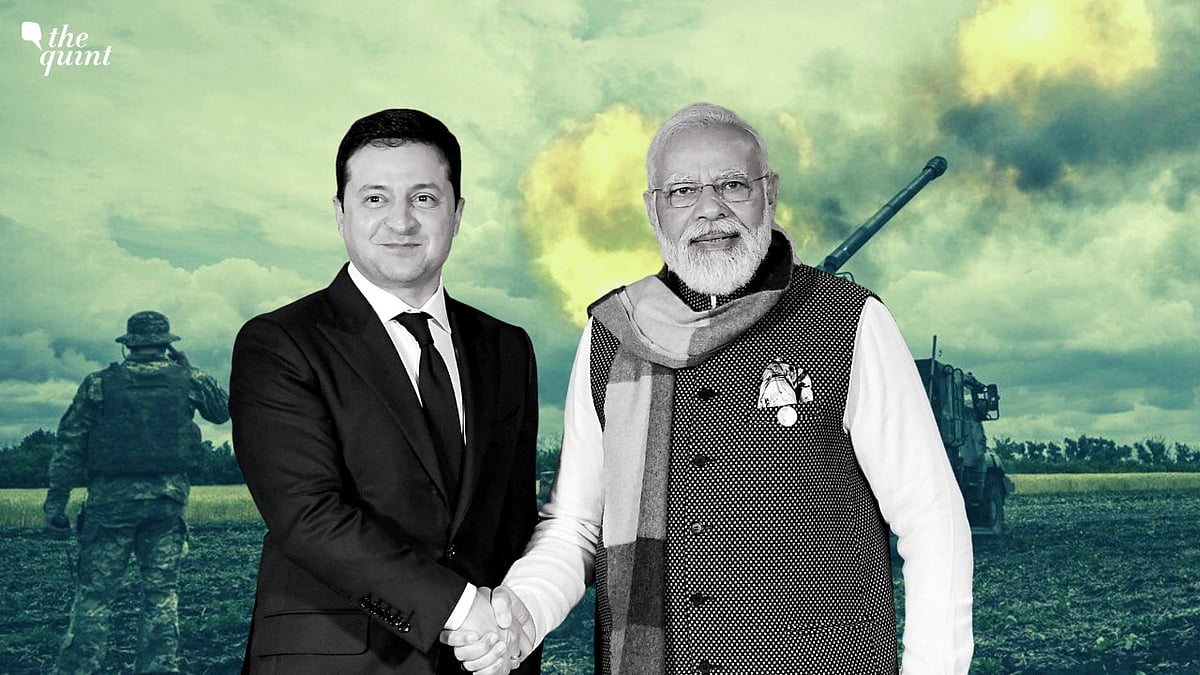
Just a day before the talks, on 9 November, Monday, Ukrainian President Volodymyr Zelenskyy called Prime Minister Narendra Modi and briefed him on the forthcoming discussions and developments in the conflict. Modi reiterated India's commitment to dialogue and diplomacy—and expressed its readiness to contribute to peaceful efforts. External Affairs Minister S Jaishankar also spoke to his Russian counterpart Sergey Lavrov.
But India is acutely aware that it has limited leverage and is, therefore, focusing on practical issues, ranging from securing the safety of commercial shipping in the Black Sea to using its political capital with Vladimir Putin to encourage de-escalation.
Trump's Strategic Positioning
On 12 November, Thursday, Witkoff and Kushner plan to travel to Moscow to meet Putin and thereafter to Dublin to speak to Zelenskyy. The American effort reflects a recognition that the Ukraine-Russia conflict cannot be settled merely through a ceasefire.
It involves the much larger question of the security arrangements for Europe and the place of Russia in them. The American proposal to discuss a wider European security architecture is significant, though it is also causing unease among European countries which do not want their security concerns negotiated over their heads.
But the electoral setback has weakened his political position and will make the pursuit of his domestic agenda more difficult. A diplomatic breakthrough in Ukraine would, therefore, be a significant foreign-policy achievement for him before the new political balance takes effect.
Ukraine and Russia remain far apart. To start with, Ukraine wants a ceasefire as the starting point of negotiations, while the Russians are looking for a comprehensive settlement on their terms. Russia insists that Ukraine surrender the regions of Donetsk, Luhansk, Kherson and Zaporizhzhia, including territories it does not fully control.
It controls most of Luhansk and substantial parts of the other regions, but Ukraine continues to hold important territory, particularly in Donetsk, where it has constructed extensive defensive positions.
Ukraine rejects the notion of ceding any territory and continues to demand the return of Crimea, which Russia annexed in 2014. As for the US, statements by Trump and his negotiators suggest that some form of territorial compromise may be necessary to get Moscow to agree to peace.
Diplomacy Amid Military Tensions
The European Union and its principal members oppose forcing Ukraine into unfavourable terms. They are also concerned that a settlement which rewards Russian military aggression could create a dangerous precedent for European security.
The US is aware that having supported the North Atlantic Treaty Organisation (NATO)'s eastward expansion, there is a need to address the larger security concerns of Russia as well as those of Europe. This does not mean accepting Moscow's right to dictate the security choices of its neighbours.
But any durable settlement will have to take account of the security architecture that has emerged in Europe since the end of the Cold War. At the same time, Washington is increasingly disinclined to play the kind of central role it has traditionally occupied as the principal military and political pillar of NATO.
Another factor preventing an agreement is that the military situation remains largely stalemated. Russia is finding it extremely difficult to make significant advances on the ground. It continues its long-range missile and drone attacks on Ukrainian infrastructure, while Ukraine has demonstrated an increasing ability to strike Russian targets deep inside the country, including oil installations and other elements of its energy infrastructure.
Neither side appears capable of imposing a decisive military outcome. This should create an incentive for negotiations, but it does not necessarily mean that either is ready to compromise.
India's Balancing Act
So where does India stand in all this? Clearly, it no longer sees itself as a country that can simply avoid taking a position while continuing its traditional engagement with Russia.
After telling Putin that this was not an era of war, Modi shifted gears in September and urged him to move from an "endless war" to an "end of war." India has also moved beyond making general statements about dialogue and diplomacy—and is now engaging both Moscow and Kyiv on specific proposals.
New Delhi is aware of Russia's geopolitical support, its dependence on Russian-origin military equipment, and the continuing cooperation in the nuclear and space sectors. But the central strategic concern is that Russia should not become excessively dependent on China.
India's efforts to balance its ties with Ukraine are a relatively underappreciated development. Its relationship with Kyiv has never been confined to the present war.
There are opportunities in pharmaceuticals, agriculture, engineering, industrial cooperation, technology, and the eventual reconstruction of Ukraine. The country also has considerable scientific and industrial capabilities which could be useful to India.
Attempts at Diplomacy
Modi's August 2024 visit to Kyiv was important because it demonstrated that India was willing to engage Ukraine independently of its relationship with Moscow. It was the first visit by an Indian Prime Minister to Ukraine since diplomatic relations were established in 1992.
More recently, Jaishankar disclosed that India had moved beyond general advocacy for peace—and was having conversations with both Moscow and Kyiv.
India is not seeking to become a formal mediator in the conflict, nor does it have the leverage to impose a settlement on either side. It was not represented at the Abu Dhabi trilateral talks. Its influence is being exercised through parallel bilateral channels with Moscow and Kyiv. This may be a more realistic approach, given the sensitivities involved and the fact that neither side is ready to make major concessions.
For India, the larger challenge is to maintain a difficult balance. It cannot afford to alienate Russia, whose strategic support and defence cooperation remain important, but neither can it allow its relationship with Moscow to come at the expense of its ties with Ukraine and Europe. Nor can it ignore the implications of a Russia increasingly dependent on China.
India's interest lies in an early end to the war, but one that produces a sustainable European security arrangement rather than a temporary cessation of hostilities. New Delhi may not have the leverage to shape the final settlement, but it has sufficient diplomatic capital with both sides to contribute to practical steps towards peace. Its ambition should be to translate that access into influence, without overstating its capacity to mediate.
(Manoj Joshi is a Distinguished Fellow, Observer Research Foundation, New Delhi. This is an opinion piece and the views expressed above are the author’s own. The Quint neither endorses nor is responsible for the same.)
- Access to all paywalled content on site
- Ad-free experience across The Quint
- Early previews of our Special Projects
Published: undefined