
Modi’s ‘Power to Empower’ Pitch: Does the World Buy India’s Idealism?
India’s real soft power is its constitutional democracy, not ancient virtue. Does the world buy Modi’s rhetoric?
advertisement
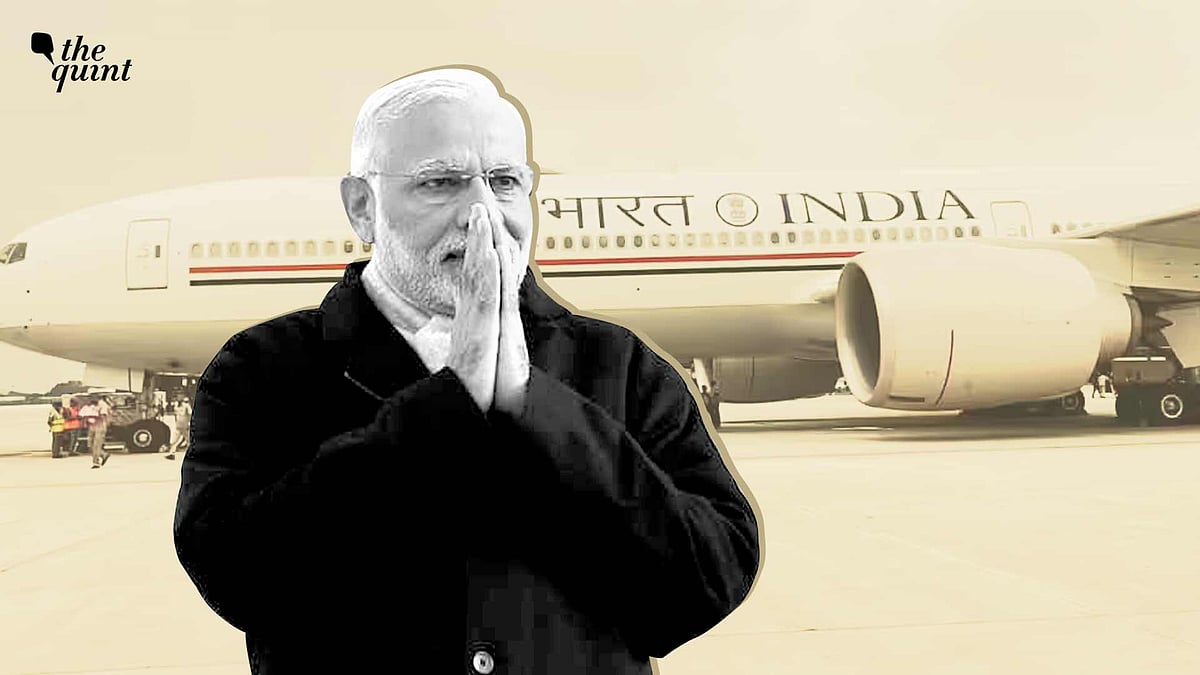
On 13 October, Prime Minister Narendra Modi addressed the Bloomberg New Economy Forum. The event was held in India for the first time. It brought together, in Modi’s words, “some of the finest minds in the world.”
The themes of the discussions extended across, as Modi described, “economy, technology, energy, and global affairs.” The Prime Minister spoke eloquently on what, according to him, was India’s tradition and outlook towards the world.
Its underlying message was that Indian civilisation has always considered not only its welfare, but that of the world.
A Civilisation’s Self-image
Indians are not the only people who consider that Indian culture makes them morally superior to others. History is replete with examples of groups who have thought that they are special, if not unique.
For some, it lies in making them more moral and spiritual, for others it lies in other characteristics. Thus, the Jewish tradition holds that they are God’s chosen people who gave them what they consider as the ‘Promised Land’ forever—even when they had no presence in it for more than a millennia. For the Americans in the 19th century, it was expressed in the belief of their ‘Manifest Destiny.’ That led them to virtually undertake ethnic cleansing of the continent’s native populations as they relentlessly expanded the territories of the United States from the Atlantic to the Pacific.
Indeed, the entire philosophy of colonialism rested on the ‘altruistic’ principle that it was civilising ‘lesser breeds without the law.’ This, while colonial powers were committing acts which would today be classified as crimes against humanity. The fact is also that the entire colonial enterprise was based on ruthless economic exploitation for the betterment of the colonial powers.
The spread of greater awareness after the Second World War brought home the fact that within the homo sapiens, no group has any inherent superiority. That it is an environment which leads to differences and shapes cultures and modes of thinking. And, if there is one characteristic which is common to all homo sapiens, it is the pursuit of their interests.
This is so even when it is so done by seeking to reconcile it with that of others so that a group’s self-interest becomes more secure. Thus, preachy morality is offensive to many peoples and countries, even if they do not show their irritation.
Power to Empower
These are the truths of inter-group or inter-state conduct. Modi’s assertions at the Bloomberg event should be evaluated against them. Modi’s claims can be summarised thus.
India is the mother of democracy. He has persisted in asserting this proposition since India assumed the G20 presidency in 2022-23, but is it historically correct?
The consideration that ideas of democratic polities first emerged in Greece, which is considered as the cradle of Western civilisation, stands on an entirely different footing. Should India seek to challenge such thinking? Will it benefit the country in any way?
Modi proposed a new idea on Power. As he put it, “Power to Empower. Beyond Power to Control lies Power to Enable. Beyond Power to Compete lies Power to Collaborate. Beyond Power to Succeed lies Power to Help Others Succeed. And, therefore, the vision with which I have come here today is: Power to Empower.”
He linked this soaring vision with India’s ancient tradition “Vidya Vivadaya Dhanam Madaya, Shaktih Paresham Paripidanaya; Khalasya Sadhoh Viparitam Etat, Jnanaya Danaya Cha Rakshanaya.” Its essence is that whoever possesses knowledge, wealth, or power, what matters is how they use it. In other words, the true value of power lies in its purpose. And it is very important to understand this philosophy in today’s world.
All this idealism is fine but does the world really buy it? Or does it consider that India is relentless in the pursuit of its interests despite all its talk of idealism? Yes, at one time India was considered as a strange land which was quintessentially spiritual but that was also enmeshed with the view that it was backward and superstitious and full of elephants and snake-charmers.
It was the aim of those who led India in the early years after independence to dispel such notions. They focussed on modern knowledge, and if they pushed global idealism, it was because that was needed to give this country space during the Cold War.
Even then, many countries found Indian preachiness grating and irritating for they knew that India’s desire, for instance, of leadership of the developing world was a part of the pursuit of its interests. Today, does the world look upon Modi’s idealism any differently?
True Soft Power
India has made great economic progress to become among the world’s six leading economies with a large and growing market which is attracting many advanced countries as well as those of the Global South. They may pay lip service to India’s soft power but it is really never beyond that. Every member of the country’s political and strategic class should know this.
Soft power attracts to a limited extent but what actually does so within it? Not all statements about India’s ancient glory—and there is much within it which can legitimately give Indians pride just as there is much among its traditions that is deeply troubling for a sensitive Indian mind—can ever compete with what India was seeking to achieve through its democratic constitution.
The world witnessed with fascination what India was attempting to attain under its constitutional democracy. The Constitution was and continues to be an instrument of giving dignity and equality and safeguarding the rights of all citizens.
What is needed is for India to clearly articulate that it will pursue its interests but in doing so, it is aware of the need to reconcile these with others for the planet faces grave issues which are impacting the future of humankind.
(The writer is a former Secretary [West], Ministry of External Affairs. He can be reached @VivekKatju. This is an opinion piece and the views expressed are the author's own. The Quint does not endorse or is responsible for them.)
- Access to all paywalled content on site
- Ad-free experience across The Quint
- Early previews of our Special Projects
Published: undefined