Parallels of Voter Suppression in India and the US Should Alarm Us Into Action
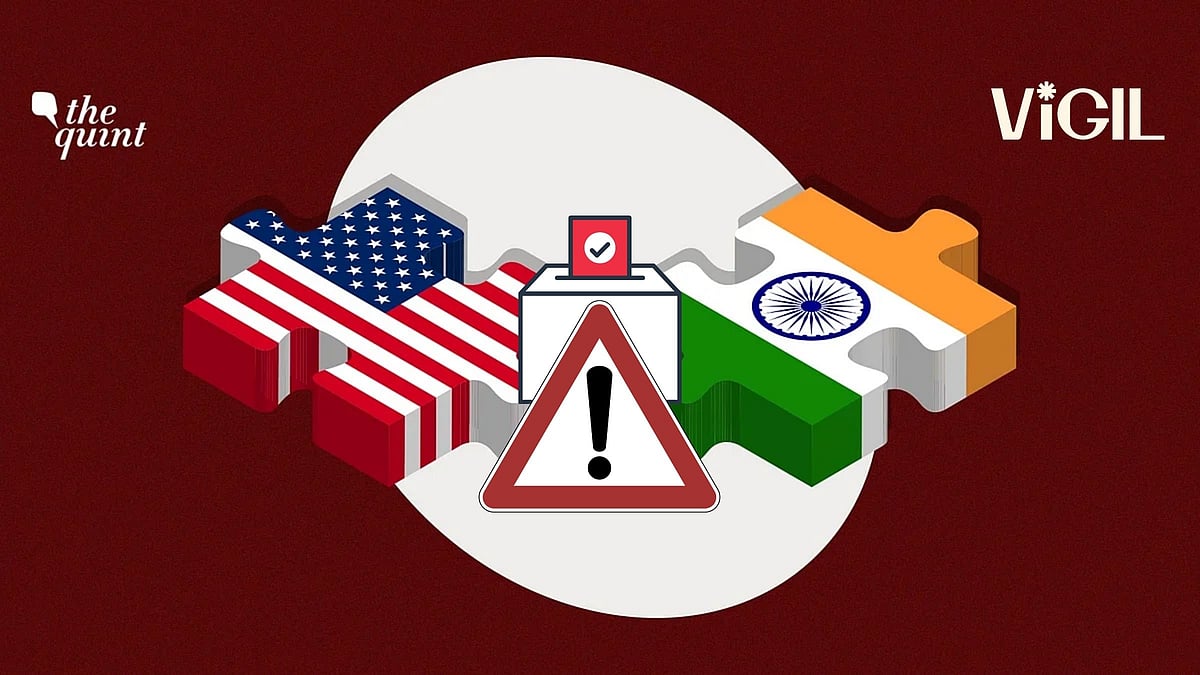
In both republics, authoritarian forces are undoing the countries' democratic foundations, writes Ria Chakrabarty.
advertisement
In 2012, I voted for the first time. My home state, Texas, had just introduced a voter ID law that required voters to present a driver's license, passport, or other government-issued ID, along with their voter registration card, at the polling booth.
Although I went to a public university and you need multiple forms of ID to obtain your student ID card, the state of Texas did not consider a student ID a valid form of identification. Many of my classmates, confused about the rules, sat out that election. For me, this was a relatively painless process, but even though I was a voter of color and a student, I was not the primary target of this ID law. Nor was I the target of the subsequent attempts by the state of Texas to restrict Texans’ access to the ballot box.
During the pandemic, Attorney General Ken Paxton tried to get hundreds of thousands of votes in Texas' Harris County thrown out because of the county’s drive-through voting system. In the next legislative session, the legislature added new restrictions to the vote-by-mail process.
Throughout my life, I have heard the same refrain from the supporters of voter suppression: the United States of America is a republic, not a democracy. Of course, these supporters seemed to have missed the first day of civics class, where the teacher would explain how voters choose their representatives in the US, a democratic republic. But that was never really the point. Instead, the idea of an American voter has been under debate since 1776.
The current debate in the US about the SAVE Act, then, is nothing new. This bill, in its many iterations, expands the restrictions that states like Texas have put into place. But the most recent version, the SAVE America Act, goes further by requiring all states to hand over their voter rolls to the Department of Homeland Security, which would evaluate who on the rolls are citizens. Currently, states maintain their own dynamic voter rolls as citizens turn 18, die, move, or get married. The rolls would become static, and inherently, millions of people would be left out of the election process. Organizations like the Brennan Center for Justice have conducted deep dives into the potential impacts of these bills on Americans.
In parallel, in my family’s home state of West Bengal, another exercise in voter suppression unfolded. During the SIR in West Bengal, the ECI has struck more than 9 million voters from the voter rolls. The ECI has used Islamophobic stereotypes, like large families and repeated names, to filter out supposed illegitimate voters. They created a new category of 2.7 million doubtful voters whose positions could be adjudicated. But only 136 people were able to get their names restored successfully. In the end, Muslims, the poor, and the marginalized were disproportionately stripped from the voter rolls. Before the elections, hundreds of thousands of Central Armed Police Forces officers were deployed to West Bengal. They will stay for two months.
Sitting in the US, as I see the images of more than 2,000 people in military fatigues strategizing how to “maintain peace” during elections in an opposition-led state, I worry about what path the world’s two largest democracies will take.
The US is accelerating denaturalization processes. The US Supreme Court said that speaking Spanish can be considered a reasonable basis to suspect that someone is eligible for deportation. ICE has arrested several US citizens. And in India, Muslims and Bengali-speaking migrant laborers have been pushed into Bangladesh, regardless of their citizenship. Every day, the most powerful men in India make speeches to remind India’s 200 million Muslims that their leaders think their citizenship is conditional.
After 250 years, lawmakers in the US are finally considering a Constitutional amendment to enshrine the right to vote. Perhaps Indian politicians should do the same. After all, the Supreme Court of India held that the right to vote is not a fundamental right enshrined in the Constitution. While that may be true, legally, perhaps that should change. The right to vote is fundamental to upholding a democracy. Everything else flows from this right.
Whatever the results on May 4, Indian democracy will have suffered a massive defeat. These elections were neither free nor fair. The elections in UP will be another test for the resilience of voting.
Just this past week, the US Supreme Court struck down a provision in the Voting Rights Act of 1965 that guaranteed representation for minority communities. It was the death knell for a bill that guaranteed a full American democracy for the first time in almost 200 years. In India, Prime Minister Narendra Modi is pushing a delimitation exercise that could potentially dilute the voices of Muslims and other minorities across the country. While the exercise is supposed to reflect India's population changes today, the government could likely redraw constituencies to dilute the voices of people who do not support the BJP.
Indians should learn from the mistakes of American politicians and take this fight on now. India has an advantage already. Unlike the US, India has always treated its citizens as equal under the law. Ambedkar’s constitution treats every Indian equally, regardless of color, caste, creed, class, or gender. The US’s constitution had to be amended to count Black people as full human beings, and even then, the 14th Amendment has been contested by the very people who insist that the US isn’t really a democracy. The Voting Rights Act, which was supposed to guarantee the vote for minorities, is dead.