
Canada Relents on India-Nijjar Links, but Diplomatic Vindication is Not Closure
India's credibility depends on demonstrating that any rogue actors who misused state authority are held accountable.
advertisement
India has scored an unambiguous diplomatic victory in the case relating to the assassination of pro-Khalistan activist Hardeep Singh Nijjar in Canada in 2023.
Recall that in September 2023, the then Canadian Prime Minister Justin Trudeau told the Canadian Parliament that his government was pursuing “credible allegations” relating to the Indian government’s links in the killing. He went on to add that he had personally conveyed his government’s concerns with Prime Minister Narendra Modi at the sidelines of the G-20 summit—and said he had raised this with the then UK Prime Minister Rishi Sunak and US President Joe Biden.
Playing Hard Ball
Operation Hard Ball, as the US Department of Justice has termed it, followed years of investigations into the crime groups engaged in racketeering, targeted killings, extortion, and trafficking bulk quantities of narcotics. Among those indicted is Lawrence Bishnoi, who is in a prison in India, and his lieutenants spread across the world—Satinderjeet Singh, aka Goldy Brar, Rohit Godara, and Sukhraj Singh Kang.
A file photo of Lawrence Bishnoi.
(Photo: Altered by The Quint)
Lisa Moreland, a Deputy Commissioner of the RCMP, said the investigation was still active, and, “there is no evidence to suggest that, through this organised crime syndicate investigation and charges laid forward, that Indian government officials would be charged or involved in this… Nothing has come out to link the Indian government.” She went on to add that the Indian government had been cooperating with the investigation.
India had rejected Trudeau’s allegations immediately in 2023, terming them “absurd and motivated”. They had added,
New Delhi, which had designated Nijjar as a terrorist, felt that such allegations were aimed at shifting the focus from Khalistani groups operating freely in Canada.
What is strange and irresponsible was the manner in which Trudeau retailed the very serious charges without offering a shred of evidence. Many speculated that the Trudeau government approach was an outcome of the fact that it had been propped up by the National Democratic Party of the pro-Khalistan leader Jagmeet Singh.
Not surprisingly, diplomatic relations between India and Canada nose-dived thereafter with both countries expelling each other’s diplomats, India suspending all visa services for Canadian nationals, and both countries issuing travel advisories about visiting the other.
For India, the Nijjar case was not the only instance of irresponsible Canadian misconduct. Back in 1985, an Air India aircraft flying from Toronto to New Delhi was bombed by Khalistani terrorists over the Irish Sea killing 329 persons, most of them Canadian citizens. The Canadian government messed up the investigation enabling those guilty linked to the Babbar Khalsa International (BKI) to get away. That they eventually got their just deserts is another story.
In this case, too, the Indian government was upset because Nijjar was no innocent. He was a leader linked to the BKI and was wanted for crimes in India from which he had escaped in 1997. He had since been associated with anti-Indian activity and his name had figured in a list of wanted persons in India given to the then visiting Prime Minister of Canada Justin Trudeau in 2018.
Accountability Remains Amiss
The vindication now, however welcome, does not mean closure. There are three issues to consider from the fallout of Operation Hard Ball.
First, the indictment complicates rather than resolves the question of accountability. Bishnoi remains in Indian custody, and the US has signalled it will seek his extradition—a demand New Delhi is unlikely to entertain given his utility as a cooperating witness in Indian cases.
Second, the RCMP's climbdown is not just a bureaucratic footnote. Deputy Commissioner Moreland's statement effectively retracts, without quite admitting to retracting, Trudeau's September 2023 Parliament intervention. That the walk-back has come via a police press conference rather than a ministerial statement in the House of Commons tells its own story about how governments manage the political cost of having been wrong.
Since Carney had taken the path of reconciliation, he probably felt that it would be better to let the RCMP do the talking rather than stage a formal apology that would reopen a chapter his government would prefer stayed closed.
Third, and more structurally, the episode should prompt some humility in the Five Eyes intelligence-sharing habit of treating unverified allegations as diplomatically actionable the moment a partner government voices them. In this case, when Trudeau had made his allegations, the White House had issued a statement expressing “deep concern” and had called on India to cooperate with Canada.
Pannun Case Still Looms
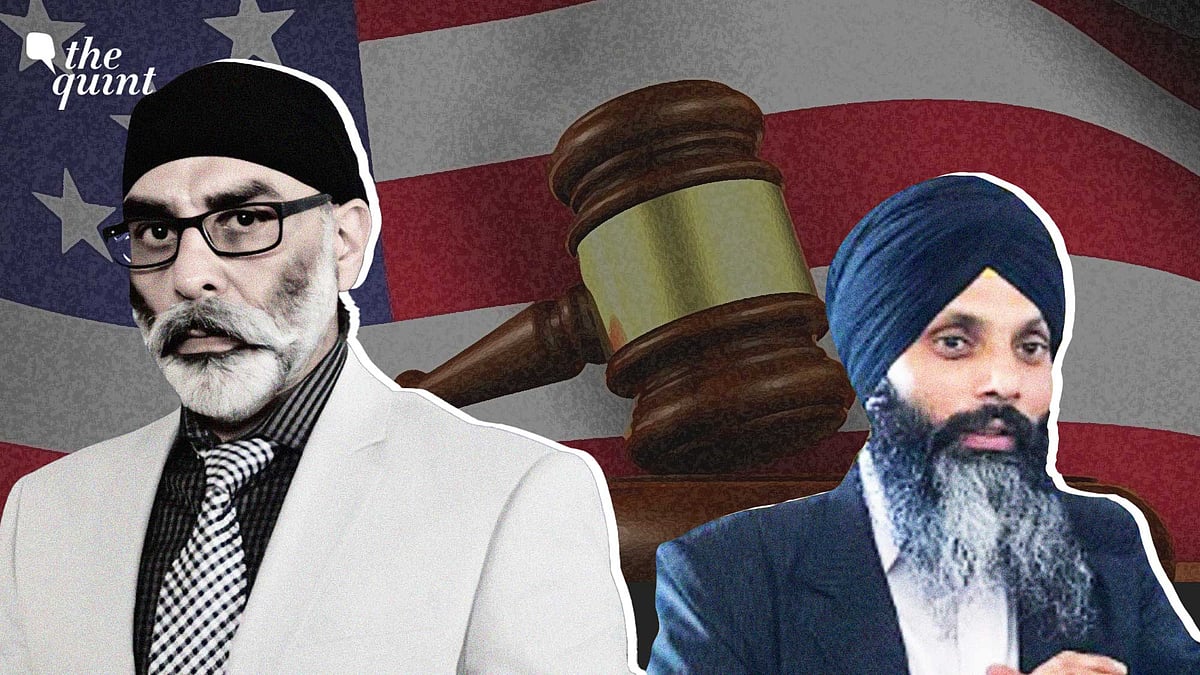
New Delhi needs to remember there is another case in the US relating to Khalistani supporters—the attempt to murder Gurpatwant Singh Pannun, also a designated terrorist by India.
Evidence of a Government of India link in this case seems to be more solid than in the Nijjar case. The November 2023 indictment of Nikhil Gupta, who is being tried in the case, has many references to the links between the Nijjar and Pannnun cases. While the Government of India has conveniently sacked the “Senior Field Officer” Vikash Yadav who directed the plot from India, Gupta has pleaded guilty to the charges against him. The US does not seem inclined to pursue him—and he does not figure in the Operation Hard Ball indictment.
The overlap between the Nijjar and Pannun investigations, the continuing Gupta prosecution in the US, and the murky intersection of organised crime, terrorism, and intelligence operations mean that uncomfortable questions have not quite disappeared.
India's case against Trudeau's conduct has been strengthened, yet its own credibility will ultimately depend on demonstrating that any rogue actors who misused state authority are held accountable and that its counter-terrorism policies remain firmly within the bounds of law.
For all the political satisfaction, New Delhi may derive from Operation Hard Ball, the larger lesson is that democracies ignore due process at their peril—whether by levelling allegations without evidence or by allowing covert operations to outrun political oversight.
(The writer is a Distinguished Fellow, Observer Research Foundation, New Delhi. This is an opinion piece and the views expressed are the author's own. The Quint does not endorse or is responsible for them.)
- Access to all paywalled content on site
- Ad-free experience across The Quint
- Early previews of our Special Projects
Published: undefined