
Justice Swarana's Dramatic Refusal to Recuse Herself Comes at Institutional Cost
Judiciary, as an institution, is larger than any judge, and protecting it sometimes requires humility to step aside.
advertisement
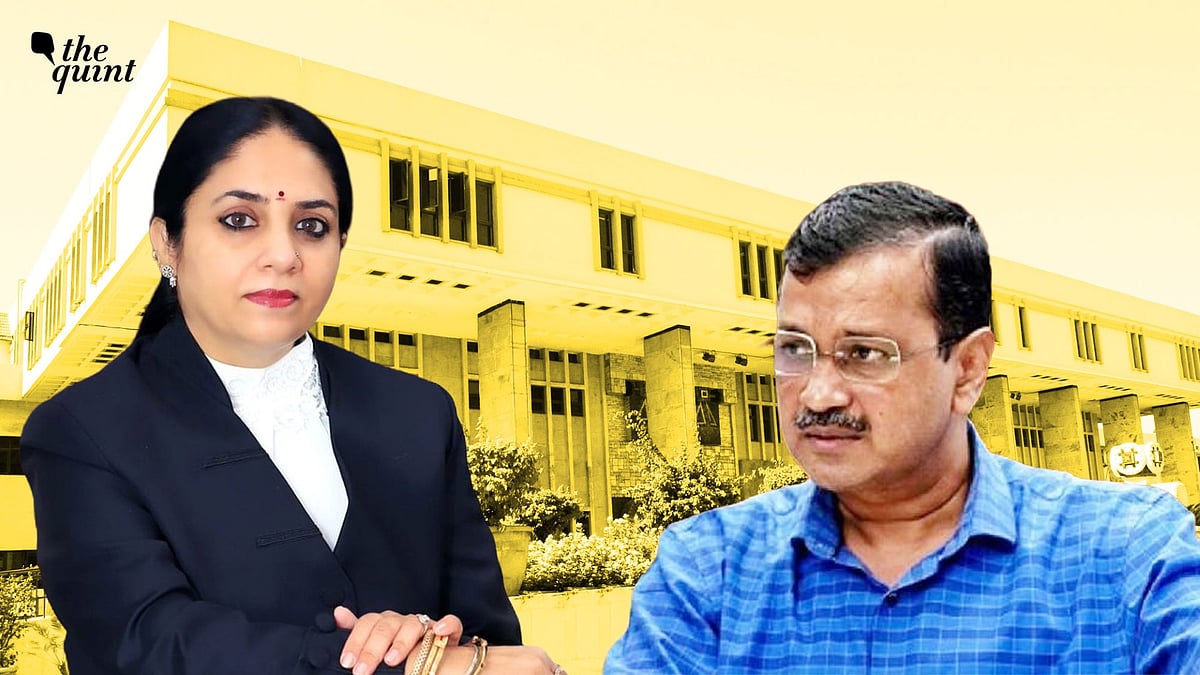
The Delhi High Court recently found itself at the centre of a judicial controversy when Justice Swarana Kanta Sharma of the Delhi High Court refused to recuse from hearing the CBI's revision petition challenging the trial court's discharge order in favour of Arvind Kejriwal and others in the alleged liquor policy scam case.
What makes this episode particularly significant is not merely the legal question of recusal, but the manner in which the court chose to confront allegations of bias, by penning an extraordinary 115-page judgment that read less like a judicial order and more like a personal manifesto defending judicial honour.
The dramatically titled judgment asked fundamental questions about the boundary between judicial determination and self-vindication.
“Justice lies not in yielding under pressure, but in doing justice objectively while enduring that pressure. This is, has been, and will remain the solemn trust, quiet strength, and unwavering resolve of this Court, i.e., to remain faithful to its oath, to not choose the easier path of recusal, but to walk the path shown by the Constitution, unhesitatingly, fearlessly, and by adjudicating without fear or favour, and state in clear terms—that I will not recuse," Justice Sharma held.
The Recusal Plea
Kejriwal's recusal application was grounded in multiple concerns, like the judge's earlier adverse observations against accused persons in bail proceedings, her attendance at events organised by the Akhil Bharatiya Adhivakta Parishad (an organisation Kejriwal claimed followed an ideology opposed to his own), and most significantly, the professional empanelment of her two children as government counsel with cases allegedly marked by the Solicitor General appearing before her.
Kejriwal argued that these circumstances collectively gave rise to a “grave, bona fide, and reasonable apprehension that the matter may not receive a hearing marked by impartiality and neutrality.”
While the legal reasoning may find support in precedent, the broader question this episode raises is whether justice was not only done but seen to be done—and whether a judge’s refusal to recuse under these particular circumstances reflects well on the institution that both the judge and the litigant claim to serve.
The Case and Trial Court Findings
The controversy goes back to the time when Delhi Excise Policy 2021-22 was in question and Kejriwal government was in process to reform liquor trade in the national capital. The policy was later withdrawn after allegations of irregularities emerged, prompting Lieutenant-Governor Vinai Kumar Saxena to order a CBI probe into the matter. What followed was a prolonged legal battle that saw senior AAP leaders like Manish Sisodia spend more than 500 days in custody and Kejriwal himself arrested during the 2024 Lok Sabha elections, remaining incarcerated for 156 days before the Supreme Court granted him bail.
The discharge order was remarkably critical of the CBI's investigation, making scathing observations against the investigating officer and recommending departmental action against him. The trial court, after examining over 40,000 pages of evidence and hearing arguments for nearly three months, concluded that the material on record was insufficient to proceed with charges—a determination that represented a complete rejection of the central agencies' narrative.
The CBI promptly filed a revision petition before the Delhi High Court challenging this discharge order. The matter was assigned to Justice Swarana Kanta Sharma, who on 9 March 2026, the very first date of hearing, without the accused or their counsel being present, issued notice and recorded that the trial court's observations were "prima facie erroneous."
The High Court also stayed the remarks against the CBI's investigating officer and directed that proceedings in the connected Enforcement Directorate (ED) matter be adjourned. It was this order, passed ex-parte and recording prima facie findings against the trial court's detailed reasoning, that became the flashpoint for Kejriwal's recusal application.
Why Recusal Was Necessary in This Case
The most troubling aspect of Justice Sharma's refusal to recuse lies in her handling of the allegation concerning her children's empanelment as government counsel. Her judgment dismisses this concern with sweeping declarations: "This Court wonders that if the test of 'apprehension bias' relates to whether the children or spouses of judges are empanelled by the Central Government, the Judge should not hear such cases, then a large part of the judiciary, from the District Courts to the highest Court, would have to recuse from hearing such matters."
Kejriwal's application pointed out that a significant number of cases had been marked to Justice Sharma's children by the Central government over three to four years. The Solicitor General of India, Tushar Mehta, who controls the allocation of work to government panel lawyers, was personally appearing before Justice Sharma in this very matter. The combination of these factors, a judge whose children receive professional benefits from the same government that is a party before her, with the allocation controlled by the very lawyer arguing the case, creates precisely the kind of situation where a reasonable observer would entertain genuine doubts about impartiality.
The fact that a particular interpretation would inconvenience the judiciary cannot be a valid reason to reject a legitimate apprehension of bias. Moreover, the judge's own acknowledgment that she has recused from cases in the past where no party even objected only highlights the inconsistency, if recusal is warranted when the judge perceives an issue even without litigant objection, why is it not warranted when a litigant raises a substantial and specific concern about government patronage flowing to the judge's family members?
The issue is not about entry into the profession but about receiving professional benefits from the very government that appears as a party before the judge. A politician's child entering politics faces no similar structural conflict and they do not adjudicate disputes involving their parent's political rivals. The analogy collapses under minimal scrutiny.
The Jurisprudence On Recusal
The jurisprudence of recusal requires judges to apply the test of the "fair-minded and informed observer," not their own subjective conviction of impartiality. Justice Sharma's 115-page judgment, written extensively in the first person with dramatic headings, suggests she applied the wrong standard—asking whether she felt biased rather than whether a reasonable observer would perceive bias.
Brief reasons accompanying a recusal order affirm that conscience guided the decision and that transparency remains the judiciary's chosen safeguard. But an exhaustive self-vindication does the opposite. It suggests a judge who took allegations personally rather than institutionally, inadvertently confirming the very apprehension the litigant raised. The peril of silence in recusal matters is real, but the greater peril is speaking too loudly in one's own defence.
Unscrupulous litigants do misuse recusal as a tactical weapon, often engaging advocates with familial ties to a judge to force withdrawal. Justice Sharma may well have perceived Kejriwal's application as such a manoeuvre, especially given that the AAP leader had already approached the Chief Justice and the Supreme Court seeking transfer. However, the proper response to a tactical recusal application is not to dig in one's heels and deliver a polemic. Judicial officers have a duty to resist specious bias claims while still taking genuine concerns seriously.
Ultimately, the moral centre of justice lies not in avoidance but in decision. Justice Sharma chose to decide rather than recuse, and that choice, considered alone, finds support in precedent. When a judge's family receives professional benefits from the very government appearing before her, and when the law officer who controls allocation of those benefits argues the case, endurance ceases to be a virtue and becomes a liability. The duty to sit is constitutionally grounded, but so is the duty to step aside when the appearance of bias becomes unavoidable. A judiciary that retreats too readily from difficult cases risks surrendering its moral authority—but a judiciary that refuses to retreat when prudence demands it risks something equally damaging: the perception that it has something to defend beyond the law.
The Institutional Cost of Refusing Recusal
Justice Sharma's judgment is replete with language that elevates personal vindication over institutional dignity. She writes of "standing up for myself and for the institution," of not "surrendering" to allegations, and of refusing to give an "Agni Pariksha" (trial by fire) at a litigant's asking.
But this framing fundamentally misunderstands the nature of recusal. Recusal is not a surrender—it is an act of institutional wisdom. When a judge steps aside, even when the allegations may be unfounded, the message sent is not that the judge has something to hide. Rather, the message is that the institution places the litigant's confidence in judicial impartiality above the ego or reputation of any individual judge.
By choosing to deliver a 115-page judgment defending herself in the first person, Justice Sharma has inadvertently confirmed the very apprehension Kejriwal raised. The judgment reads less like a dispassionate legal ruling and more like a wounded personal rebuttal. Sections titled "When I Was Asked to Recuse…" and "The End…" are not the hallmarks of judicial detachment.
The broader institutional damage is even more significant. When a high-profile litigant raises substantial concerns about judicial impartiality, and the judge responds with a manifesto-length personal defence, public confidence in the judiciary suffers.
Reasonable observers, and not just Kejriwal or his supporters, will read Justice Sharma's judgment and wonder: why did the judge feel the need to write so extensively in her own defence? Why the dramatic language about robes and oaths and trials by fire? These are not the hallmarks of a judge who approached the recusal question with the cold neutrality that the law requires.
The law on recusal has long recognised that justice must not only be done but must be seen to be done. This principle operates not for the benefit of judges but for the benefit of litigants and the public who must trust in the impartiality of the judicial process. When a judge's children receive professional benefits from the government appearing as a party before that judge, with allocation controlled by the government's senior law officer arguing the case—a reasonable apprehension of bias arises. This is not a question of actual bias; it is a question of institutional perception.
The Supreme Court has repeatedly held that recusal is not about the judge's ego but about the litigant's confidence in the system. When a judge says "I will not recuse" in a 115-page personal defence, the confidence of litigants, not just Kejriwal, but every litigant who appears before that judge in the future—inevitably suffers.
The institution of the judiciary is larger than any individual judge, and protecting that institution sometimes requires the humility to step aside. In this case, that humility was conspicuously absent—and the institution is poorer for it. Now, the main matter of discharge will be heard by the Delhi High Court, before the same bench, let witness what will happen and whether the discharge order will be upheld or set-aside.
(Areeb Uddin Ahmed is an advocate practising at the Allahabad High Court. He writes on various legal developments. This is an opinion piece and the views expressed above are the author’s own. The Quint neither endorses nor is responsible for them.)
- Access to all paywalled content on site
- Ad-free experience across The Quint
- Early previews of our Special Projects
Published: undefined