
Kejriwal’s Recusal Plea: Can Courts Restrict Access When Fairness is Challenged?
When a litigant questions a court's neutrality, the judiciary’s response must be grounded in openness, not opacity.
advertisement
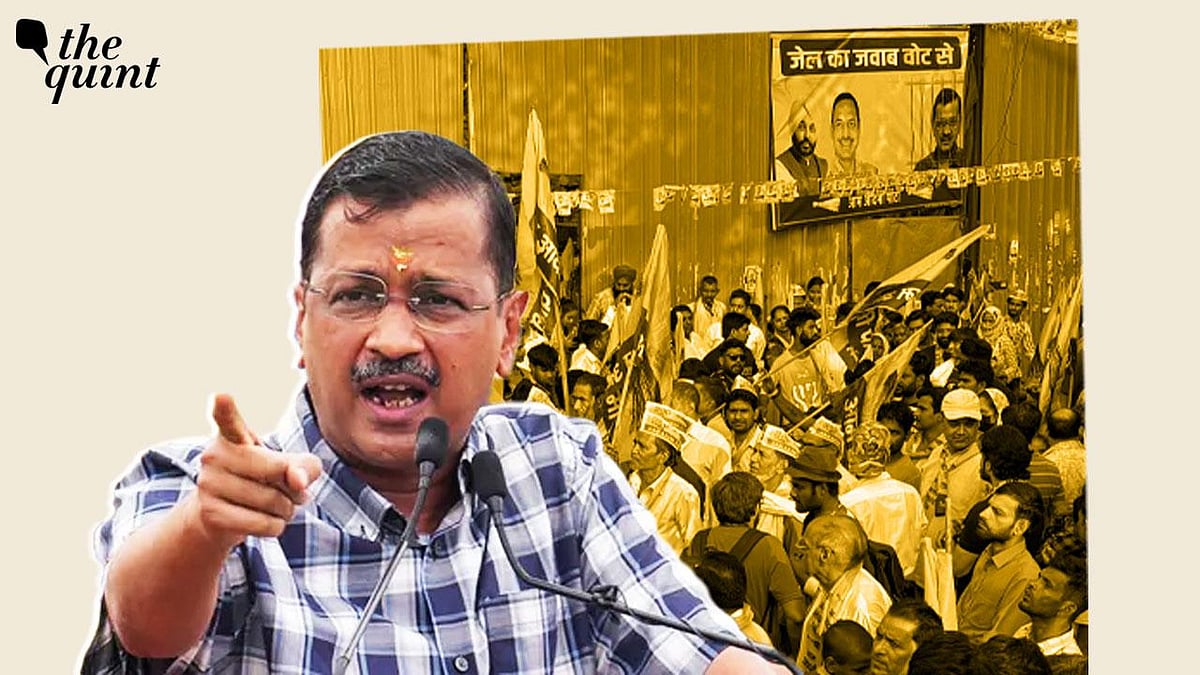
There are moments in constitutional life when a particular case begins to illuminate a larger unease. The recent proceedings before the Delhi High Court in the Delhi excise policy matter have become one such moment. What began as a hearing on the challenge to a trial court order discharging Arvind Kejriwal and others has opened into a broader question: What happens when the fairness of the forum itself is questioned, but the public’s access to that moment remains controlled by the same institution?
On the surface, this appears to be a familiar legal episode: a high-profile litigant arguing his own case, a recusal plea against the presiding judge, and fragments of courtroom proceedings circulating widely. The court’s subsequent direction to remove unauthorised videos may seem like an administrative response to maintain order.
But if we pause there, we miss the real question.
Open Justice vs Controlled Visibility
During the hearing, Kejriwal sought the recusal of Justice Swarana Kanta Sharma on the ground of a reasonable apprehension of bias. This does not mean that bias has been established. Rather, it reflects a claim that certain circumstances may give rise to a perception—among reasonable observers—that the proceedings may not appear fully impartial.
At the same time, clips of the proceedings began circulating widely online. The High Court then directed that such unauthorised videos be taken down, noting that they were not part of any officially permitted recording.
This is where the constitutional tension becomes unavoidable. Because the same legal system that restricts unauthorised recording is also constitutionally committed to open justice.
Recusal and the Question of Fairness
To understand why this moment matters, it is necessary to pause on why “recusal” matters.
Recusal simply means that a judge steps aside from a case—not because wrongdoing has been proved, but because there is a reasonable concern that the judge may not appear fully impartial.
Because courts derive their authority not only from constitutional text, but from public confidence. And that confidence depends not just on outcomes, but on whether the process itself appears fair to those who are subject to it.
Open Justice and Its Limits
Alongside recusal lies another equally important principle: open justice.
The Supreme Court of India has repeatedly affirmed that court proceedings must remain open. In Election Commission of India v MR Vijaya Bhaskar, the court held that the public has a right to know what transpires in judicial proceedings and that reporting—even through digital platforms.
Similarly, in Swapnil Tripathi, the court recognised live-streaming as a way to democratise access to justice, deepen accountability, and make courts more transparent.
On paper, then, the position is clear: justice must be visible. Yet, this commitment to openness operates within limits. Courts retain strict control over how proceedings are accessed and shared. The Delhi High Court’s live-streaming framework prohibits recording or disseminating proceedings without authorisation.
This means two things can be true at once:
The public has a constitutional right to know what happens in court.
The court controls whether, when, and how that information is made available.
The Kejriwal episode brings this contradiction into sharp focus. Because here, the issue in court was not routine. It involved a direct challenge to the perceived impartiality of the bench. At precisely that moment—when public scrutiny becomes most important—the circulation of courtroom proceedings was restricted.
Controlled Visibility and Institutional Legitimacy
The answer lies not in any one order, but in a broader pattern of how visibility is managed.
Even where live-streaming frameworks exist, access to proceedings remains selective and institutionally controlled. Recordings are not always archived or easily accessible. Courts retain the authority to exclude categories of cases, suspend streaming, or restrict dissemination.
There are legitimate reasons for this. Cases involving sexual offences, minors, national security, or witness protection demand confidentiality. But the concern arises when ordinary proceedings—especially those involving public importance—are also subject to tight control.
In such a system, transparency begins to look less like a constitutional guarantee and more like an institutional choice.
And that brings us to the real issue: legitimacy. When a litigant questions the neutrality of the court, the judiciary’s response must be grounded in openness, not opacity. The public must be able to see the process through which such concerns are addressed. Because legitimacy is not enforced—it is earned. And it is earned through visibility.
If courts restrict unofficial access, they assume a greater responsibility to ensure meaningful official access. Otherwise, the public is left with a system where informal transparency is prohibited, and formal transparency is incomplete.
The Constitutional Choice Ahead
The Indian judiciary today stands at a crossroads.
The present moment does not challenge judicial authority. It brings into focus something more fundamental: the balance between judicial control and public access.
If courts insist that only authorised channels may show their proceedings, then those channels must be robust, consistent, and accessible. Transparency cannot depend on discretion; it must operate as a principle. It would be a mistake to reduce this issue to the identity of the litigant.
The Constitution does not merely promise justice. It promises justice that can be seen, questioned, and trusted.
The question, then, is not whether courts can control the camera. It is whether, in doing so, they risk controlling the very visibility on which their legitimacy depends.
(The author is Sahil Hussain Choudhury, a lawyer and Constitutional Law Researcher based in New Delhi. The views expressed above are the authors' own. The Quint neither endorses nor is responsible for the same.)
- Access to all paywalled content on site
- Ad-free experience across The Quint
- Early previews of our Special Projects
Published: undefined