
'Pre-Approval' for Judicial Appointments? What Justice Kaul's Memoir Reveals
Justice Chandrachud has said he cannot comment in detail without reading the memoir, writes Sanjay Hegde.
advertisement
Near the end of the first Harry Potter book, the house cup hangs in the balance. The headmaster, Albus Dumbledore, rises and awards the final 10 points to Neville Longbottom. Neville is the clumsy boy who tried to stop his own friends from breaking the rules. The headmaster explains to the students in the hall, “There are all kinds of courage. It takes a great deal of bravery to stand up to our enemies, but just as much to stand up to our friends."
Justice Sanjay Kishan Kaul has now earned those 10 points. He earned them late, after he left the bench. But he earned them all the same. His memoir is called Without Fear or Favour. Its target is not strangers from without. It tells stories about friends, compatriots, and acquaintances at the bar.
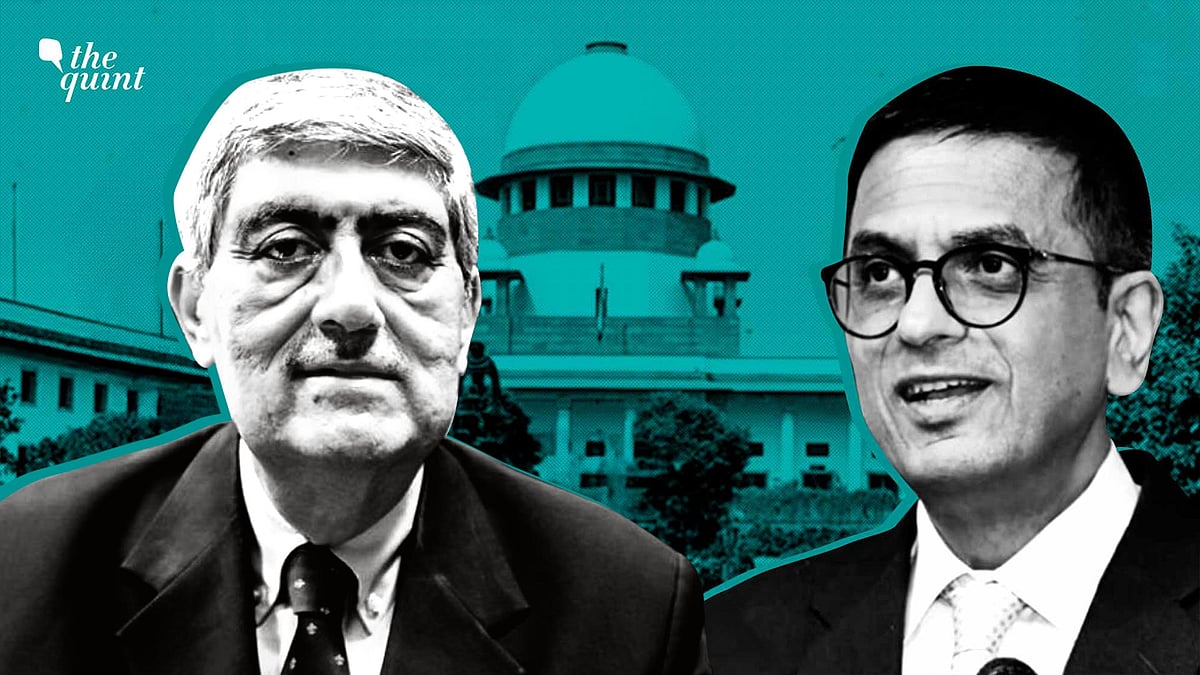
At retiring, Justice Kaul was the seniormost puisne judge under Chief Justice DY Chandrachud. He had known him for four decades and calls him "Dhan" throughout the book.
The Middle Path
Start with the scene that has drawn the headlines. The collegium met to fill six Supreme Court vacancies. Five names had been agreed on in advance. Then the Chief Justice proposed a sixth at the last minute. Kaul told him the name was unacceptable to him and would not carry with the others in the collegium either. The Chief Justice then took Kaul into a separate room and wondered aloud whether he should phone the government to check its view. Kaul told him he could not do such a thing in the middle of a collegium.
The second episode troubles me more. Kaul was hearing a challenge under the Prevention of Money Laundering Act (PMLA). Midway through the hearing, he was called to the Chief Justice's chamber, with Justice Sanjiv Khanna present. He was asked whether he really wished to go on with the case, and was urged towards caution and a middle path.
Kaul does not now recall which of the two said it. But his reply deserves a place in our legal lore. He said he had never taken the middle path on anything in his judicial career. The Solicitor General then sought time. The other judges agreed to give it. The hearing could not finish before Kaul retired.
The third episode concerns the very system that appoints judges. A matter on judicial appointments, including the transfer of four Gujarat High Court judges, was listed before Kaul for 5 December. It vanished overnight. The registrar cited an old file noting about a missing formal permission. Kaul did not buy the excuse, nor should we.
Master of the Roster
These are not mere quarrels between two senior judges. They show how the Supreme Court really works. Kaul writes that the problem lay in administrative power concentrated in the Chief Justice's office, used without adequate checks, and at times under pressures unconnected to merit.
He notes that the Supreme Court is run largely through its registry, unlike the High Courts, where judges discuss administration more widely. The master of the roster has no committee to answer to. He answers only to his conscience. When conscience seeks convenience and ignores conviction, nothing else holds.
The collegium fares little better in his telling. Until Justice UU Lalit's time, no structured system existed to place a judge's judgments before the collegium. Kaul had refused to sit in a collegium under Justice NV Ramana unless he could study them first.
Think about that. We chose judges for the highest court without reading what they wrote.
The government's own conduct emerges in sharp relief. It once asked whether more minority representation was really needed. The Chief Justice then relayed a further query: what caste had a candidate's family been before conversion. The judge was eventually appointed, when Kaul himself convened a collegium for the purpose.
Some candidates for judicial appointments, have simply withdrawn their names from consideration despite the collegium reiterating their recommended names. Saurabh Kirpal still persists by not withdrawing from the fray. Kaul accepts that Kirpal’s being openly gay is plainly a factor. He also admits that the collegium has at times informally accepted the government's blocking rather than pushing to the limit.
The Power of Contempt
Fairness demands we hear the other side. Justice Chandrachud has said he cannot comment in detail without reading the book. He recalls their collegium meetings as respectful and does not recall any recorded dissent. Kaul himself praises his friend's intellect and hard work on the judicial side.
His complaint is confined to administration and dealings with the government. He also concedes that "pre-approval" had become a practice before Chandrachud and has continued after him. That concession matters. It means the rot is in the institution, not in one tenure.
He had a sharper weapon too. A contempt petition on appointment delays came before him. He chose to issue notice and give things a gentle push, and he believes it worked reasonably well. Perhaps. But Kirpal's file still gathers dust. Gentle pushes rarely move a government that knows the judges will not shove.
We have seen judges speak in office before. In January 2018, four senior judges held a press conference against their Chief Justice. Many disapproved. Yet nobody doubted the record they had made, and made in time. Kaul's account would have carried even greater weight had it come from a sitting judge, with the power still in his hands.
Still, let us not be churlish. Most retired judges write memoirs that polish their own halos and spare their colleagues. They go quietly to tribunals and commissions. Kaul has chosen another road. He told Karan Thapar that he had tried to be as blunt as possible, after debating for a long time whether to write at all. That debate must have cost him. Forty years of friendship do not get risked lightly on a printed page.
Late truth is not worthless truth. History is written from such records. The next collegium, the next Chief Justice, the next young advocate will know that a side-room phone call is not a private matter. Someone was watching. Someone wrote it down.
Dumbledore gave Neville his points when the year was over, not in the middle of term. Kaul too has spoken once his term is done. The house cup has already been lost. But the boy who stood up to his friends was remembered. So, I suspect, will Kaul be.
(Sanjay Hegde is a senior advocate at the Supreme Court of India. This is an opinion piece and the views expressed are the author’s own. The Quint neither endorses nor is responsible for them.)
- Access to all paywalled content on site
- Ad-free experience across The Quint
- Early previews of our Special Projects
Published: undefined