
Between Jana Gana Mana and Vande Mataram Lies India’s Constitutional Choice
Placing Jana Gana at the top, as the anthem was deliberate. The two songs reflected two different ideas of India.
advertisement
Nations reveal themselves through the symbols they elevate. In 1950, India made a careful choice. For the national anthem, the Constituent Assembly considered Vande Mataram, Jana Gana Mana, and Saare Jahan Se Achha. All had stirred the freedom struggle.
Yet, the Assembly gave Jana Gana Mana primacy as the National Anthem and accorded the first two verses of the Vande Mataram the status of the National Song. Sare Jahan Se Accha, in Urdu, was dropped from consideration primarily because its author Sir Muhammed Iqbal was one of the ideological fathers of the Pakistan project.
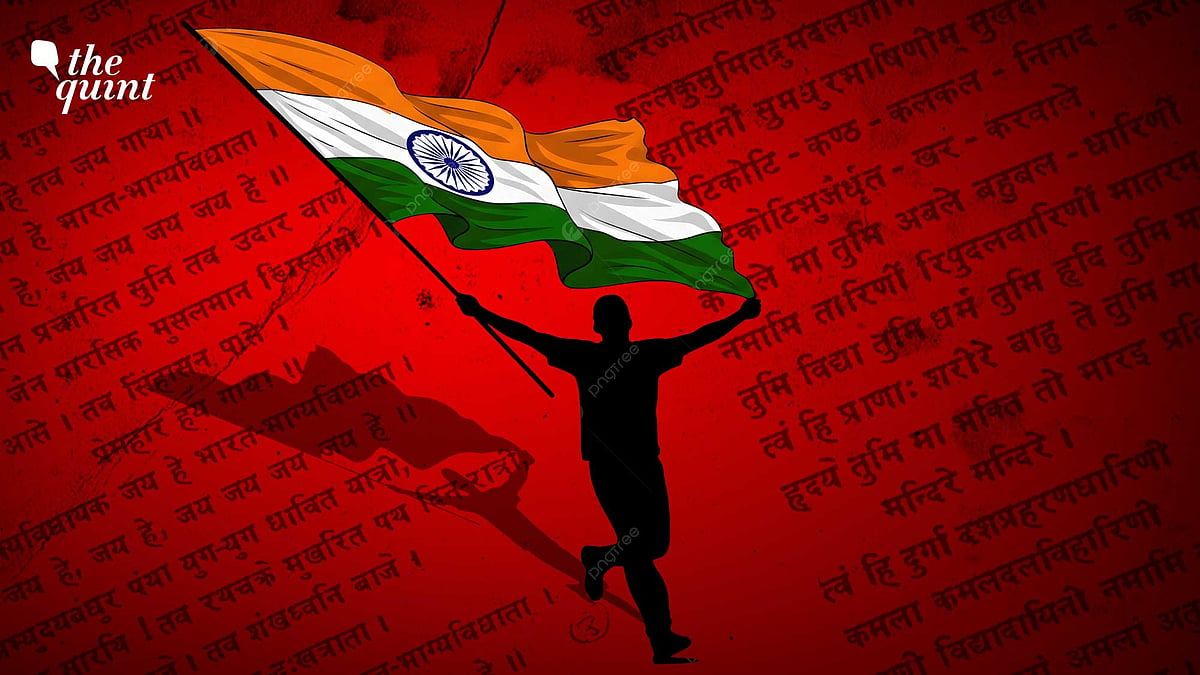
That hierarchy—placing Jana Gana Mana at the top—as the anthem was deliberate. The two songs reflected two different ideas of India. The recent move to require playing of all six verses of the Vande Mataram, and giving it precedence at official events unsettles that settlement. It suggests that what the framers resolved through debate can be rearranged by executive instruction. It risks shifting the Republic’s centre of gravity.
Nation as Landscape or Goddess
Look at the anthem. In a single verse, it invokes Punjab, Sindh, Gujarat, Maratha, Dravida, Utkala, and Banga.
The anthem embodies unity through plurality. It is constitutional in spirit. That is why the Constitution gives it explicit recognition. Article 51A speaks of respect for the flag and the anthem. Statutory protection follows. The anthem stands at the heart of the republic’s legal order.
Vande Mataram stands elsewhere. As poetry, it is powerful. The opening stanzas celebrate the land in rich imagery. Rivers, fields, breeze and moonlight. Those lines can unite across faith and region. They did so in the freedom movement. But the later stanzas invoke Durga, Lakshmi, and Saraswati. The motherland becomes a goddess. The idiom shifts from civic landscape to sacred symbol.
For many, this is cultural beauty. For others, it blurs the line between nation and faith.
The Balance the Framers Struck
The framers recognised this tension. In the aftermath of Partition, they understood how easily symbols can wound. They limited official use of Vande Mataram to its opening stanzas and placed the anthem first. The compromise honoured history while affirming equal citizenship. To disturb that balance is not a minor protocol change. It signals a preference for cultural nationalism over civic nationalism.
Civic nationalism rests on the Constitution and equal rights. Cultural nationalism draws from shared heritage and sacred imagery. Both currents run through India’s past. Only one was chosen to define the State. When Vande Mataram is given precedence over the anthem at official ceremonies, symbolism speaks. It suggests that devotional imagery may now define the nation’s public face. Even if unintended, that message travels.
Consensus Not Circulars
There is also a question of consistency. If a bureaucratic order can reorder national symbols today, what prevents another rewrite tomorrow? Suppose on the eve of elections in Tamil Nadu, an enterprising official were to decree that Subramania Bharati’s “Anna nee deshabhakta” be sung compulsorily at all official events across India. It is patriotic poetry. It inspires pride. It has a regional home and national resonance. Would the country accept that? Would Parliament be bypassed in that case as well? If the answer is no, then the present experiment deserves scrutiny.
National symbols derive authority from consensus, not circulars. The Assembly debated in the shadow of violence and division. It chose carefully. It placed the Jana Gana Mana as the anthem at the constitutional centre because it best captured a plural India. It acknowledged Vande Mataram but did not allow it to define the Republic. That distinction preserved both art and equality.
India can cherish both songs. It need not confuse their roles. When we stand for Jana Gana Mana, we affirm an idea of India that is diverse yet indivisible, inclusive yet firm. To dilute that primacy is to narrow the vision the framers embraced. Symbols endure when they unite. They divide when pressed into service. The wisdom of 1950 lay in knowing the difference. Jai Hind. Jaya he, Jaya he, Jaya, Jaya Jaya he.
(Sanjay Hegde is a senior advocate at the Supreme Court of India. This is an opinion piece and the views expressed are the author’s own. The Quint neither endorses nor is responsible for them.)
- Access to all paywalled content on site
- Ad-free experience across The Quint
- Early previews of our Special Projects
Published: undefined