Growing Up Muslim in India's Classrooms
From communal slurs to daily violence, Muslim children have to pay a cost, personally, and politically.
advertisement
In August 2023, a disturbing video from a school in Muzaffarnagar, Uttar Pradesh, spread rapidly across social media. In the clip, a teacher instructs students to take turns to slap a seven-year-old Muslim classmate while making remarks about his religion. The boy stands before the class as one child after another strikes him. What shocked many viewers was not only the cruelty of the act but also the setting: a classroom, a space meant to nurture confidence, curiosity and trust.
The episode raised an uncomfortable question. If a classroom itself becomes a space where humiliation is normalised, what does this mean for children growing up in such environments? Incidents like this reveal how hardened public discourse and the mainstreaming of prejudice shape the everyday experiences of children in Indian classrooms.
After the February 2020 anti-Muslim violence in Delhi, a seven-year-old boy in a Muslim-majority neighbourhood asked his mother a question she could not answer. "Will our house also burn?" He had not witnessed the violence directly. But he had absorbed its shadow—in the tension of his parents' voices, the sudden quiet of his street, the glances exchanged by adults who lowered their conversations when he entered the room. His question was not about politics. It was about safety.
Early childhood research shows that the first years are crucial for emotional security, identity formation and psychological wellbeing. Children understand the world through everyday interactions with family, teachers, neighbours and peers. Developmental psychologist Urie Bronfenbrenner described this through his Ecological Systems Theory, which argues that a child’s development is shaped by the multiple environments surrounding them—from the home and classroom to the wider social and political climate.
What Bronfenbrenner called the macrosystem—the broader cultural and political environment—quietly filters into children’s daily lives through conversations, media narratives and the behaviour of adults around them. When that wider environment carries stigma or suspicion toward a community, children inevitably absorb those signals and begin to interpret the world through them.
How Prejudice Shapes Developing Minds
Such experiences are not new. In Mothering a Muslim, journalist Nazia Erum documents how prejudice increasingly shapes the everyday lives of Muslim children in schools and playgrounds. She describes how children are mocked with slurs such as "terrorist" or told to "go to Pakistan". Some parents recount how their children return home, asking why their names sound different. Why do classmates laugh when they mention their religion, or why are they singled out during discussions about national identity?
Developmental psychologists have long emphasised that children are highly sensitive to their social surroundings. For Muslim children growing up in today's climate, that sense of security can be fragile. When a child hears their neighbourhood discussed on news channels as a suspect enclave or notices their parents tense during conversations about identity, the message is clear: the world outside may not be entirely safe for people like them.
Research from Harvard's Center on the Developing Child has shown that chronic stress—including the vigilance that comes from anticipating discrimination—can produce "toxic stress" responses in children. When the body's stress response system is activated repeatedly without the buffering protection of supportive adults, it can disrupt brain architecture and affect lifelong health. For Muslim children navigating environments where their identity is stigmatised, this is not a theoretical risk. It is an everyday reality.
The Classroom and Beyond
School settings often become the stage where these dynamics play out. A classroom joke about a child's name, a classmate's question about why "your people" celebrate a certain festival, or a teacher's failure to intervene when communal slurs are casually used—each carries developmental weight.
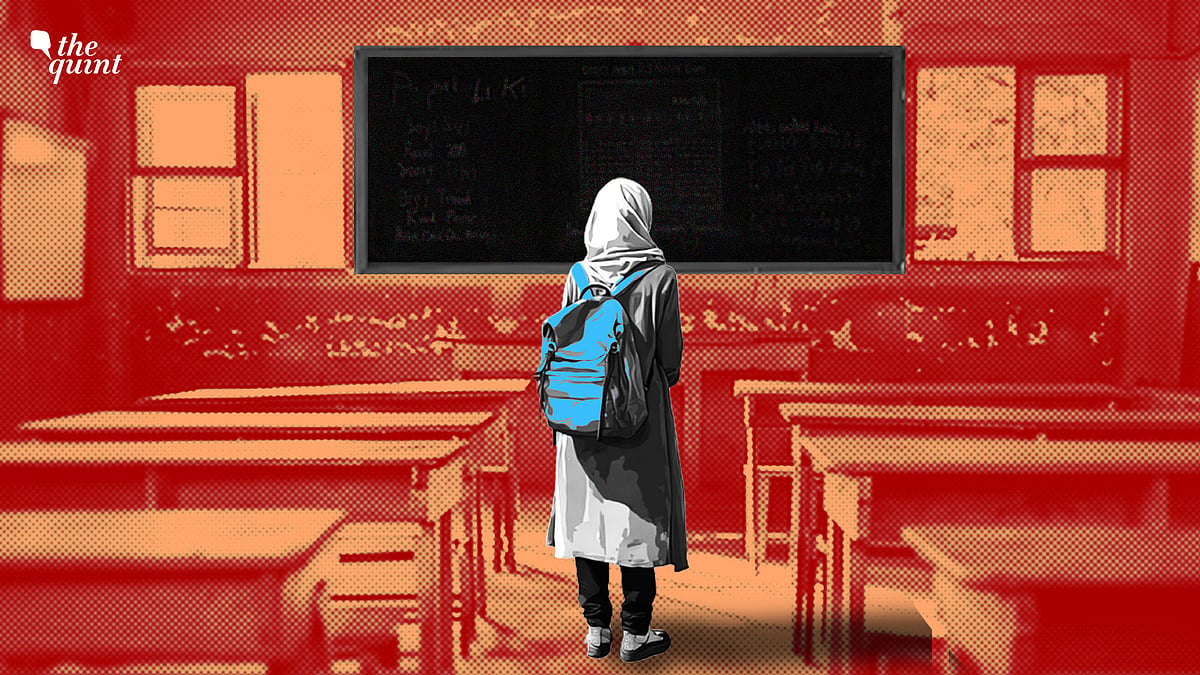
Educational spaces themselves have also become sites where identity is publicly contested. The debates surrounding the Karnataka hijab controversy—in which Muslim students were denied entry to classrooms for wearing the hijab—turned schools into arenas of national conflict. For children watching, the message was unmistakable: their most visible marker of faith could become grounds for exclusion from spaces meant for learning.
Neighbourhood environments also matter deeply. Many Muslim families in cities such as Delhi live in areas that carry the stigma of being "Muslim localities"—places like Jamia Nagar or Seelampur. These neighbourhoods are often portrayed in public discourse as dangerous or alien spaces.
A Blind Spot in Policy
Despite these realities, conversations about child mental health in India rarely address the specific experiences of minority children. Public awareness about psychological wellbeing has grown in recent years, yet policy frameworks still treat childhood as a socially neutral category. Programmes such as the National Mental Health Programme aim to expand mental health services across the country, but they seldom recognise how curriculum, segregation, discrimination and social exclusion shape children's emotional worlds.
Ignoring these experiences risks overlooking a crucial dimension of childhood. When children grow up in environments where their identity is repeatedly questioned or stigmatised, the effects extend far beyond the immediate moment. Feelings of insecurity can shape educational engagement, social relationships and long-term mental health.
What Change Requires
Recognising this issue does not require viewing Muslim children solely through the lens of victimhood. Rather, it calls for acknowledging that childhood development is deeply shaped by social context—and that context can be changed.
Schools can play a crucial role by fostering genuinely inclusive environments. This means teacher training that addresses religious bullying directly, curriculum materials that reflect India's pluralistic history, and classroom cultures where every child's identity is treated as a source of dignity rather than discomfort.
The seven-year-old who asked whether his house would burn is older now. He may have stopped asking such questions aloud. But the question itself—about safety, about trust, about whether the world holds a place for him—does not simply disappear. It becomes part of the emotional architecture of his growing years. What India does with that question, in its classrooms, its neighbourhoods and its policies, will shape not only his future but the country's own.
(Sheikh Ayesha Islam is an alumna of the Department of Educational Studies, Jamia Millia Islamia. She is a social work and early childhood development professional. Istikhar Ali is a DAAD fellow at Universität Göttingen and a PhD scholar at Jawaharlal Nehru University. This is an opinion piece, and the views expressed are the author’s own. The Quint neither endorses nor is responsible for them.)
- Access to all paywalled content on site
- Ad-free experience across The Quint
- Early previews of our Special Projects
Published: undefined