
India's Strategic Reset: Why a 'Moderate' BJP Leader Has Been Picked for Dhaka
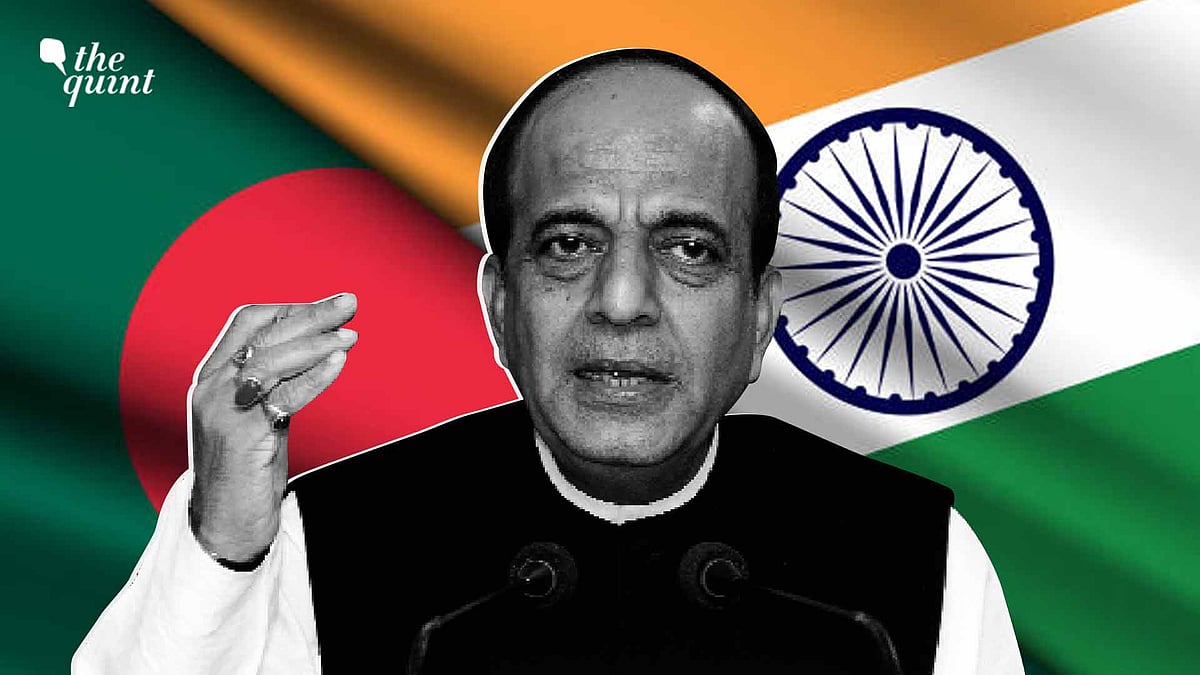
Sending a political appointee to Bangladesh, with a direct line to the Indian PM, signals intent about mending ties.
advertisement
India’s foreign policy has not displayed a particularly stellar performance in the last couple of years. But there is one exception—its neighbourhood policy. After years of drift, it has succeeded in winning back Sri Lanka and the Maldives into its fold. Now, work is in progress in restoring ties with Nepal and Bangladesh.
While Pakistan remains out of the fold, there has been progress in normalising ties with China. And, as for Myanmar, its domestic turmoil prevents any significant intervention on the part of New Delhi.
A Departure from Norm
In the Modi years, diplomatic appointments have been the exclusive preserve of the IFS babus, so this is a clear departure from the norm. It is an irony, of course, that Prime Minister Narendra Modi appointed a foreign service veteran, S Jaishankar, as the External Affairs Minister, the topmost political job in the ministry. But the Modi government's decision to appoint Trivedi has been a carefully considered one.
The development of the Northeast, countering Chinese and Pakistani influence in the Bay of Bengal, securing borders, robust trade, energy cooperation, and joint management of transnational issues like management of rivers, radicalisation and trafficking serve mutual interests. The appointment suggests India seeks not mere damage control but proactive engagement with the new Tarique Rahman-led Bangladesh Nationalist Party (BNP) dispensation.
Trivedi may lack diplomatic experience, but he brings considerable political and administrative heft to the post.
A two-term Lok Sabha MP, Trivedi has been a former Union Minister of State for Health and Family Welfare and, briefly, Railway Minister in 2012. He has also served three terms in the Rajya Sabha. Born in 1950, Trivedi holds a Bachelors' degrees in Commerce from Kolkata's St Xavier’s College and an MBA from the University of Texas, Austin. Before politics, he worked in the travel business and also trained as a pilot.
As the scion of a Gujarati business family settled in Kolkata, Trivedi speaks fluent Bengali and is familiar with the ethos of Bengal. He has had a long political journey, beginning with the Congress in the 1980s, shifting to the Janata Dal in 1990, and then to the Trinamool Congress (TMC) in 1998.
India-Bangladesh Relationship on the Cusp of Mend
Trivedi takes up his new job at a crucial period. India-Bangladesh relations entered a turbulent phase after the 2024 student-led uprising that ousted Sheikh Hasina, who sought refuge in India. The subsequent interim government under Muhammad Yunus saw rising anti-India sentiment, trade frictions, border incidents, and demands for Hasina’s extradition.
Both sides have resumed visa services, discussed energy cooperation (including diesel supplies via the Friendship Pipeline), and signalled willingness for “frank and candid” dialogue on sensitive issues. Yet, structural challenges persist: the unresolved Teesta water-sharing agreement, the impending expiry of the 1996 Ganga Water Treaty in December 2026, trade imbalances, border fatalities, and lingering minority concerns.
Meanwhile, the Yunus-led interim government period saw a significant turnaround in the Pakistan-Bangladesh ties with over a dozen high-level interactions, including in the defence area, and key breakthroughs like the restoration of direct shipping, cargo links, and diplomatic consultations.
As for China, it has played a significant role in promoting the bilateral thaw between Pakistan and Bangladesh, and moved towards a potential trilateral strategic alignment. Indeed, Beijing hosted the first Pakistan-Bangladesh-China trilateral summit in Kunming in June 2025.
Trivedi’s cross-party background—from the Congress to the TMC to the BJP—positions him as a bridge-builder rather than a rigid ideologue. His West Bengal experience equips him to understand sub-national dynamics that often complicate bilateral ties, particularly on water and connectivity.
A Moderate Face in Saffron Camp
New Delhi’s choice also reflects broader strategic calculations. Trivedi’s long parliamentary experience and reputation for moderation could help de-escalate rhetoric and foster people-to-people ties strained by recent events. His business background and international education may also aid economic diplomacy—crucial given persistent trade deficits that fuel Bangladeshi grievances.
But, of course, considerable challenges await.
Water negotiations demand balancing India’s federal realities—West Bengal’s concerns—with Bangladesh’s downstream needs. Border management requires sustained cooperation to reduce fatalities and smuggling. Economic ties need rebalancing through better market access and investment. Security cooperation against extremism must continue without appearing interventionist.
When it comes to sustained, candid engagement on issues like sharing of Teesta, Ganga waters, and trade is essential but fortunately, India has a positive history here.
In 2014, we settled the maritime boundary issue through international arbitration. In 2015, the two sides swapped 162 enclaves making their land boundary issue much less complicated. Bangladesh has given India the permanent use of its Chittagong and Mongla ports to facilitate logistics to the North-east. A protocol on inland water transit has created several routes and connected many ports of call to facilitate seamless cargo movement between the two countries and the two have restored several pre-1965 rail links. There are numerous trade and energy linkages developed over the years which require to be further developed.
What the appointment is likely to reveal is that political envoys with regional roots and cross-party credibility can complement professional diplomacy. If Trivedi helps stabilise ties, facilitates progress on water and connectivity, and rebuilds mutual trust, it could set a useful precedent for neighbourhood diplomacy.
India and Bangladesh share history, geography, and destiny. Their relationship, when functional, benefits 1.8 billion people. When fractious, it breeds insecurity and lost opportunities. The coming months will reveal if Trivedi can help translate cautious engagement into enduring cooperation.
(The writer is a Distinguished Fellow, Observer Research Foundation, New Delhi. This is an opinion piece and the views expressed are the author's own. The Quint does not endorse or is responsible for them.)
- Access to all paywalled content on site
- Ad-free experience across The Quint
- Early previews of our Special Projects
Published: undefined