
Sheshnag Lake Excavation: Connectivity Can't Come at Cost of Kashmir's Ecosystem
Are we protecting Kashmir's glacial ecosystems that sustain us or weakening them in the name of connectivity?
advertisement
I still remember visiting natural springs in Poonch as a child, accompanying my grandparents. They were places where water flowed freely, where people stopped to drink and where the surrounding landscape seemed to have an assurance of permanence. When I return to some of those places today, many of those springs are gone. What once appeared to be an ordinary part of mountain life has become a memory.
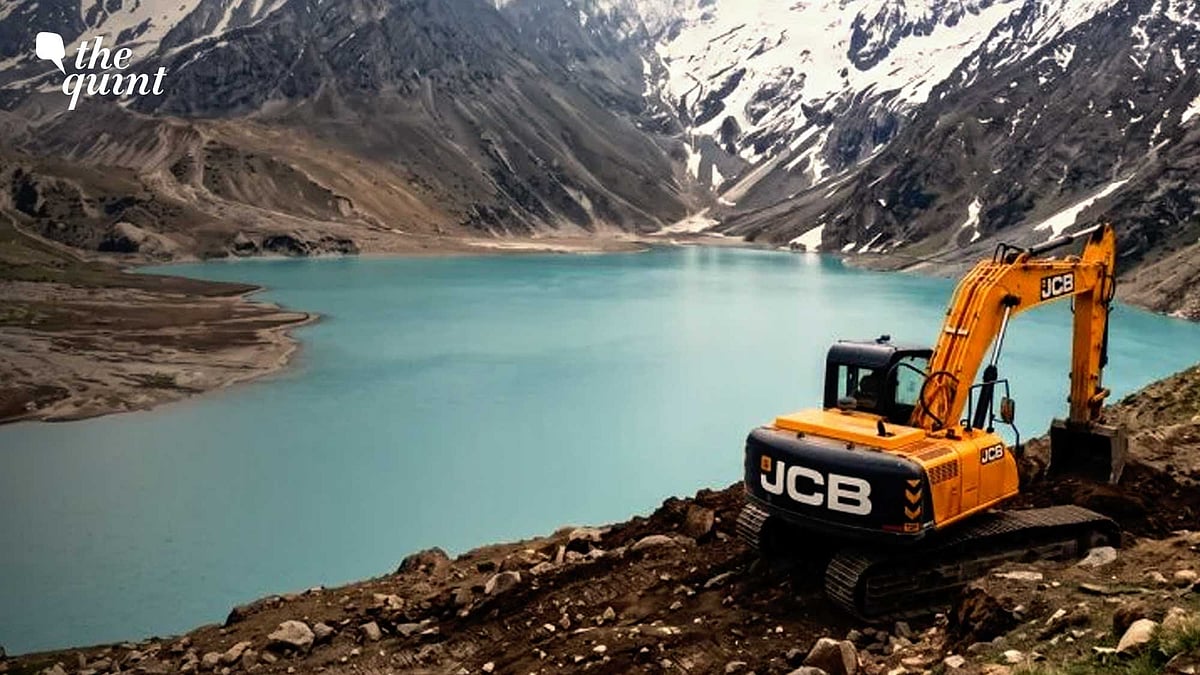
That is perhaps why the sight of a heavy excavator operating near Sheshnag Lake in south Kashmir has been so unsettling.
The Border Roads Organisation (BRO), which is undertaking the work, has maintained that the activity is part of post-Amarnath Yatra operations, involving the widening and stabilisation of existing tracks. It has said that the work follows applicable safety norms and environmental safeguards and that measures are being taken for the safe disposal of excavated material, protection of natural drainage and minimisation of disturbance to the surrounding terrain.
Ecological Sensitivity
The explanation deserves to be heard. Pilgrims, local residents and those working in the region need safe routes and adequate facilities. No one should have to choose between connectivity and safety. But the question is whether the method of achieving these objectives is appropriate for an ecologically sensitive glacial landscape.
Sheshnag is not an ordinary stretch of mountain terrain. Situated at approximately 3,590 metres above sea level in Anantnag district, it is a glacier-fed lake along the traditional Pahalgam-Amarnath pilgrimage route. The paved road ends at Chandanwari, beyond which pilgrims traditionally continue on foot, ponies or palanquins. The lake is also connected to the Eastern Lidder, which eventually joins the Western Lidder at Pahalgam to form the Lidder River. Its ecological importance, therefore, extends beyond the immediate landscape.
This does not mean that an outburst is imminent or that the excavation has triggered one. But it does mean that any intervention around the lake requires a level of scientific scrutiny that ordinary roadwork cannot substitute for.
A study published in the Journal of Glaciology in January 2026, examining glacial lake outburst flood susceptibility across the Kashmir Himalaya, identified 155 glacial lakes. It found that the area of ice-contact proglacial lakes had increased by 26 percent between 1992 and 2024. The researchers assessed factors including dam material, slope gradient, upstream lake cascades, seismic activity and permafrost conditions. Five lakes were classified as having very high GLOF susceptibility, with potential consequences for thousands of buildings, 15 major bridges, roads and a hydropower project.
The study is an important reminder that glacial hazards cannot be assessed simply by looking at the water visible on the surface. The stability of surrounding slopes, the composition of natural dams, changes in ice and the movement of water all matter.
Environmental Warnings
In my September article for The Wire, I had also drawn attention to Professor Avtar Singh Jasrotia, head of the Department of Remote Sensing and GIS at the University of Jammu, who had flagged accelerated expansion and ice melt at several glacial lakes, including Sheshnag. These observations should make us more cautious, not less.
The problem is that Kashmir’s environmental warnings are rarely isolated incidents. They are part of a larger pattern of ecological stress.
The report also warned that shrinking lake areas had contributed to ecosystem degradation, loss of biodiversity and climate insecurity. It described lakes as natural flood-balancing reservoirs and noted their importance in regulating the region’s flood system.
These are not merely statistics in an audit report. They represent the gradual weakening of natural systems that have protected communities for generations.
The warning signs are visible in other ways too. Jammu and Kashmir recorded 926 forest fire incidents during 2025-26, affecting approximately 2,105 hectares of forest land, according to information provided by the government to the National Green Tribunal. Forest fires weaken vegetation cover, damage habitats and can leave exposed slopes more vulnerable to erosion, particularly when followed by heavy rainfall.
Then there are cloudbursts and flash floods. Last year’s Chisoti cloudburst in Kishtwar, which devastated the area and complicated rescue operations, remains a painful reminder of how quickly a mountain community can be overwhelmed.
This is something I had explored in my earlier writing for The Quint on Jammu’s floods and the policy failures that compounded their impact. A disaster may be triggered by nature, but its consequences are often shaped by human decisions made long before the rain arrives.
Cost of Development
The same question must now be asked about Sheshnag.
The BRO has said that the work is confined to existing tracks and is intended to improve pilgrim safety. That objective is understandable. However, an existing track is not automatically an environmentally safe corridor for excavation or widening. Even work undertaken within an existing alignment can disturb fragile ground if its geological and hydrological conditions are not properly understood.
There are also questions about the larger infrastructure plans for the region. The proposed Khanabal-Baltal highway, or NH-501, has featured in the public debate, with concerns raised about its proposed alignment through stretches including Chandanwari, Sheshnag and Panchtarni. Authorities must clarify whether the current work is connected to this larger proposal or is limited to the existing pilgrimage track. The two should not be conflated without documentary evidence.
The government and the executing agency must make the relevant project details public.
What exactly is being excavated? What geological and environmental assessments were conducted? What permissions and clearances apply? Where is the excavated material being disposed of? Have glaciologists, hydrologists and independent environmental experts examined the site?
The BRO’s assurance that safeguards are being followed is important, but assurances alone cannot settle these questions. Environmental protection requires transparent documentation and independent verification.
Beyond Co-opting Agendas
There is also a human dimension that should not be overlooked. The Lidder River is not simply a scenic waterway for visitors to Pahalgam. It supports drinking water needs, agriculture, tourism and livelihoods. Communities downstream have a legitimate interest in what happens to the glacial landscapes from which their rivers originate. They should not have to wait for a disaster to discover whether the risks were properly assessed.
The controversy has also brought forward the religious significance of Sheshnag. For generations, the lake has been associated with the Amarnath pilgrimage and is revered in Hindu tradition. Its protection should not become a matter of political positioning or competing religious claims. A sacred landscape deserves respect, but so does the ecological system that sustains it. The two are not separate concerns.
It would be equally misplaced to suggest that environmental scrutiny amounts to opposition to the Amarnath Yatra or to development in the region. Pilgrim safety is important. So are better facilities, reliable access and the needs of local communities. But infrastructure in the high Himalayas must be designed around the limitations of the terrain, rather than expecting the terrain to absorb every intervention.
I have written before about the springs that disappeared from the landscape of my childhood, the forests affected by fires, the growing vulnerability to cloudbursts and the warnings emerging from glacial lakes. Each time, the concern has been the same: we are losing natural protections faster than we are learning to value them.
Sheshnag offers us an opportunity to change that approach before another warning becomes a tragedy. The question is not whether Kashmir needs development. It does. The question is whether we can pursue it without undermining the very ecosystems on which its people depend.
(Kanwal Singh is a writer and political analyst. This is an opinion piece and the views expressed are the author’s own. The Quint neither endorses nor is responsible for them.)
- Access to all paywalled content on site
- Ad-free experience across The Quint
- Early previews of our Special Projects
Published: undefined