
ECINET Was Meant to Modernise Elections. Is it Now Overruling Election Officers?
The ECI cannot now ask voters to trust a machine that its own officers cannot overrule.
advertisement
For most of the last four decades, technology has been the Election Commission of India's best argument for itself. Electronic voting machines were first tried in Kerala's Paravur in 1982 and needed a change in the law before they could spread. By 2004, every Lok Sabha seat voted on them.
T N Seshan's push for photo identity cards and the steady computerisation of rolls turned handwritten registers into searchable databases. VVPATs came later, then cVIGIL for complaints and ERONet for roll management. Each step drew suspicion. Each, on balance, made elections quicker and harder to rig at the booth. The Commission earned a rare reputation: its technology brought more people into the vote.
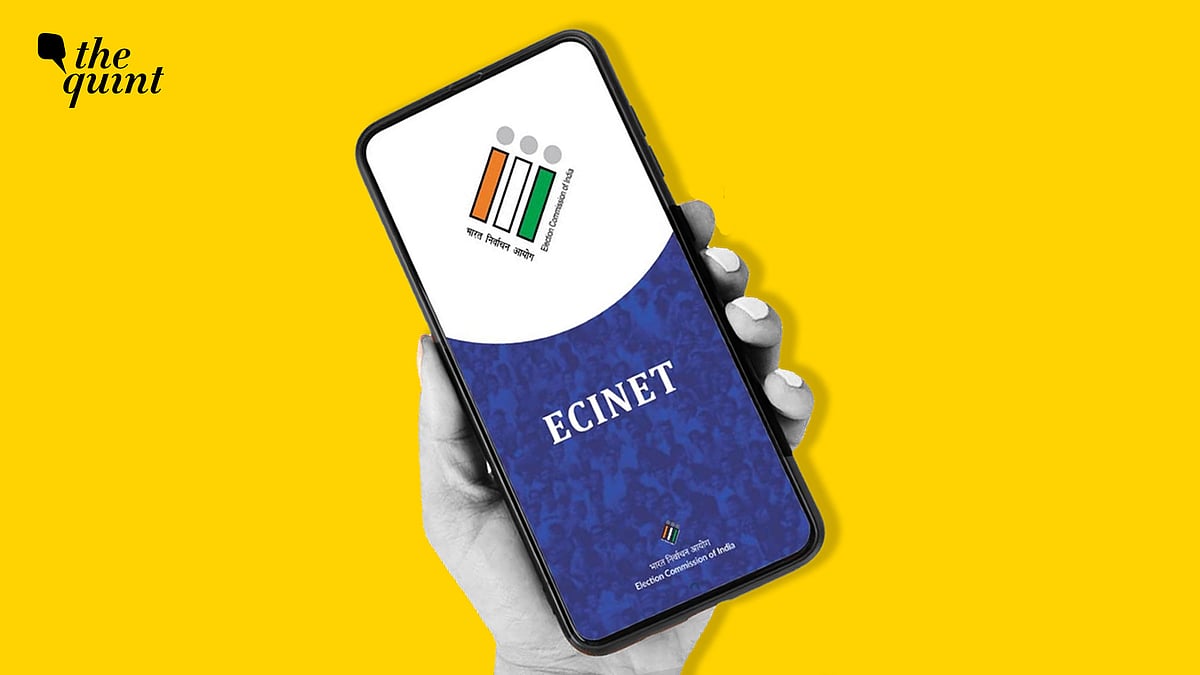
That record is what makes the fight over ECINET so uncomfortable. ECINET was meant to be the next logical step, pulling more than 40 of the Commission's apps into one platform. Piloted in Bihar in 2025, it was formally launched in January 2026 in 22 Indian languages and English. The Commission promised that where the software and a statutory form disagreed, the form would prevail.
Over the past year, as the Special Intensive Revision ran on ECINET, it appears to have worked the other way round.
When Software Starts Making The Rules
Under the Representation of the People Act, 1950 and the Registration of Electors Rules, 1960, the electoral rolls is prepared and corrected by Electoral Registration Officers in the field. Software can make their work faster. But the ECI cannot be deciding what they are allowed to do.
On September 23, The Indian Express reported that two of the three commissioners, Sukhbir Singh Sandhu and Vivek Joshi, had objected at least 14 times in ten months. Several were about ECINET. One concerned a declaration added to Form 6, the enrolment form for new voters, asking whether the applicant, a parent or a grandparent was on the roll from the last SIR. Joshi warned that Form 6 could not be changed without amending the Rules; Sandhu later called the question "unauthorised and illegal".
Goa And Maharashtra Expose The Problem
Goa is where the argument stopped being abstract. Local officers examined 649 electors who contested their deletion and found 97 of them eligible for the final roll. To restore them, they needed ECINET to allow a rollback of Form 7 deletions. The state sent eight emails in seven days. The option was not switched on in time, and when the Express checked the final roll on September 20, all 97 names were missing.
The Commission says Form 7 deletions cannot be rolled back; Goa's CEO says the cases were later handled through house visits and fresh Form 6 applications. That is a workaround, and it tells you who actually had the last word.
The Commission has not stood still. After a full meeting on 26 September, it brought back the old Form 6 outside SIR periods, promised a drive to re-enrol people struck off during the SIR, and let EROs exempt voters flagged for discrepancies from hearings. And it set up a committee, headed by a Senior Deputy Election Commissioner with an independent expert from an IIT or IIIT, to check whether ECINET complies with the Acts and Rules.
Yet it insists the platform is decentralised, that no officer at headquarters can perform a field officer's statutory functions, and that every decision was unanimous. Goa and the Maharashtra letter sit awkwardly beside that claim. The Supreme Court, meanwhile, will hear a plea next week challenging the CEC's exercise of powers on his own.
The Commission Needs To Give EROs Back Control
The committee is a start, but it is an in-house one, reviewing a system built on the Commission's own instructions. One outside expert will not change that. What would change it is what the Commission does with the report.
Two changes would help.
First, publish the rulebook the software actually follows: every form and workflow on ECINET matched to the provision that authorises it, a public log of every change, and the committee's report released in full. Joshi's shelved audit should become routine, with tamper-proof records of who added, deleted or altered a name, and on whose authority.
Give EROs back control of their own decisions inside the system, including the power to reverse a deletion, with reasons recorded. If the software blocks a lawful order, the case should be escalated within 48 hours and shown on a public dashboard.
Maharashtra's CEO has asked for exactly this kind of change. The Commission should listen. A body that built its credibility on machines people learned to trust cannot now ask voters to trust a machine that its own officers cannot overrule.
(Subimal Bhattacharjee is a Visiting Fellow at Ostrom Workshop, Indiana University Bloomington, USA, and a cybersecurity specialist. This is an opinion piece. The views expressed above are the author’s own. The Quint neither endorses nor is responsible for them.)
- Access to all paywalled content on site
- Ad-free experience across The Quint
- Early previews of our Special Projects
Published: undefined