Bricks of Memory: Bismillah Khan’s Home and the Cost of Banaras’s Development
The demolition of Bismillah Khan's house exposes the clash between tourism development and heritage preservation.
advertisement
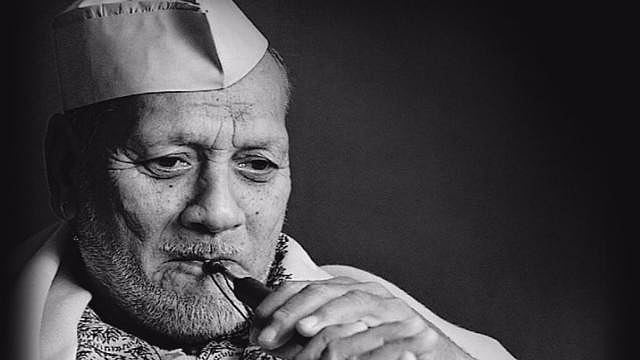
The recent partial demolition of Ustad Bismillah Khan's home, purchased in 1936 in Varanasi (historically known as Banaras), exposes an uncomfortable imbalance between heritage conservation, urban development and investment in experiential cultural tourism.
Khan, among India's most celebrated twentieth-century musicians, brought the shehnai, a traditional double-reed wind instrument, to international prominence and received the Bharat Ratna, India's highest civilian honour, in 2001.
Situated on the River Ganges, Banaras has long been an economic and cultural centre of northern India, where pilgrimage, music, craftsmanship and artistic exchange have shaped its historical identity.
Historian Arnold Toynbee understood civilisations through their creative responses to challenges. His insight raises a troubling question: can a city meet the demands of modernisation without eroding the living traditions that sustain its civilisation? The 2014 Kyoto–Kashi partnership, promising culturally sensitive urban renewal, and substantial tourism investments announced in 2026 invite precisely this scrutiny.
The iconic musician's residence offered an opportunity to reconcile conservation, community traditions, histories, and heritage skills with experiential tourism. Instead, the irony persists: a city investing lavishly in celebrating its antiquity risks allowing the very cultural landscapes that sustain it to disappear.
Tourism Strategy and the Missing Link
Experiential tourism cannot flourish by ignoring the communities whose cultural inheritance gives it substance. Khan's residence exposes a fundamental policy failure: cultural legacy acquires national prestige and commercial value, while responsibility for its preservation remains a private burden. Public homage cannot substitute for practical conservation.
Confronted by overcrowding and structural decay, Khan's family pursued redevelopment, proposing living quarters alongside a private museum. Rising property values encourage rebuilding while conservation costs remain beyond many households. Grand projects honour cultural icons; the rooms that nurtured their genius are left to crumble.
Beyond Bismillah’s Home
Khan’s legacy belongs to a wider landscape demanding urgent protection, extending beyond Varanasi’s identity as a pilgrimage destination. Its community histories, inherited skills and neighbourhoods give antiquity its substance. Heritage accumulates like the river’s sediment, carrying centuries of encounters and exchange; tourism too often skims the surface.
Sarai Harha, Khan’s residential quarter, and neighbouring Benia Bagh weave together music, craftsmanship, pluralism and political memory. When Khan died in 2006, bazaars fell silent, and mourners converged upon his home before moving towards the square. Their collective grief revealed a community bound by making his art and mourning his loss. Yet such solidarity must not obscure the caste hierarchies embedded within Banaras’s celebrated pluralism and hereditary musical traditions.
My research into Dhanesari Bai’s role in sheltering revolutionary Chandrashekhar Azad connects Dal Mandi’s artistic life with histories of political resistance. Performance spaces also nurtured struggles over freedom and belonging. A widened road may shorten the visitor’s journey while diminishing the history available to encounter.
Keeping Culture Alive
Preservation theorist Ned Kaufman emphasises human attachments, stories and practices beyond monument-centred conservation. A museum bearing Khan’s name cannot recreate the intricate relationships between domestic life, artistic patronage, inherited skills and neighbourhood memory.
Literary journeys could similarly connect Kabir, Ravidas and Tulsidas with Bharatendu Harishchandra, Premchand and Urdu playwright Agha Hashr Kashmiri. Kashinath Singh’s Kashi Ka Assi offers another window into the city’s conversational life, where humour and everyday exchanges reveal the tensions of a changing Banaras.
Recordings preserve music, but neighbourhoods preserve the human relationships through which music acquires meaning. Without integrated conservation, neglect becomes an inventory of loss: performances enter archives, façades acquire polish and cultural custodians lose their homes. Tourism restores the visible skin while the living fabric beneath it unravels.
Sapha-Pani: Music Along the Everyday Journey
Bismillah Khan embodied Banaras as a microcosm of India, where cultural life extended beyond temples into neighbourhoods, bazaars and artistic households. His genius emerged not merely from formal performance but from the everyday encounters that shaped his musical imagination.
In 1996, while researching Banaras’s performing-arts history, I recorded a conversation with Khan alongside cultural scholar and activist Dr Bhanu Shanker Mehta and art historian Anand Krishna Rai. His recollections revealed an extraordinary living archive, where musical traditions travelled through the ordinary rhythms of daily life.
A fifteen-minute walk through Dal Mandi towards the Ganges for sapha-pani, the daily ritual of bathing and renewal, frequently stretched into an hour. From balconies overlooking narrow lanes, kalajeevi tawaifs sought his musical advice. Homes, courtyards and streets became spaces of spontaneous artistic exchange. The neighbourhood was not scenery surrounding his music; it was part of its creation.
This was heritage without an admission ticket, music without a designated cultural venue, and artistic exchange without the vocabulary of experiential tourism. What development now seeks to package as an attraction once flourished as ordinary life.
Heritage Investment Without Heritage Conservation
The demolition of Khan’s home is not simply a dispute over private property or the loss of a celebrated musician’s residence. It exposes a larger failure to reconcile investment, urban development and heritage conservation. Varanasi attracts ambitious tourism expenditure, yet its inhabited cultural landscapes lack comparable protection. Infrastructure receives coordinated planning; cultural continuity remains dependent upon individual households.
Conservation cannot mean compelling families to inhabit unsafe buildings for the convenience of public memory. Nor should private ownership excuse institutional indifference. Planned conservation requires structural assistance, adaptive reuse, financial incentives, community participation and safeguards against displacement. These are not obstacles to tourism investment but essential conditions for making that investment culturally meaningful and economically sustainable.
What Remains of Banaras
Khan’s home presented precisely such an opportunity: to reconcile safe housing, artistic inheritance, neighbourhood continuity and experiential tourism. Instead, its demolition reveals the distance between ceremonial recognition and practical responsibility. The state honours the maestro, tourism markets his legacy, and the family confronts the costs of preserving his memory.
This is cultural democracy: development from below, not imposed from above, with administrative support sustaining what citizens know, practise and transmit. Any development worthy of Banaras must embrace its irrepressible character and work with its people to conserve what makes the city so extraordinary.
(Dr Navina Jafa is Vice President, Centre for New Perspectives. She can be reached @navinajafa. This is an opinion piece and the views expressed are the author’s own. The Quint neither endorses nor is responsible for the same.)