
Writing About ‘Writing About Caste’
The judicial vocabulary around caste comes with an added weight of policy implications, writes Ravikant Kisana.
advertisement
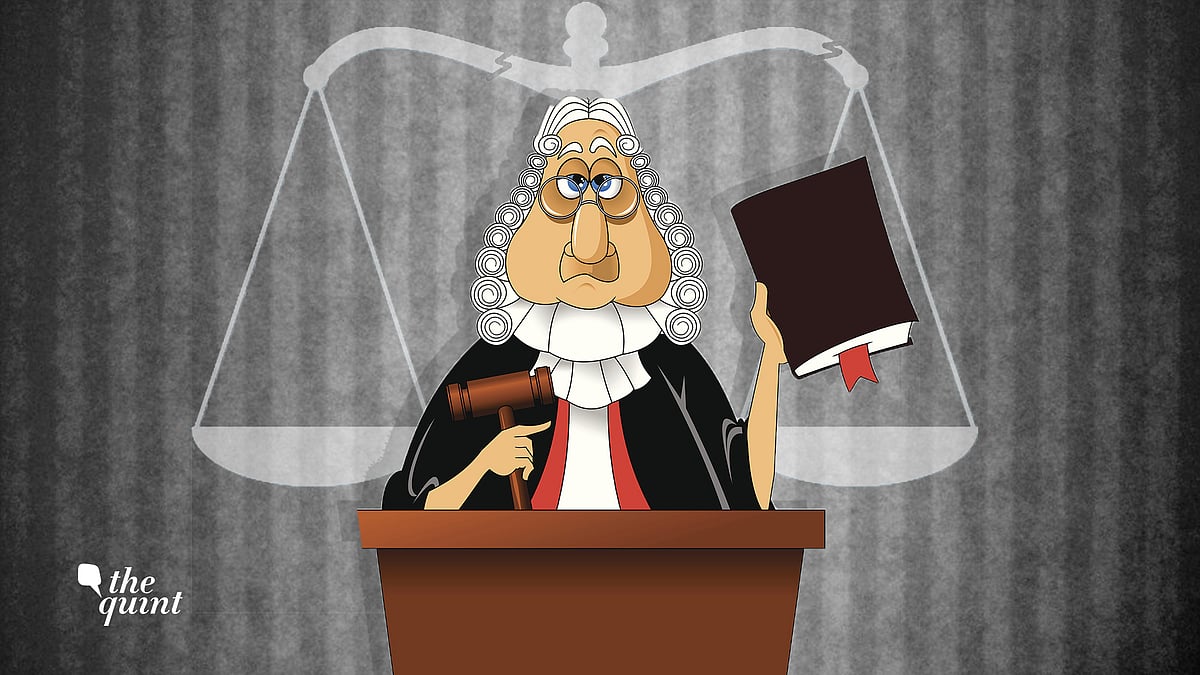
In a 'first-of-its-kind institutional exercise' aimed at urging judges and legal practitioners to adopt a more constitutionally aligned vocabulary while litigating on caste-related matters, the Supreme Court recently released a report on the 'judicial conceptions of caste'.
The initiative was undertaken by the previous Chief Justice of India BR Gavai, who himself comes from a Buddhist and Scheduled Caste background. The report opens an interesting discourse on how to talk or write about 'talking or writing about caste'—beyond the legal paradigm as well.
Yet, its articulation (and resultant implications) of language and manifestation at intersection of cultural mores, social articulation, policy formulation and legal jurisdiction are rarely fully understood. This has much to do with how caste is learnt and at the levels at which one learns of it in daily social praxis.
Caste-Coded at Birth
Caste is incepted at birth and initiation into it begins even before the birth of spoken language. From childbirth to early rituals around the newborn, caste markers are incorporated not just in cultural functions but also often on the very body of the baby. From piercings, to kajal markings to ward off evil eye, to bits of tiny jewellery and much more, is sourced from caste-coded community anthropological traditions.
Kancha Illiah Shepherd, in his iconic book Why I am not a Hindu, has masterfully laid out a multiplicity of caste-coded behavioral, linguistic, social, and cultural norms, from birth to death, that are deeply ethnographically engrained.
These caste norms and traditions are also not frozen. They change and twist with geography and minor sub-caste differences. So much so that a different clan from the same caste group native to a region a few hundred miles away, may have significant divergences in these practices. Indeed, among my own kin, Gujjars from Punjab differ from those in Himachal Pradesh or Uttarakhand, who themselves will have many differences with those native to the NCR cities of Noida, Faridabad, Gurugram, or the Bharatpur-Alwar belt of Rajasthan.
In such a society, communities rise and fall with the ebb and flow of history—caste similarly responds to it. This is an ongoing churning, one that is very visible and immediate to us even now. There are many social commentaries and oral narratives which discuss this.
For instance, from the late 1980s to about the mid-2000s, Yadavs as a community were politically ascendant in Uttar Pradesh and Bihar. Historically considered a backward ‘shudra’ caste, but within postcolonial Indian political space, they were able to mobilise into a powerful political entity. In that aforementioned period within North India, social relations, even family ties between historically more savarna castes and more powerful Yadav families, were gaining cultural acceptance in a way that would not be possible even two generations prior.
Beyond social relations, even in public articulation, this fluidity of power manifests.
With this clout comes the instinctive capacity to assert claims in a more public manner. So the linguistic honourific that precedes the name of Prithviraj Chauhan becomes the site of a caste-contestation between the two communities.
Cast(e) in Legalese
In legal parlance, of course, language has a deeper meaning than everyday usage. The language used in argument, especially in writing judgments, becomes an important precedent and basis for future litigation and deliberation.
Thus, the judicial vocabulary is one which comes with an added weight of policy implications. The report prepared by the Supreme Court’s think tank Centre for Research and Planning (CRP) looked at decades of Constitution bench judgments in caste-related matters. It correctly notes that the language of the judgment can deeply impact the way a matter is framed. Either it can be seen as a site of pity or denuding agency, or it can be framed as a subject of a rights-based approach.
Furthermore, the highest court has personnel sourced from savarna elite families (frequently intergenerationally situated within the legal fraternity) and elite law schools which are only now beginning to process the exclusionary embedded relationship of caste with legal learning and practice. In that sense, the report is a welcome initiative and has tremendous referential value.
In the absence of this, such an exercise may appear to have reduced its scope to ultimately being a glorified listing of ‘good words’ to use and ‘terms to avoid’.
And while it is appreciated that law professionals have a ready primer now to cite and refer on matters of caste vocabulary (not to mention journalists reporting on the casteist loose comments issued forth by bombastic judges and advocates), it fails to address the larger discourse on how legal language on caste shapes the policy on caste, and neither responds to the inherent fluid and ephemeral nature of caste itself.
Beyond this, it would be good to see the report expanded upon and revised in scope periodically, as well as adapted regionally (both in its geographic and linguistic dimensions).
In any case, Justice Gavai has since moved on from his role as Chief Justice of India. His tenure was 193 days. Departing Chief Justices (owing perhaps to short tenures) want to leave legacy changes after them.
(Ravikant Kisana is a professor of Cultural Studies and author of the book 'Meet the Savarnas'. He can be contacted on X/Instagram as 'Buffalo Intellectual'.The views expressed in this article are the author's own and do not reflect or represent his institution.This is an opinion piece, and the views expressed above are the author’s own. The Quint neither endorses nor is responsible for the same.)
- Access to all paywalled content on site
- Ad-free experience across The Quint
- Early previews of our Special Projects
Published: undefined