'Mere Paas Bapu Hai': The Non-Violent Indian's Patience With BJP Has Run Out
The BJP’s crackdown on protests may have done more to fuel public anger than restore fear, writes Dushyant Arora.
advertisement
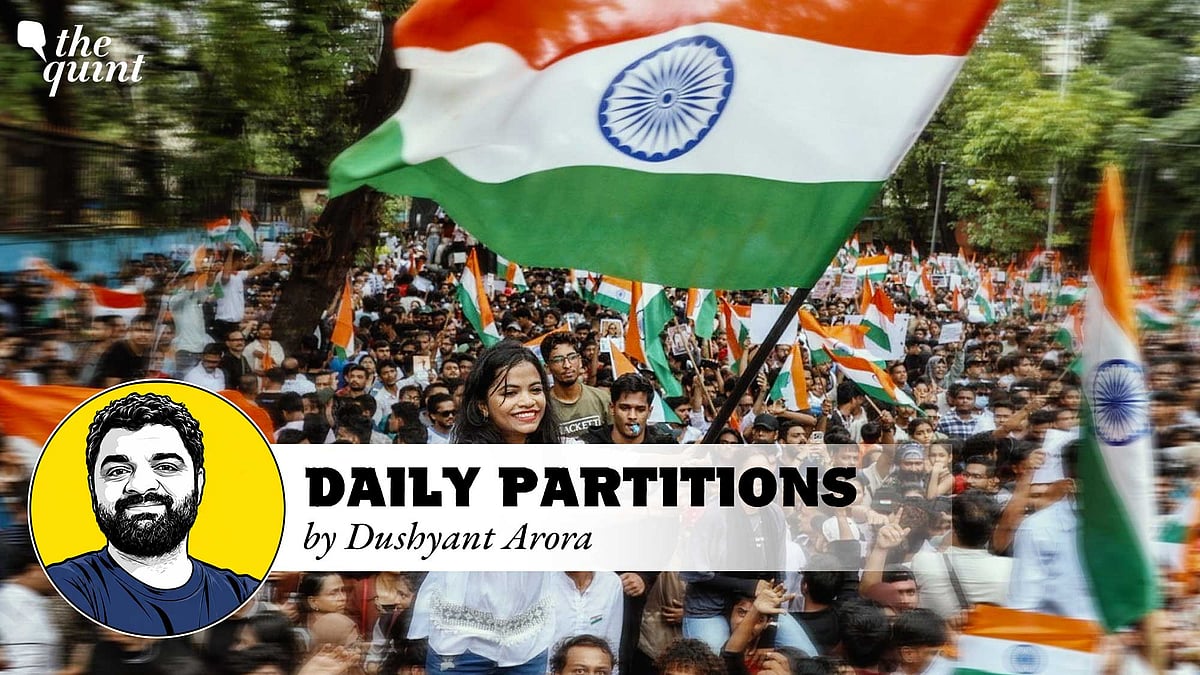
What is the impact of the anti-SIR protests on how the ordinary Indian perceives the Bharatiya Janata Party (BJP)? I looked for answers on the streets of Delhi, where I have been since the morning of October 10.
But first, a recap.
The Events of July 2026
In July, the geniuses at the BJP decided that Abhijeet Dipke and co did not have any serious organisation on the ground and by preventing them from protesting, they will be making the same mistake that the United Progressive Alliance (UPA) government made by giving undue importance to Anna Hazaare and briefly arresting him. They let the Cockroach Janta Party (CJP) go to Jantar Mantar. Dipke announced a march to the Parliament on the 20 July, and the government still didn’t do much.
When an apprehension arose that Sonam Wangchuk may die from fasting, these geniuses decided that taking him from the site against his will and keeping him in a hospital will harm less than letting him die in public sight.
On almost every phone screen across India, two things became clear. First, people were no longer afraid of Modi and Shah and Second, both were extremely unpopular.
The moment this dawned on those two, it was destined that if the CJP ever tries this again, they will have to be nipped in the bud. Courage and dissent are contagious. Once a child points it out, everyone starts seeing the king is naked. How would this be done?
The October Surprise
Anarchy. Colloquially the word anarchy is associated with ordinary folks running riot, breaking the law, looting, and more. There is, however, another kind.
In Sarkaari Anarchy, goons supporting the government are permitted to cause havoc- beat up protestors, molest women, and police watches quietly or with encouragement. For them, bail remains the rule and jail the exception. The law works, but only to the extent it can help them.
Ernst Fraenkel, a Jewish labour lawyer who defended political prisoners in Nazi courts until he fled Germany in 1938, called it the dual state. The legal scholar Kim Lane Scheppele has a name for governments that keep every legal form intact while using it to dismantle what the law was meant to protect: autocratic legalism. As you see, nothing original here.
Coming back to my original question. How were these events perceived by the ordinary, non-ideological, sometimes even non protesting ordinary Indian in Delhi? In his book Justice Ignited, author Brian Martin writes that during civil resistance, oppressive malicious actors are mindful that their violence can ‘backfire’ and they use the following tactics to prevent this backfire:
“Cover-up: information about the event is prevented from reaching receptive audiences.
Devaluation of the target: the moral worth of an individual or group suffering injustice is reduced.
Reinterpretation: the event or situation is claimed not to be what it seems.
Official channels: the issue is dealt with through formal procedures — such as courts or inquiries — or pronouncements by authorities or experts, giving an appearance of providing justice.
Intimidation and bribery: those who might act on the basis of outrage are subjected to threats or attacks, or offered incentives not to act.”
When Repression Backfires
Sometimes the ‘backfire’ happens regardless of all these tactics. When? Martin writes that this happens when those resisting are successfully able to do the following:
Exposing information about the injustice.
Validating the targets.
Interpreting the event or situation as unjust.
Mobilising public support and either avoiding or discrediting official channels.
Refusing to be intimidated or bribed, and exposing intimidation and bribery.
Among others, Martin cites Gandhi as the most successful practitioner of the ‘backfire’.
What was the consequence of all the force the BJP used? Social media and newspapers across the world are full of images of the extraordinary deployment of paramilitary forces. Videos of young people being brutally dragged into buses have gone viral.
Ordinary folks are furious. This has included a constituency the BJP believes is still with it—shopkeepers. I personally witnessed shopkeepers distributing free soft drinks and water to protestors, I was one of them. When I thanked them, they said, “Ye kuch nahin hai, jo aap kar rahe ho wo badi cheez hai.” (This is nothing, what you are doing is important.)
Anger on the Streets
The owner of a famous restaurant in Connaught Place, gave shelter to about a dozen young people who were being chased by goons and a variety of cops. He even stepped out and shouted at the cops. To my amusement and some intrigue, he said—and I am translating his words from Hindi—“I have seen you people in villages. There, you don't even wear underwear until you turn 18. Here, 40 of you are bullying young people. Have you no shame?”
Every auto driver, cab driver, chaiwala, I have spoken to has expressed not just disapproval but rage against the government. They may not join the protests, but they will make themselves heard at the ballot.
Earlier, people suspected that something was wrong with India’s electoral process. It is the BJP’s disproportionate reaction to and defence of the Chief Election Commissioner of India that have confirmed their fears. The day Saurav Das and Ashutosh Ranka got detained, the verdict on the street was near unanimous: this was bound to happen; these people won’t let anyone rise.
And what of the judiciary? Here, the opinion was divided but damaging nevertheless. Some felt that the BJP doesn’t respect the judiciary while others felt that courts do whatever Modi wants them to do. Das and Ranka aren’t popular figures. They haven’t been seen to suffer like Wangchuk and Neha Bora. They aren’t charming.
But just a few months back, BJP’s Nadda sat across them and took photos with them. They are young professionals, upper caste Hindus so the BJP can’t even weaponise bigotry and communalism against them, as it has been able to do against Umar Khalid.
The BJP's Crisis of Credibility
No one is willing to believe that they are a part of some global conspiracy against India, no matter how hard the BJP tries. Everyone outside the BJP’s devotees is convinced that they have been treated unfairly.
They know that, in persecuting Ranka and Das, the BJP is not enforcing municipal laws. It is simply trying its best to prevent regime change. They know that Modi and Shah are the regime.
I will go out on a limb and make a prediction: no matter what the BJP does from here, the patience of the ordinary, non-violent Indian has run out.
Aaj mere paas police hai, Election Commission hai, media hai, courts hain, propaganda hai. Kya hai tumhare paas? The BJP is asking the ordinary Indian. (I have the police, the Election Commission, the media, the courts and propaganda. What do you have? The BJP asks the ordinary Indian.)
The answer it is hearing?
Mere paas…. Bapu Hain.
(Dushyant Arora is a lawyer and research consultant based in Mumbai. This is an opinion piece, and the views expressed are the author’s own. The Quint neither endorses nor is responsible for them.)