
Assam's Floods Are a Governance Failure, Not Just a Climate Crisis
When a state knows floods will come, every preventable death becomes a matter of public responsibility.
advertisement
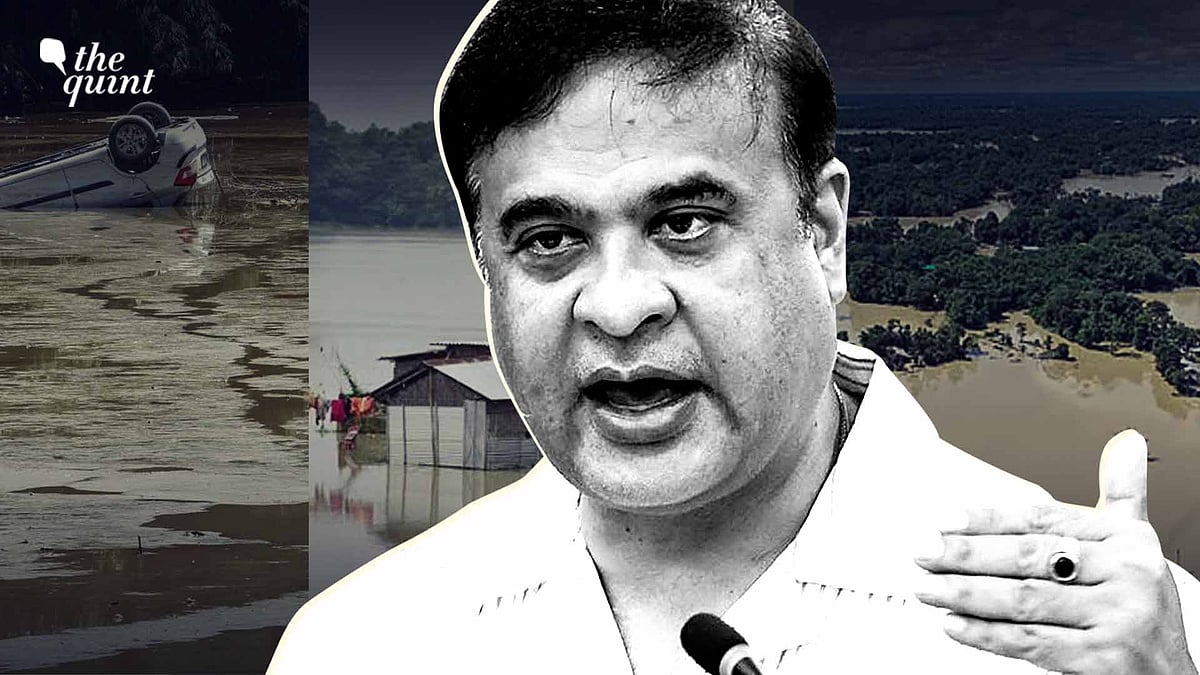
In recent weeks, Assam has faced one of its worst flood crises in years. Reports put the death toll at around 80 lives lost and over 3 lakh affected, as thousands of villages have been inundated and families pushed into makeshift camps along roads and embankments.
The waters will eventually fade away. What should not recede is the public memory that this was not an unavoidable act of nature but was a disaster made worse by political choices.
Disaster management has increasingly become an occasion for image-management, displacing the harder work of preparedness, transparency, and life-saving public investment.
When Relief Comes After Disaster
Yet flood fatalities in Assam are not new. Almost half of Assam’s landmass is prone to floods. Between 1953 and 2020, over 50 million hectares in Assam were affected by floods which represents over 10 percent of the total area affected by floods India wide. The risk was known, and so were the communities most likely to bear it.
What changed this year was not the basic hydrology of the Brahmaputra, but the level of political theatre surrounding relief. As floodwaters rose, Assam’s BJP leaders prominently announced party‑led relief campaigns worth Rs 16 crore in materials and touted crores more in donations to the Chief Minister’s Relief Fund.
The government’s own documents make clear that the State Disaster Response Fund (SDRF) is meant for immediate relief such as food, shelter, evacuation, medical aid and that separate funds, including the State Disaster Mitigation Fund, should support structural and non‑structural measures to build resilience.
Yet long‑promised embankment repairs, wetland conservation, improved drainage, and robust early‑warning systems have lagged far behind the scale of the threat. Experts and local communities have warned for years that aging embankments, disappearing wetlands, and poorly managed river systems are amplifying flood impacts.
The Politics of Flood Governance
Relief optics have filled that governance vacuum. When disaster response is dominated by party‑branded campaigns and social media content, the metric of success quietly shifts, from how many lives were protected before the flood, to how many kits were distributed after.
This performativity has real human costs. A disaster that could have been largely about temporary displacement and managed loss becomes a mass casualty event. People who should have been evacuated from known high‑risk zones find themselves trapped on rooftops and tress. Families who should have had access to pre‑positioned food, water, and medicine line up for relief that is as much about visibility as urgency.
Kaziranga is not only a conservation icon, but is also part of Assam’s complex flood landscape, where riverine ecology, infrastructure and tourism intersect. When activists raising concerns about ecological disruption and community rights around such projects are met with arrests rather than engagement, the signal is clear that the development will be pursued first, debate later—if at all.
That attitude causes problems for the state when floods like these happen. Disaster management is not just about moving people and goods, but is about listening to communities, integrating Indigenous knowledge, and planning with the grain of local ecologies, not against them. Suppressing those voices while showcasing relief drives is not governance. It is disaster capture, the political appropriation of crises to build partisan capital while insulating decision‑makers from scrutiny.
The Climate Justice Failure
From a climate justice perspective, Assam’s floods expose three interlinked failures.
First, preparedness is treated as optional, even though climate change is making extreme rainfall and flood events more intense and erratic. The state’s own partnerships with multilateral institutions like the World Bank and Asian Development Bank have acknowledged the need for better flood forecasting, early warning systems, river-basin management, and climate-resilient infrastructure.
Second, transparency is minimal. While allocations and broad announcements are public, ordinary citizens cannot easily see how much of disaster funding went to embankment strengthening versus administrative overhead, to char‑dwelling communities versus urban centers. Without accessible, audited breakdowns, demands for accountability are easily dismissed as politicized criticism.
Assam deserves better than this. A genuine disaster‑governance agenda would start long before the monsoon by mapping high‑risk zones, repairing failing embankments, protecting wetlands and floodplains from encroachment, funding local early‑warning and evacuation plans, and guaranteeing that relief funds are allocated and monitored with public, disaggregated reporting. It would treat environmental defenders not as enemies of development but as partners in keeping people and ecosystems safe.
Most importantly, it would measure success not in crores announced or kits distributed, but in lives not lost. Compensation hardly makes a difference when you lose everything from home, cattle to livelihood.
When a state knows that floods will come, knows roughly where they will hit, and has hundreds of crores in disaster allocations at its disposal, every preventable death becomes a matter of public responsibility. Assam’s floods are, undeniably, intensified by climate change. But climate alone did not arrest activists, underfund preparedness, or turn disaster into spectacle. Those were political choices, and they can, and must, be changed.
(David Sathuluri, a recent graduate from Columbia University, is engaged with questions around caste, climate change, and urban spaces. This is an opinion piece and the views expressed above are the author's. The Quint neither endorses nor is responsible for the same.)
- Access to all paywalled content on site
- Ad-free experience across The Quint
- Early previews of our Special Projects
Published: undefined