
Unpopular Opinion: Vote Chori isn't a Silver Bullet for the Opposition
There may be merit to the questions against the EC but it's unlikely to be an electoral issue.
advertisement
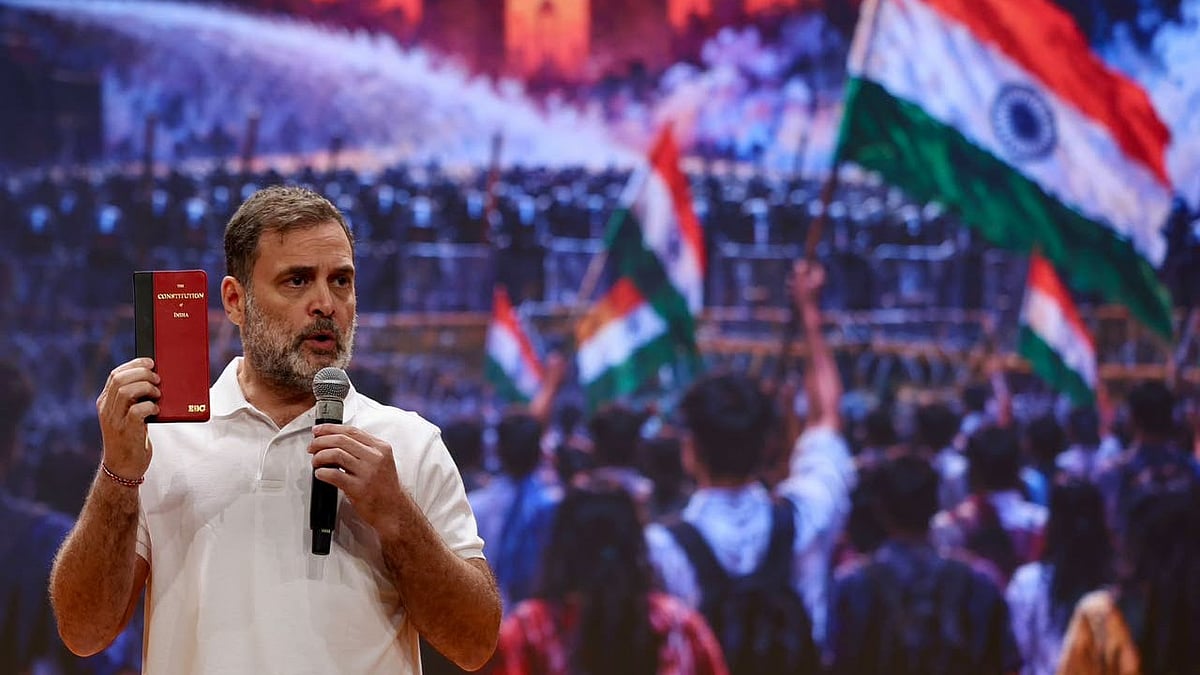
The Opposition is in no mood to give up on its demand for Chief Election Commissioner Gyanesh Kumar's resignation and restoration of those whose names were deleted from the electoral rolls under the Special Intensive Revision.
The Congress has promised a massive protest on 1 November, the Left parties are holding a 'human chain' protest on 27 October and the Cockroach Janta Party is also likely to resume protests after Diwali.
Now, for a moment, let's not get into the merits of the Opposition's allegations. The huge break by the Indian Express last month and reports from organisations like the The Quint, The Reporters' Collective, Scroll and Newslaundry among others, have shown that there are questions that can be raised over the SIR process.
In this piece, we'll only look at one question: can the entire Gyanesh Kumar/SIR row harm the Modi government and help the Opposition electorally?
Not a Major Electoral Issue
Five states are going to the polls early in 2027: Uttar Pradesh, Punjab, Uttarakhand, Manipur and Goa. SIR or Gyanesh Kumar isn't emerging as a major electoral issue in any of these states.
This is similar to what had happened in Bihar in 2025. The Opposition led by the Congress had carried out a massive campaign alleging 'vote chori'. They did attract sizable crowds but it didn't have any significant impact on the election.
Bengal was a different case. It added to the communal vitiation of the election, giving the BJP a chance to showcase to its base that it is the only party trying to remove "infiltrators" from the electoral rolls.
This can possibly happen in Uttar Pradesh and Uttarakhand and contribute to polarisation in the election. But if it does, it's the BJP and not the Opposition who stand to gain.
According to the August 2026 Mood of the Nation Survey, the top issues for the public are related to the economy: unemployment (23%), price rise (16%) and economic growth (14%).
The survey also had interesting insights regarding the credibility of elections. 52 percent respondents said elections in India are "free and fair" while 47 percent said they felt "democracy is in danger". So around half the people aren't convinced about the functioning of our democracy.
However, half the people believing democracy is in danger isn't sufficient to help the Opposition so long as elections or credibility of democratic institutions isn't an important issue for the people.
Also, it must be said that 60% respondents said they support the SIR process.
So while the Opposition is well within its right to target the BJP and the CEC, it would be well advised not to lose track of the bread-and-butter issues that affect the people.
A past lesson is relevant here. The Congress' best phase after 2014 has been 2017-18 when it defeated the BJP in MP, Rajasthan, Chhattisgarh and Karnataka and came close to defeating it in Gujarat. At that time, the main plank of the Congress was economic: issues like demonetisation, GST, unemployment and agrarian distress.
Opposition's dilemma
In raising the slogan vote chori, the Opposition is facing a dilemma: how does it question the electoral process and continue to fight elections?
Most recently, the chief electoral officer in Punjab, IAS officer Anindita Mitra, received praise from all the major political parties: AAP, Congress, SAD etc. So it is clear that despite demanding a rollback of the SIR, the Opposition parties are working business as usual.
The main problem for the Opposition is that boycotting elections isn't really an option for it. Successful election boycotts can' t be enforced top-down by parties. For a boycott to be successful, it needs to be as a result of a popular demand.
Let's take two reasonably successful election boycotts from the past. In 1992, all Akali Dal factions except one boycotted the Assembly elections in Punjab in the thick of the violence in the state. Then in Kashmir, separatists managed to enforce boycotts reasonably successfully through the 1990s. The situation began changing in the 2000s with a steady increase in public participation.
In both these cases, boycotts were successful because they reflected a popular sentiment. This isn't the case with the anti-Gyanesh Kumar protests as yet.
In fact, if the Opposition doubles down on questioning the credibility of elections, they run the risk of making their own base feel that there's no point voting if the elections are already rigged.
What Happens Next?
This doesn't mean that electoral rolls, SIR and Gyanesh Kumar's conduct are not issues and that the Opposition should not raise them. These can complement a larger anti-BJP mobilisation in the run-up to the state elections and maybe even the 2029 Lok Sabha elections and add the the anti-Modi sentiment they seek to create.
However, data suggests that the core focus of any such mobilsation has to be on economic issues. It is economic issues like jobs, inflation and agrarian distress that are affecting people the most and these are also issues where the Modi government is at its weakest.
How the Opposition balances all these efforts remains to be seen.
For now, it is clear that the Modi government and CEC Gyanesh Kumar have both dug in their heels. Having conceded to the Cockroach Janta Party-led youth protests by removing Dharmendra Pradhan over the NEET issue, the government is in no mood to relent once again. In fact, it has escalated the use of police violence and mass detentions especially targeting the CJP to scare away its supporters.
The mantle of the anti-Gyanesh protests has now fallen on the Congress-led Opposition. This has its advantages and disadvantages. On one hand, it is far tougher for the government to use police force against a large Opposition party as compared to a neophyte movement like CJP or even Leftist unions. On the other hand, being led by a mainstream party can potentially drive away common, politically unaligned citizens who may have wanted to become part of a 'non-partisan' protest.
- Access to all paywalled content on site
- Ad-free experience across The Quint
- Early previews of our Special Projects
Published: undefined