
Punjab’s New Sacrilege Law: Justice Restored or Overreach Repeated?
From 1978 Sikh-Nirankari clash to Bargari 2015, cases saw delays, acquittals and firing, casting doubt on 2026 law
advertisement
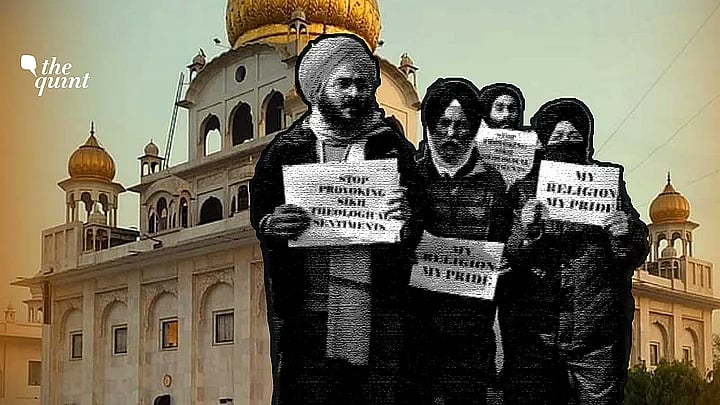
The Jathedar of the Akal Takht Giani Kuldeep Singh Gargaj has called for a meeting of Sikh organisations and scholrars on 3 May to deliberate on the anti-sacrilege law passed by the Punjab Assembly.
The Jaagat Jot Sri Guru Granth Sahib Satkar (Amendment) Bill, 2026 passed unanimously by the Punjab Legislative Assembly on 13 April reopened one of Punjab’s most sensitive and unresolved questions: how should the law handle sacrilege when decades of experience show that justice in these cases rarely arrives?
The Aam Aadmi Party government, led by Bhagwant Mann, framed the amendment as a “historic correction.”
A crisis of faith in the system, not just the law
The events of December 2021 highlighted this crisis. Within hours, two alleged sacrilege acts occurred—one inside the Golden Temple in Amritsar, and another in Kapurthala. In both cases, mobs killed the accused before justice could be served.
1978: The start of a Long Divide
The 1978 Sikh-Nirankari clash is seen as the beginning of a long period of instability in Punjab. For Sikhs, the issue was not just a theological disagreement but also perceived state indifference or even tacit support for practices they viewed as sacrilegious. When Sikhs protested, the confrontation turned violent, resulting in the deaths of 13 Sikhs. The subsequent legal process deepened their sense of injustice; those accused of the killings were acquitted, with the court accepting claims of self-defence.
These acquittals did more than close a case; they set a precedent in public memory. The perception emerged that even when Sikhs were killed while protesting sacrilege, accountability could be diluted through legal interpretations and political contexts. The consequences of 1978 were not limited to that moment, but contributed to a decade of militancy, counterinsurgency, and widespread violence that reshaped Punjab’s social and political landscape.
1986 Nakodar: A Repetition of the Pattern
If 1978 marked the rupture, 1986 reinforced it. In Nakodar, the burning of copies of the Guru Granth Sahib sparked protests across the region. The demand was simple: identify those responsible and ensure respectful handling of the desecrated scriptures. Instead, police fired on protestors, killing four Sikhs.
The lack of visible punishment for the act itself strengthened the perception that justice mechanisms were either ineffective or misdirected. By the mid-1980s, this pattern had become ingrained in public consciousness.
2015: A Contemporary Turning Point
Nearly three decades later, the incidents of 2015, ranging from Burj Jawahar Singh Wala to Bargari, Kotkapura, and Behbal Kalan, revived these historical memories. A copy of the Guru Granth Sahib was stolen. Threatening posters appeared. Torn pages were found scattered on roads. The sequence suggested not an isolated act but something more organised, possibly intended to provoke unrest.
The political fallout was significant. The Shiromani Akali Dal–Bharatiya Janata Party alliance faced serious backlash in the 2017 elections. Yet beyond electoral consequences, the legal handling of these cases proved equally important. Multiple Special Investigation Teams were formed, reports were contested, charges were filed and challenged, and processes moved slowly through the courts. For many observers and activists, the main issue remained unresolved: despite the scale of the incidents and public mobilisation, accountability seemed partial, delayed, or unclear.
The Buildup of Unresolved Cases
By the late 2010s and early 2020s, incidents of sacrilege had not stopped. Sikh religious authorities, including the Akal Takht, reported a steady rise in such cases. A common explanation from authorities was that the accused were mentally unstable, drug-dependent, or acted alone without a broader conspiracy.
While these explanations may be valid in some cases, their repetition has created scepticism. Many Sikh leaders and commentators believe that invoking mental instability too readily avoids deeper investigation into possible organised motives. This has widened the gap between official narratives and public belief. The result has been not only anger but also fatigue—a sense that inquiries, commissions, and investigations follow a predictable cycle without yielding closure.
Support for the 2026 law: Deterrence and Recognition
In this context, the 2026 amendment was introduced. The Mann government argues that previous laws were not sufficient to address the seriousness of sacrilege. By imposing life imprisonment and widening the definition of the offense, the new law aims to establish both deterrence and symbolic recognition.
Finance Minister Harpal Singh Cheema has described the legislation as proof of the government’s commitment to protecting the Guru Granth Sahib’s sanctity. The focus is not just on punishment but also on signalling that the state recognizes the unique status of the scripture within Sikhism, where it is viewed not only as a holy book but as the living Guru.
From this perspective, the law's severity is not excessive but appropriate given the gravity of the offence as experienced by the community.
Criticism: Overreach and Unresolved Issues
However, critics have raised different concerns. Opposition leaders, including from the Congress and the Shiromani Akali Dal, argue that a tougher law does not address the real issues.
Congress figures like Sukhjinder Singh Randhawa have pointed out that earlier sacrilege cases are still unresolved, questioning whether new legislation can make up for past failures. Pargat Singh has highlighted the lack of progress in investigating 2015 incidents, suggesting that focusing on new laws may distract from unfinished cases. Sukhbir Singh Badal from the Shiromani Akali Dal has noted that similar provisions were attempted in 2016, arguing that the issue lies in implementation rather than a lack of laws.
Legal concerns have also been raised. Critics argue that the broad definition of sacrilege, especially its inclusion of speech and digital expression, could create ambiguity and potential for misuse. Others question aspects like regulation or documentation of Guru Granth Sahib copies, seeing them as possible state interference in religious practices.
Former Delhi Sikh Gurdwara Management Committee president Paramjit Singh Sarna described parts of the law as “overreach,” indicating worry about balancing protection and control.
Law Versus Legitimacy
In many cases—1978, 1986, 2015—the focus shifted from the original sacrilege to the state’s response to public mobilization. This shift has had lasting effects.
The 2026 law attempts to break this cycle by strengthening the legal response, ensuring that sacrilege is treated with the utmost seriousness. However, whether this will be enough remains uncertain. If investigations continue to be delayed, prosecutions falter, or cases become tangled in political disputes, the severity of punishment on paper may not lead to credibility in practice.
An Attempt At Correction Or an Overcorrection?
Supporters see the law as a long-overdue correction, acknowledging that past governments failed to act decisively. Critics worry it risks being an overcorrection, emphasizing symbolic severity over systemic reform. Both perspectives recognize the same underlying truth: that sacrilege in Punjab is not just a legal matter but a deeply political and emotional issue, shaped by history and sustained by unresolved grievances.
What makes this moment different is the extent of accumulated grievances. From 1978 to 1986 to 2015 and beyond, the repetition of similar patterns has created a situation where legislative action is seen as necessary, even if it is not perfect.
Conclusion: Beyond the Law
Ultimately, the significance of the 2026 amendment will depend less on its text and more on its implementation.
If it leads to timely investigations, credible prosecutions, and transparent outcomes, it may begin to restore faith in institutions. If not, it risks becoming another chapter in the same pattern it seeks to break.
For many Sikhs in Punjab, the issue is no longer whether laws exist, but whether they work.
And it is this question, more than the severity of any punishment, that will determine whether the new law marks a turning point or merely continues a long and troubled history.
(Nishtha Sood holds a degree in Politics and International Relations from SOAS, London, and writes on terrorism laws in India, linguistic movements, and issues of identity. This is an opinion article and the views expressed above are the author’s own. The Quint neither endorses nor is responsible for them.)
- Access to all paywalled content on site
- Ad-free experience across The Quint
- Early previews of our Special Projects
Published: undefined