
What the Month of Poh Teaches Sikhs About Faith and Resistance
The winter month of Poh in the Sikh calendar enters Sikh consciousness bearing memory, loss, and Chardi Kala.
advertisement
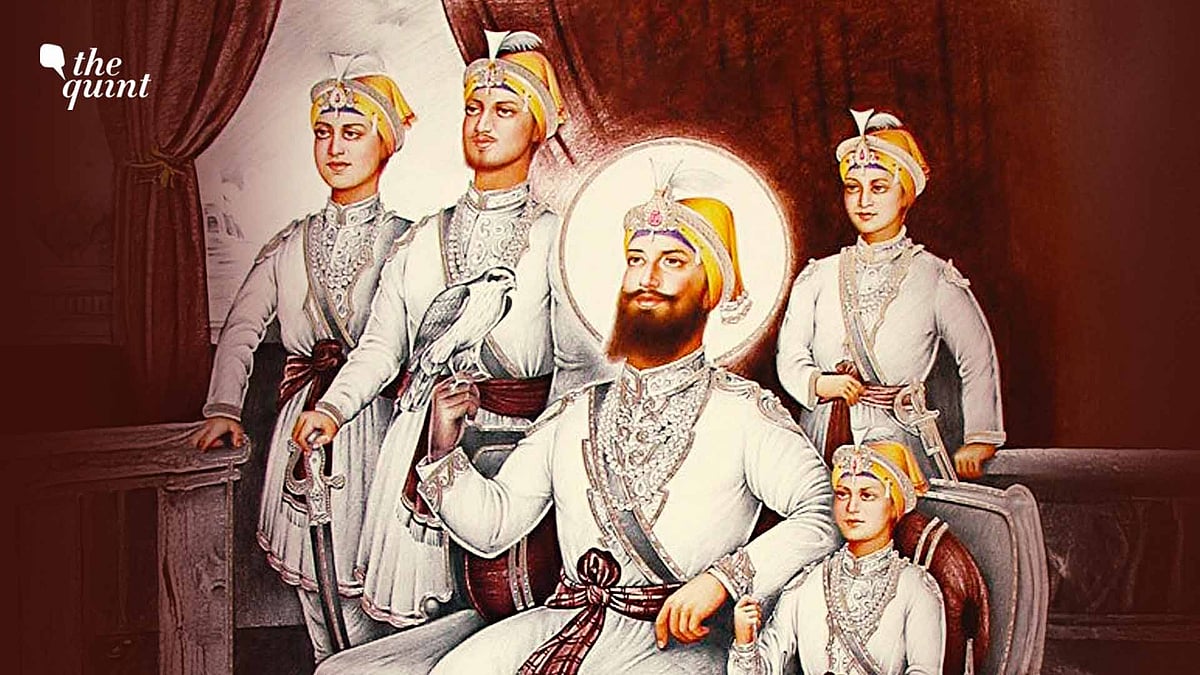
Guru Gobind Singh’s powerful verse, “In Putran Ke Sees Par Vaar Diye Sut Chaar, Chaar Muye To Kya Hua Jeevat Kai Hazaar,” (I sacrificed my four sons for Panth; what if four are gone, when thousands still live), stands as a timeless testament to sacrifice and resilience in Sikh history.
It was not merely a poetic expression of grief, but a declaration of purpose—spoken by a father who had offered his four sons, Baba Ajit Singh Ji, Baba Jujhar Singh Ji, Baba Zorawar Singh Ji, and Baba Fateh Singh Ji, to the cause of truth and righteousness. In declaring that the loss of his sons was for the sake of countless others who would continue to walk the path of Dharma, the Guru affirmed that the Khalsa Panth itself is his living legacy.
A history that carries more days of sacrifice than celebration, yet continues to serve humanity with humility, courage, and resolve.
It reminds us that we were once inert, until Guru Nanak poured life into us—freeing humanity from the chains of caste, fear, and hatred, and teaching us to look directly at the Infinite. That moral vision did not remain an abstraction. It was tested repeatedly through history, most profoundly during the winter month of Poh.
The winter month of Poh in the Sikh calendar (December in the Gregorian System) does not arrive quietly. It enters Sikh consciousness bearing memory, loss, Chardi Kala, and an unshakable courage that continues to humble the human spirit. It recalls the unparalleled sacrifices of Guru Gobind Singh Ji, his four beloved Sahibzadas, Mata Gujri Ji, and countless Sikhs who chose righteousness over fear.
Across Punjab, this memory finds expression not only in Shaheedi Jor Melas, but in oral traditions, poetry, restraint, and silent acts of remembrance that have endured for centuries.
When Memory Becomes Moral Discipline
Wisdom passed down through generations reminds us that communities endure not by merely recalling history, but by allowing it to shape their conscience and guide their moral compass. Sikh tradition exemplifies this truth. Rooted in selflessness, justice, and dignity of life, Sikhs does not romanticise suffering, they name it, confronts it and transforms it into seva.
Choosing to sleep on the floor during this sacred time is not an act of deprivation, it is a conscious gesture of reverence, a quiet homage to extraordinary sacrifice. Even today, in Anandpur Sahib and Sirhind, devoted Sikhs commemorate these days by sleeping without bedding, willingly bearing the cold their Guru’s family once endured. Memory, here, is embodied and lived, not merely recalled.
The Sahibzadas: Courage Beyond Age
The martyrdom of the four Sahibzadas—Baba Ajit Singh Ji, Baba Jujhar Singh Ji, Baba Zorawar Singh Ji, and Baba Fateh Singh Ji—stands as a testament that courage is not measured by age, but by conviction.
At Chamkaur Sahib, Baba Ajit Singh Ji and Baba Jujhar Singh Ji attained martyrdom on the battlefield, fighting as Khalsa against overwhelming Mughal forces. Soon after, at Sirhind, the younger Sahibzadas—Baba Zorawar Singh Ji (nine) and Baba Fateh Singh Ji (about seven)—were ordered to be bricked alive for refusing to renounce their faith.
Sikh history challenges age as a measure of wisdom. Sikhi has known a nine-year-old Guru, alongside Gurus who lived into their seventies. Moral clarity, sovereignty, and spiritual resolve are not bound by years. At the Mughal court of Wazir Khan, the younger Sahibzadas displayed wisdom far beyond their age. When offered life in exchange for conversion, they responded with Gurbani:
“Pahilā maran kabūl jīvan kī chhaḍ ās, Ho sabhnā kī reṇukā tau āu hamāre pās.
First accept death, abandon attachment to life; become the dust of all—only then do you come before the Divine.” (Ang, 1102, Guru Granth Sahib)
When all persuasion and tortures failed, the execution was ordered. Mata Gujri Ji, fully aware of what lay ahead, dressed her grandsons like grooms. They walked into martyrdom not as victims, but as sovereign souls. They displayed that true warriors are those who stand up for the oppressed and never evades the battlefield.
A Sacrifice the World Recognised
The universality of this sacrifice moved even those beyond the Sikh faith. Allah Yaar Khan Jogi, a Muslim poet of the late 19th-early 20th century, wrote moving verses on Chamkaur and Sirhind—Ganj-e-Shaheedan and Shaheedan-e-Wafa—mourning the Sahibzadas as martyrs of humanity.
“Bas ek Hind mein tirth hai yatra ke liye,
katai bāp ne bete jahān Khudā ke liye.”
If there is one true place of pilgrimage on this earth, it is where a father sacrificed his sons for God.
After the execution of the younger Sahibzadas, the Mughal authorities denied land for their cremation. It was Bhai Diwan Todar Mal, a merchant of Sirhind, who purchased a small piece of land by covering it entirely with gold coins laid on edge, an act of courage, compassion, and quiet defiance in the face of tyranny. His sacrifice affirmed that conscience transcends identities.
Sirhind and Chamkaur thus become not mere historical sites, but moral landscapes—etched permanently into Sikh consciousness.
The Battle of Chamkaur also revealed another form of courage—compassion as defiance. Bibi Harsharan Kaur could not bear to see the bodies of martyrs left dishonoured. She performed their last rites. For this act of humanity, the Mughal authorities threw her into the same fire. Even then, truth stood firm.
Zafarnama: Victory Defined by Truth
It was in this state that Guru Gobind Singh Ji composed the Zafarnama, the Epistle of Victory, addressed to Aurangzeb. It was not a celebration of military success, but a declaration that moral victory belongs to truth, not tyranny and power.
The Zafarnama shook the empire because it exposed the emperor’s moral defeat. A Guru with nothing left stood taller than a throne built on deceit. History had never witnessed an emperor-prophet as Bhai Nand Lal Goya calls him, who lost everything, yet rose beyond loss itself.
Writing this piece together, one of us from Jammu and Kashmir, the other from Punjab, feels less like collaboration and more like continuity. Sikh history has always moved across regions long before it was confined to maps. In 1675, when Kashmiri Pandits faced forced conversions under the Mughal rule, it was Kirpa Ram Dutt who led the delegation to Guru Tegh Bahadur Ji.
The Guru’s martyrdom at Chandni Chowk transformed a cry for faith from Kashmir into a universal stand for freedom of conscience. That stand did not end with sacrifice alone. After the revelation of the Khalsa in 1699, Kirpa Ram Dutt embraced Sikhi, was baptised into the Khalsa, and went on to fight alongside Guru Gobind Singh Ji.
By the time 40 Sikhs stood at Chamkaur in 1704, resistance was no longer Punjabi or Kashmiri—it was Khalsa. In that unbroken chain, from Kashmir to Anandpur to Chamkaur, lies the quiet connection between where I come from, where my co-author writes from, and why Poh continues to bind us to this shared inheritance of courage. It reminds us that remembrance is not passive. It is a living responsibility. To recommit to justice, dignity, and humanity. And that is why winter, for Sikhs, still burns with light.
(Kanwal Singh is a writer and columnist from J&K and Damanjeet Kaur is a writer from Punjab. This is an opinion piece. All views expressed are the author’s own. The Quint neither endorses nor is responsible for them.)
- Access to all paywalled content on site
- Ad-free experience across The Quint
- Early previews of our Special Projects
Published: undefined