
Mining in Maharashtra Tiger Corridor: Activist on Hunger Strike Forcibly Removed
Bandu Dhotre had been on a hunger strike against a proposed mining project in a tiger corridor in Chandrapur.
advertisement
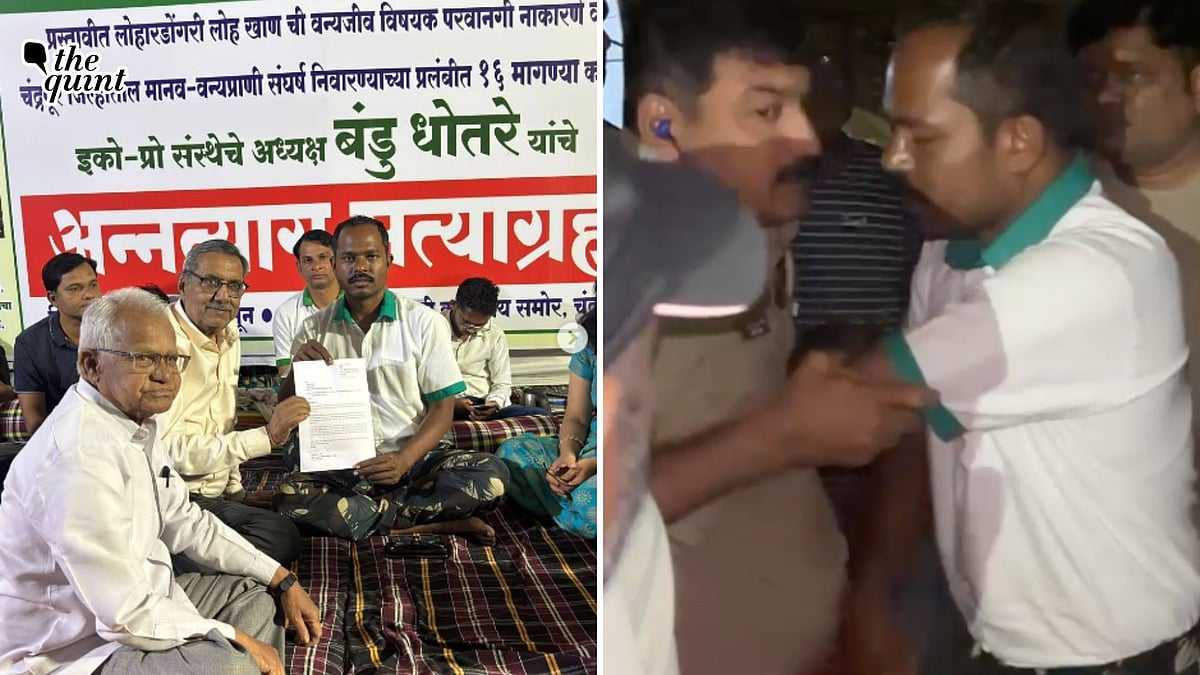
Environmental activist Bandu Dhotre, who had been on a hunger strike against a proposed mining project in a crucial tiger corridor in Maharashtra’s Chandrapur district, was forcibly removed by police from the protest site on Monday, 9 March, and shifted to a hospital.
Dhotre, along with several other activists, had been fasting in protest against an iron ore mining project proposed in the Brahmapuri forest division of Chandrapur.
The approval came despite strong objections from the SBWL’s own expert committee, which had recommended against allowing the project in the ecologically sensitive corridor.
Dhotre has been leading the campaign against the project since the clearance was granted nearly two months ago, mobilising environmental groups and local residents.
According to Dhotre, officials from the administration had repeatedly urged him to end the fast.
Dhotre added that the agitation against the mining project would continue despite poluce action.
The Project
The mining project has been proposed by Sunflag Iron and Steel Company Ltd, a Nagpur-based firm.
The proposed mine lies in the heart of dense forests adjoining the Ghodazari Wildlife Sanctuary, within a crucial wildlife corridor that connects the Tadoba Andhari Tiger Reserve—Maharashtra’s largest national park—to the Brahmapuri–Gadchiroli landscape and other tiger-bearing forests further north.
This forest landscape is home to over 60 tigers, along with several other wildlife species.
A three-member committee of the State Board for Wildlife (SBWL), constituted in October 2024 to examine the proposal, had submitted a detailed report opposing the project.
(Photo: Bandu Dhotre)
It further warned that fragmentation of the forest landscape could increase human–large carnivore conflict, posing heightened risks to local communities, wildlife, and their habitats.
The committee concluded that the environmental damage, health risks to local residents from pollutants, the likelihood of escalating human–wildlife conflict, the cost of mitigation efforts, and the compensation burden on the state exchequer would far outweigh any potential economic benefits of the project.
“Therefore, the project is not recommended,” the committee stated in its findings.
Environmentalists and local residents say the region has already seen a gradual rise in human–tiger conflicts in recent years, often resulting in fatalities. They attribute the trend largely to increasing ecological pressure from mining activity and irrigation projects in the region.
Dhotre's Movement
Since its approval, the project has faced backlah from the state's Opposition parties as well as environmental activists. Shiv Sena (UBT) leader Aaditya Thackeray had also raised the issue in the state Assembly and had written to the Union Environment Ministry to cancel the approval granted by the SBWL.
For the past two months, Dhotre had been mobilising support for a peaceful movement against the project. On 5 March, Dhotre and several other activists began a hunger strike at the protest site, organising different forms of demonstrations each day to draw attention to their cause.
(Photo: Bandu Dhotre)
“We have been holding a different demonstration every day,” Dhotre said. “One day we held a shirtless protest, another day there was a ‘lotangan’ protest, where participants rolled on the ground in a symbolic act of resistance.”
According to Dhotre, public awareness about the protest had been steadily growing in recent days.
Dhotre also said he had led several environmental movements in the past and had previously served as a member of the State Board for Wildlife (SBWL).
“I have led many such movements before. I have also been a member of the SBWL and have worked closely with local authorities and the police to address human–tiger conflict in the region. This is the eighth hunger strike I have undertaken, but never before have I been subjected to such treatment,” he said.
- Access to all paywalled content on site
- Ad-free experience across The Quint
- Early previews of our Special Projects
Published: undefined