
As CJP Heads To Jantar Mantar, Four Hard Questions It May Have to Address
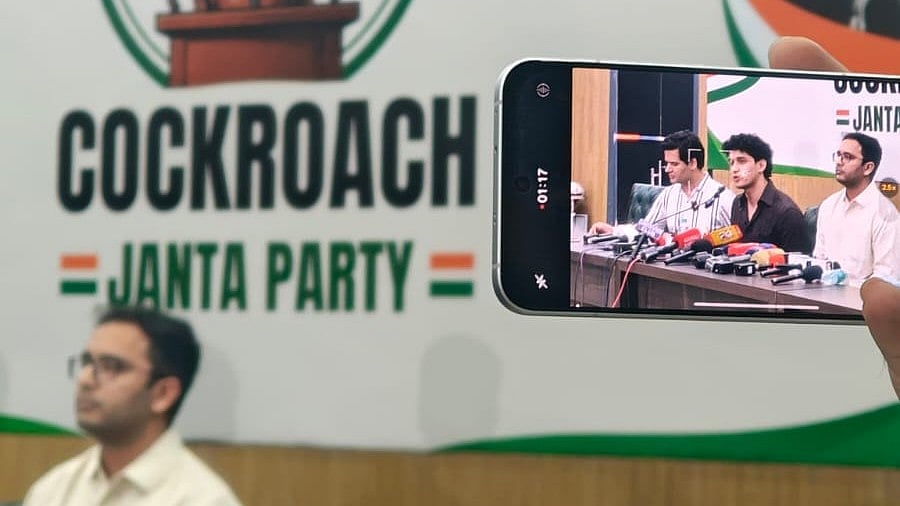
The Cockroach Janta Party’s first formal press conference signalled ambitions beyond social media satire.
advertisement
On the morning of June 6, when Abhijeet Dipke lands at Indira Gandhi International Airport, the cameras will be waiting. A Boston university student, Dipke is the founder of Cockroach Janta Party (CJP) — a satirical social media page with over 22 Million followers which is, from the looks of it, on its way to transitioning into a serious political front.
Dipke is returning to launch a protest at Jantar Mantar demanding the resignation of Education Minister Dharmendra Pradhan over the recent mismanagement of NEET, CBSE, and CUET exams which impacts lakhs of students in the country.
The choice of venue, the calibre of the spokespersons, the format, all signalled that the group needs to be taken seriously on terms beyond follower counts and social media presence.
The Unanswered Questions
On funding: When reporters asked how the movement was being financed, chief spokesperson Saurav Das said the press conference banner had cost Rs 200 and invited those present to contribute Re 1 each.
The response drew laughter. It did not constitute an answer.
On social media, unverified, viral claims about foreign funding are already doing the rounds. At the presser, Das said, and rightly so, that any public movement that threatens status quo, is quickly branded as a "deep state conspiracy".
We saw this play out during the protests against farm laws and the citizenship amendment act.
On political links: It is public knowledge that CJP founder and spokesperson Ranka have worked with the Aam Aadmi Party in the past. Dipke denied any current links with the party.
At the June 3 press conference, spokesperson Ranka characterised questions about AAP links as a pattern of the "ruling party's ecosystem" labelling critics as "anti-national" or "Pakistani".
Later, when asked if and when Ranka quit the party, he said that he was never an "official" member in the first place.
On ideology: The CJP's official slogan is "Voice of the Lazy and Unemployed."
Their stated mission is: "Build a party for a generation raised on promises, notifications, and low battery warnings. A generation that is overqualified, frustrated, angry at what's broken, and financially confused. That's it. That's the mission. The rest is satire."
At the presser, when questioned about ideology, the CJP stated that they will "abide" by the Indian constitution. When specifically questioned on the position on reservations, issues concerning rights of minority students, and student activists languishing in jail under anti terror laws, they said that position on these issues is yet to be ironed.
On gender: The CJP's spokesperson roster and visible leadership are entirely male. Speaking to the media, Dipke said women had been offered roles but preferred not to be at the forefront due to online attacks and threats. This is a known and real problem for women in Indian public life.
At Its Core, a Transparency Argument
The CJP's central demand is accountability from the government. It is asking a minister to resign because a public institution failed in its obligations to students and was not transparent about those failures. That is a legitimate demand, and it mirrors what accountability-focused civic movements have always argued.
A clear organisational charter, disclosing who controls decision-making and how, would strengthen its credibility among the students it is trying to mobilise, many of whom have learned to be sceptical of movements that speak accountability while practising opacity.
Whether the June 6 protest draws hundreds or tens of thousands, the longer-term credibility of the CJP as a youth platform will be determined not by its follower count but by whether it answers these questions on its own initiative.
- Access to all paywalled content on site
- Ad-free experience across The Quint
- Early previews of our Special Projects
Published: undefined