
Bengal: Muslims Become Cow Protectors, Hindu Traders Demand Cattle Slaughter
Ever since the BJP government enforced stricter rules, Hindu traders say, "If we can't sell, we will be finished."
advertisement
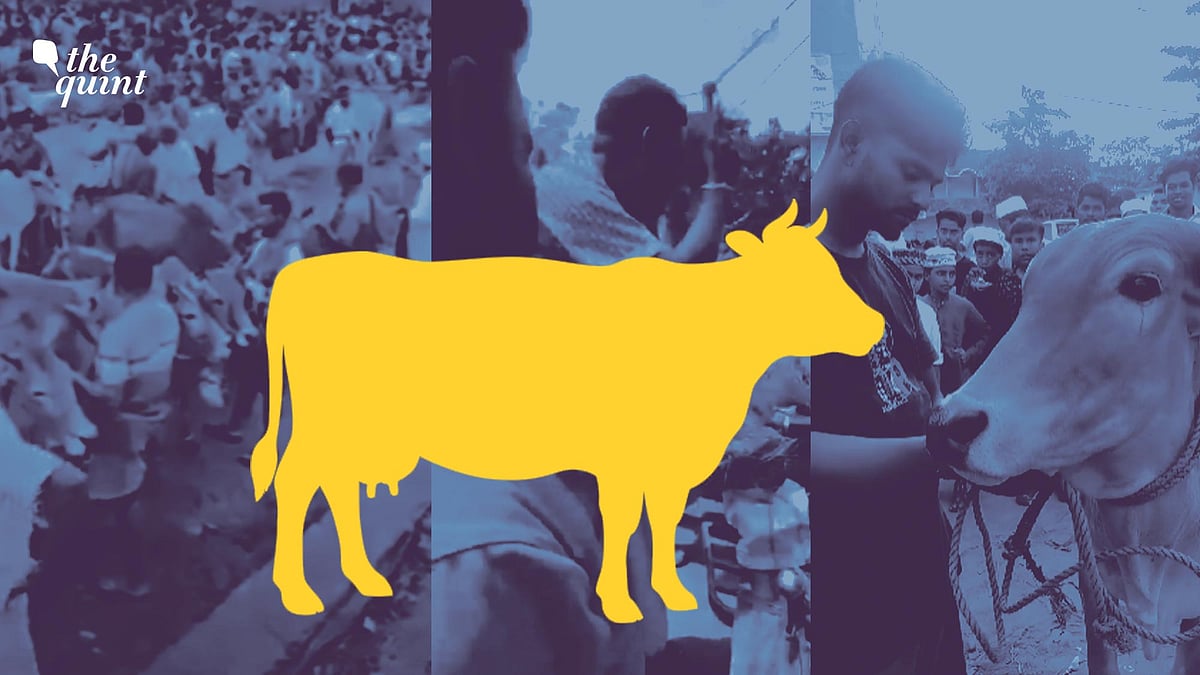
West Bengal's social media landscape has suddenly become flooded with cows. In one viral video, Muslim youths are seen stopping Hindu cattle sellers and sending them back home with their cows, saying: “Why are you trying to sell your mother? Take her home and serve her. You’ll earn money by selling cows, but we’ll end up in jail.”
In another clip, Muslim youths halt trucks transporting cattle and interrogate the drivers: “Why are you tying up your mother like this and transporting her inhumanely? Walk them respectfully instead.”
At the same time, several Muslim influencers are publicly appealing to people not to buy cows this Eid-ul-Adha.
Alongside these videos are heartbreaking clips of Hindu cattle rearers returning home without any earning from empty cattle markets, their faces dry with anxiety and despair.
Many openly blame the newly formed BJP government led by Chief Minister Suvendu Adhikari.
The crisis has exploded online. A regional media outlet’s report on the “cow crisis” crossed one million YouTube views and three million Facebook views within a single day.
The Notification That Triggered the Crisis
On 13 May, the newly formed BJP government announced stricter enforcement of the West Bengal Animal Slaughter Control Act, 1950. Under the directive:
Animals can only be slaughtered with official certification proving they are over 14 years old or permanently unfit for work.
Slaughter is permitted only in government-approved slaughterhouses.
Public slaughter is prohibited.
Violations may lead to six months’ imprisonment, a fine of Rs 1,000, or both.
After the notification, Hindu nationalist groups and police reportedly began stopping and harassing cattle transporters on roads.
Soon after, Muslim groups began campaigning for a boycott of cow purchases for Eid. That was the moment panic spread among Bengal’s Hindu cattle traders.
Bengal’s Reality: Muslims Eat Beef, Hindus Raise the Cattle
West Bengal’s cattle economy rests on a social contradiction unique to the state. While Muslims largely run beef shops and consume beef, the overwhelming majority of cattle rearers and sellers are Hindus — especially members of the Ghosh community, Bengal’s traditional dairy caste.
Historically, Ghosh neighbourhoods were among the earliest and strongest RSS-BJP strongholds in Bengal, long before the BJP had even a single MLA in the state Assembly. In several communal flashpoints over decades, Ghosh localities were known for active involvement in anti-Muslim mobilisations.
Yet, ironically, the BJP government’s enforcement drive has first devastated this very community.
With Eid-ul-Adha approaching on 27-28 May, Muslim organisations are now openly urging people to sacrifice goats or buffaloes instead of cows. The result: thousands of Hindu cattle rearers fear economic ruin.
Empty Cattle Markets Before Eid
Usually, Bengal’s cattle markets are overflowing before Eid. Hundreds of cows and buffaloes remain tied in rows as traders and buyers negotiate loudly into the night.
But this year, many haats are eerily silent. At one Sunday evening market, where 200-300 animals are usually sold, only two cows remained tied. Muslim buyers were almost entirely absent.
Instead, groups of worried Hindu cattle rearers stood discussing debt, loans and survival.
Biswajit Ghosh (35) said many farmers had taken loans at high interest, mortgaged jewellery, or pledged land to rear cattle. “I alone have bank loans worth Rs 1 crore. The situation has become disastrous.”
Sixty-seven-year-old Gobinda Ghosh owns 15 cows and 150 buffaloes. Standing in front of his cowshed, he said: “I have bank loans worth Rs 2 crore. Twelve labourers work here. Each earns Rs 22,000 plus food expenses. If there is no solution, my whole family may have to die.”
Why the '14-Year Rule' Terrifies Farmers
Most cows stop giving milk after seven to eight years.
Maintaining a cow costs roughly Rs 300-500 per day — at least Rs 9,000 per month. Once a cow stops producing milk, keeping it alive until the age of 14 could cost over Rs 7.5 lakh.
But a 14-year-old cow is usually weak, diseased and commercially worthless. Farmers say nobody will buy such cattle for meat, and keeping them alive indefinitely is economically impossible.
For dairy farmers, the new rule effectively means: once a cow stops producing milk, it can never be sold again.
A Law From Another Era
The West Bengal Animal Slaughter Control Act, 1950 was originally enacted to preserve milk supply and agricultural animal power in a largely pre-mechanised rural economy.
But critics argue Bengal no longer functions like the agrarian society of the 1950s.
Former CPM leader and ex-panchayat chief Rashid Gazi said:
Rural Economy at Stake
India possesses roughly 192.9 million cattle and 109.6 million buffaloes according to the 2019 Livestock Census. The country produces around 9–9.5 million tonnes of beef annually — mostly buffalo meat — and exported 1.475 million tonnes in 2023, making India the world’s second-largest beef exporter after Brazil.
West Bengal itself is one of India’s largest beef-producing states, with nearly 12.5 million cattle and 1.5 million buffaloes.
The state’s weekly cattle markets — including Sunukpahari Hat, Mayapur Gorur Haat, Dhola Cows Bazaar, Birshibpur Garuhat, Bagjola Goru Hat, Panskura Goru Haat, Birohi Cow Market, Samsi Weekly Haat, Gosaipur Haat and Swarupnagar Haat — collectively sustain crores of rupees in rural livestock trade every week.
For many poor agrarian households without access to formal banking, cattle function as liquid savings — an emergency insurance system that can be sold during crisis.
Caste issues expert Kumar Rana notes that although the Ghosh caste is most associated with cattle rearing in Bengal, many rural communities depend on livestock as their primary economic safety net.
Political Reactions
BJP leader Abani Mondal acknowledged the growing unrest among cattle rearers. “This is a 1950 law that previous governments failed to enforce. We are implementing the rule of law now. Naturally, some problems are arising and we must overcome them,” he said.
Asked whether the party had sought relief measures for cattle rearers, Mondal admitted no formal demands had yet been made, though he added that “something must be thought through quickly.”
Meanwhile, ISF MLA Naushad Siddiqui has written to Chief Minister Shuvendu Adhikari seeking exemptions under Section 12 of the Act, which allows special permission for religious slaughter.
In his letter, Siddiqui warned that delays in veterinary certification and administrative barriers were pushing poor cattle traders, transport workers and farmers into severe financial distress.
Interestingly, many Muslim social media users criticised Siddiqui’s intervention. Comments online included:
CPI(M) MLA Mustafizur Rahman Rana has also written to the Chief Minister, urging a peaceful resolution before Eid.
According to Calcutta High Court sources, at least five PILs have already been filed challenging the implementation drive, including one by CPI (ML) Liberation.
State committee leader Moloy Tiwari said the petition seeks an interim order preventing “a dormant and outdated 1950 law from being weaponised in the name of cow protection against livelihoods across communities.”
Lawyer Samim Ahmed, appearing for cattle traders and dairy farmers in one PIL, argued:
“The State has abruptly operationalised a historically dormant law without adequate veterinary infrastructure, certification mechanisms, or slaughter facilities. This threatens the livelihoods of cattle traders, dairy farmers, transporters, meat workers and leather workers.”
If this rule remains in force, farmers would stop rearing cattle for milk, as maintaining non-productive animals until death would become financially ruinous.
The ripple effects would extend far beyond the beef economy. Feed suppliers, veterinary medicine, the leather industry, slaughterhouses, restaurants, transport workers, and rural labourers — all would be affected.
The impact, therefore, is no longer just religious or political. It is economic, social and civilisational.
And perhaps the greatest irony of all is this:
For the first time in Bengal, large sections of Muslim society are publicly opposing cow sacrifice, while a section of Hindutva’s traditional Hindu support base is desperately hoping that cows will be sacrificed — somehow, by any means necessary.
- Access to all paywalled content on site
- Ad-free experience across The Quint
- Early previews of our Special Projects
Published: undefined