
New CAPF Bill Reverses Supreme Court Order; Reserves 50% I-G rank posts for IPS
Likely to be tabled next week, the CAPF Bill enforces IPS dominance in paramilitary forces, undoing SC's directive.
advertisement
In May 2025, the Supreme Court recognised what thousands of Central Armed Police Forces (CAPF) officers had argued for years: that their careers were being stalled by a system that ensures IPS deputation to top positions in their respective forces.
The Court passed a landmark judgment, which among many other things, directed the government to reduce IPS deputation.
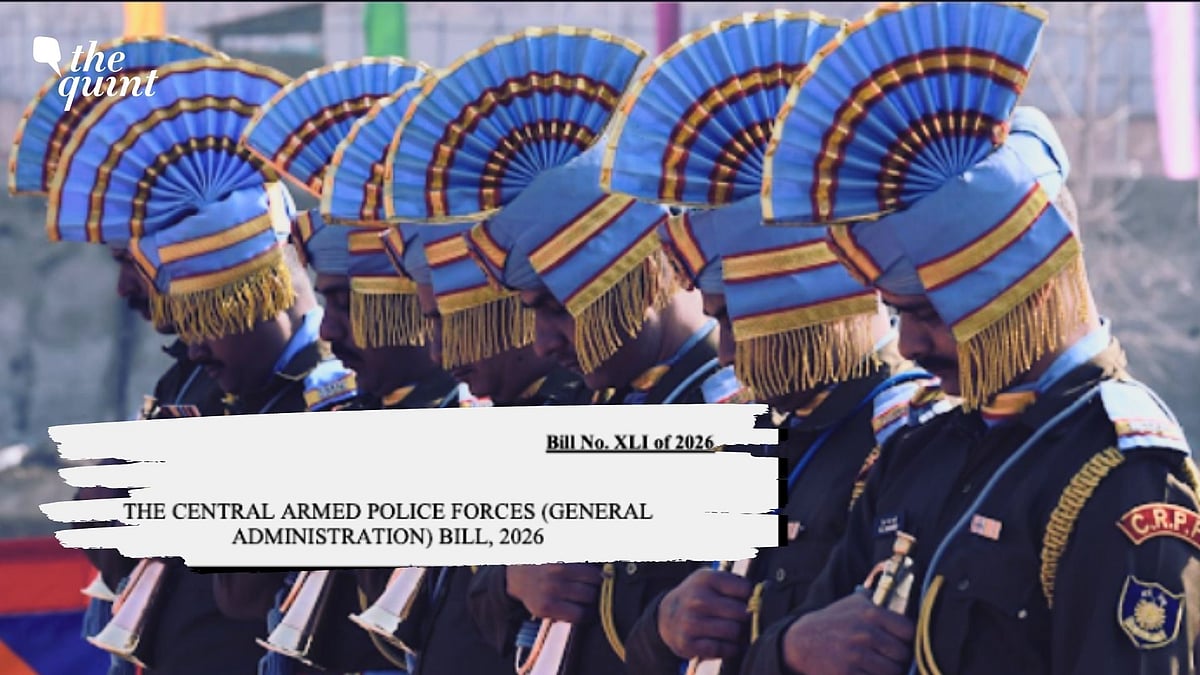
In March 2026, however, the Union government has proposed a law that appears to reverse that shift. A copy of this Bill, circulated among Rajya Sabha members on Friday, 20 March, was seen by The Quint.
What the New Bill Does
The Central Armed Police Forces (General Administration) Bill, 2026 introduces a sweeping legal framework to govern appointments, promotions, and cadre structure across CAPFs.
It empowers the Centre to frame rules governing CAPFs by introducing a clause that allows the government to bypass existing judicial directions, including the Supreme Court’s 2025 ruling.
Instead of leaving deputation as a flexible administrative arrangement, the Bill fixes it into the structure:
Inspector General (IG): up to 50 percent posts on deputation
Additional Director General (ADG): minimum 67 percent on deputation
Director General (DG): 100 percent deputation-based
This makes IPS presence in senior ranks not just permissible, but mandatory.
The Bill also consolidates power with the Central government to determine recruitment rules, control promotions, and define service structure.
What the Supreme Court Had Ordered
The contrast of the Bill's provisions with the May 2025 judgment is stark.
The Supreme Court had:
recognised CAPFs as Organised Group A Services (OGAS)
directed a cadre review and rule overhaul
and most critically, ordered that deputation posts up to the Senior Administrative Grade (SAG) be progressively reduced within two years
While the Court called for phasing out deputation, the Bill locks it in.
The Court pushed for internal promotions, the Bill preserves external dominance at senior levels.
Why This Matters
CAPFs, which include forces like CRPF, BSF, and ITBP, lead operations in conflict zones, command troops on the ground, but often do not rise to the top ranks within their own forces.
For years, officers have argued that IPS deputation blocks upward mobility, creating a pyramid where field command lies with CAPF officers but leadership positions remain externally controlled.
"Historically, Indian Police Service officers are an integral and important part of the Central Armed Police Forces, who have been serving on deputation along with officers and members of these Forces. The Central Armed Police Forces perform functions relating to national security and anti-insurgency in close coordination with the State authorities. Therefore, in the interest of maintaining Centre-State relations by ensuring close coordination between the Union and the States for effective operational functioning, it is essential to maintain the existing system of deputation of the Indian Police Service Officers in the Central Armed Police Forces," the Bill states.
But critics argue that these justifications were already considered and rejected by the Supreme Court.
In a previous report on this subject by The Quint, Sarvesh Tripathi — former CRPF Assistant Commandant who is now a Supreme Court Lawyer — claimed that the Centre's reasons are an eyewash. "No other service sees lateral entries to top positions via deputation...The actual point at the heart of this matter is that CAPFs are the most operational forces during elections. That is why whichever government is in power wants greater control over who leads these forces."
(At The Quint, we've consistently reported on the structural issues plaguing India’s institutions and power structures. If you believe in our work, support us by becoming a member.)
- Access to all paywalled content on site
- Ad-free experience across The Quint
- Early previews of our Special Projects
Published: undefined