
CAPF Officers Won in Supreme Court. Modi Govt's New Bill Could Undo The Outcome
CAPF officers' Supreme Court victory at risk from Modi government's new bill.
advertisement
(First, a small appeal: At The Quint, we've consistently reported on the structural issues plaguing India’s institutions and power structures. If you believe in our work, support us by becoming a member.)
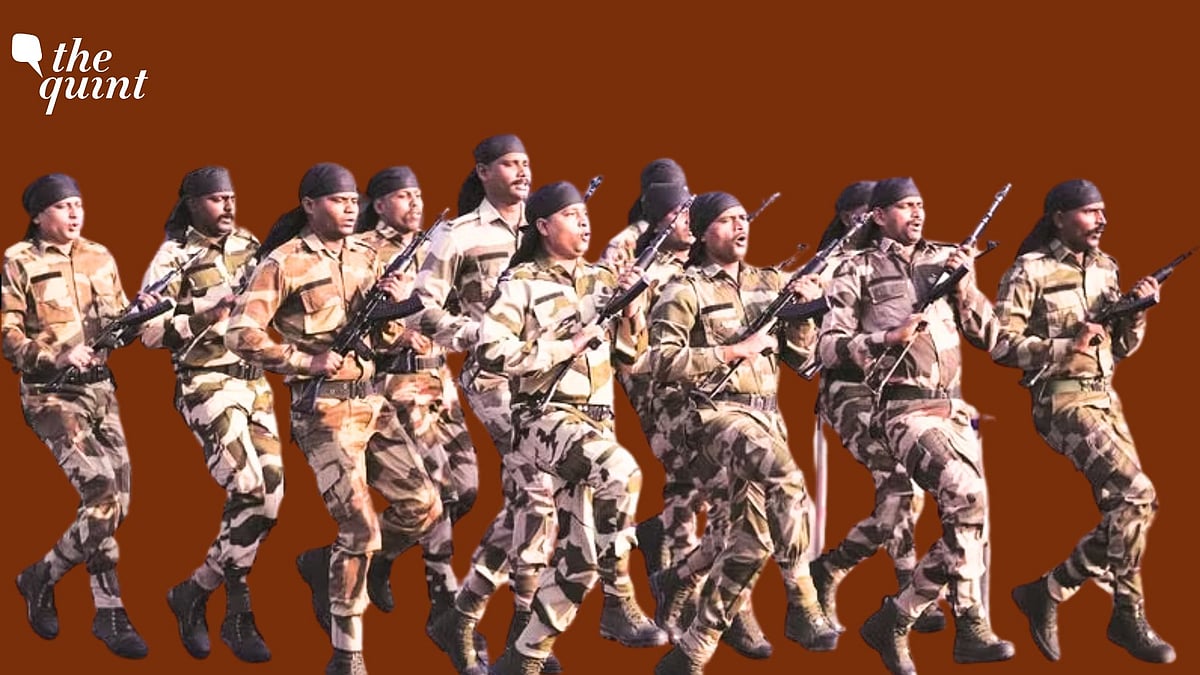
For years, officers of India’s Central Armed Police Forces (CAPFs) fought a battle over a simple question: who should lead India’s paramilitary forces?
They argued that officers who spend their entire careers within the CAPFs, which include the CRPF, BSF, CISF, ITBP, and SSB, should have a fair opportunity to rise to the top ranks of their own forces.
It recognised that the existing system where senior posts are routinely occupied by Indian Police Service (IPS) officers on deputation had led to stagnation in promotions for CAPF cadre officers. It directed the government to progressively reduce deputation posts up to the Senior Administrative Grade (IG level).
But just months later, the Union Cabinet has approved the Central Armed Police Forces (General Administration) Bill, which could effectively preserve the system the Court sought to reform.
This move by the central government has raised two important questions:
1. Where is the constitutional line between legislative power and judicial authority?
2. What does it mean for The Bharatiya Janata Party (BJP) which, in its 2019 and 2024 election manifestoes, promised "stronger" and "better equipped" paramilitary forces?
A Long-Running Power Struggle
The conflict between CAPF cadre officers and IPS officers is not new.
CAPFs, which together have over 11 lakh personnel, are responsible for a wide range of internal security duties. These include counter-insurgency operations, guarding international borders, securing critical infrastructure, and combating Left Wing Extremism.
Under existing recruitment rules:
50 percent of Inspector General (IG) posts
20 percent of Deputy Inspector General (DIG) posts
are filled by IPS officers on deputation.
CAPF officers have long argued that this structure blocks their career progression and prevents them from reaching the top of their own organisations.
"The level of career stagnation is such that in most organised forces, officers get a promotion in four years. In CAPFs, officers have had to wait for upto 14 years for their first promotion," explained Supreme Court lawyer and Ex Assistant Commandant CRPF, Sarvesh Tripathi.
He added: "Among many other things, the long legal battle which was first fought in the Delhi High Court and then the Supreme Court, was essentially about the morale of the cadre."
What the Supreme Court Said
In its 23 May 2025 judgment in Sanjay Prakash & Ors vs Union of India, the Supreme Court examined the grievances raised by CAPF cadre officers.
The Court noted that officers had complained about “lateral entry into the higher grades” through IPS deputation, which prevented them from getting timely promotions and resulted in “a great deal of stagnation” that could affect morale.
The Court also examined service data presented before it.
For instance, in the CISF:
Out of 16 IG posts, 8 were deputation posts.
Out of 67 DIG posts, 20 were deputation posts.
The Court recorded evidence of widespread stagnation in promotions. In the batches examined before it, 140 out of 153 cadre officers were stagnating in various ranks, including IG, DIG and Senior Commandant levels.
The New Bill and What Does It Say
As per reports by The Hindu and The Times of India, the Central Armed Police Forces (General Administration) Bill, cleared by the Union Cabinet on 10 March, aims to retain the provision for IPS deputation to senior posts such as DIG and IG in CAPFs.
Officials have indicated that the bill seeks to bring statutory clarity to the administrative structure of CAPFs.
CAPF officers, however, see it differently.
“The CAPF (General Administration) Bill appears to be a move to negate the Supreme Court ruling,” a CAPF officer told The Times of India, arguing that the Court’s directive would have required the government to free up senior posts for cadre officers over time.
The Centre had earlier filed a review petition against the Supreme Court verdict, but it was dismissed in October 2025.
Manifesto Promises vs Structural Reform
Across successive election manifestoes, the BJP has repeatedly promised to strengthen India’s paramilitary forces.
The party’s 2019 Lok Sabha manifesto stated:
Similarly, the 2024 manifesto promised to equip the armed forces and CAPFs with “modern state-of-the-art weapons, equipment and technology”.
However, CAPF officers say the manifestoes have focused largely on modernisation and operational capability, while remaining largely silent on issues such as career progression and leadership within the forces.
Tripathi, who is also a national spokesperson for the Akhilesh Yadav's Samajwadi Party, added: "This is a structural problem that is unique to the CAPFs. No other service sees lateral entries to top positions via deputation. The point at the heart of this matter is that CAPFs are the most operational forces during elections. That is why whichever government is in power wants greater control over who leads these forces."
Why CAPF Officers Took the Battle to Court
The legal battle itself began after the government recognised Group A executive cadres of CAPFs as Organised Group A Services (OGAS) in 2019.
CAPF officers argued that once they were granted OGAS status similar to other central services they should also enjoy clear promotional pathways within their own cadre, rather than seeing senior posts filled by officers from another service.
Their petitions asked the court to ensure:
proper cadre reviews
promotion-based filling of senior posts
and reduction of IPS deputation
The Supreme Court’s 2025 judgment partially endorsed that argument.
What Happens Next
The government has told the Supreme Court that it needs time to conduct a comprehensive cadre review and submit proposals for implementing the Court’s directions.
At the same time, the proposed bill could reshape the legal framework governing CAPF administration.
"Once its passed, the CAPF can challenge the constitutional validity of the law in the court," Tripathi said while cautioning that this time the Court might not be able to do much. "Any action by the Court to overturn the provisions of the law will be seen as judicial overreach," he said.
Once passed by Parliament, this law may determine how far the Court’s vision of greater leadership opportunities for CAPF officers is actually implemented.
For CAPF officers, however, this is more than leadership and promotions.
They argue that officers who spend decades in difficult operational environments, from insurgency zones to high-altitude border deployments, should have the chance to lead the institutions they helped build.
- Access to all paywalled content on site
- Ad-free experience across The Quint
- Early previews of our Special Projects
Published: undefined