Inside Doctor, Activist's Arrests as Odisha Cracks Down on Anti-Mining Protests
Inside the fight over bauxite, where corporate giants use state machinery against local activists
advertisement
The arrest of Dr Randall Sequeira, a doctor providing healthcare in the remote tribal areas of Kalahandi and Rayagada districts in Odisha, on the night of 16 October, has become the latest flashpoint in the long-drawn battle of attrition between anti-mining and tribal rights activists on the one hand and the big players of the aluminium industry — namely the Vedanta and the Adani groups — backed by the state government on the other.
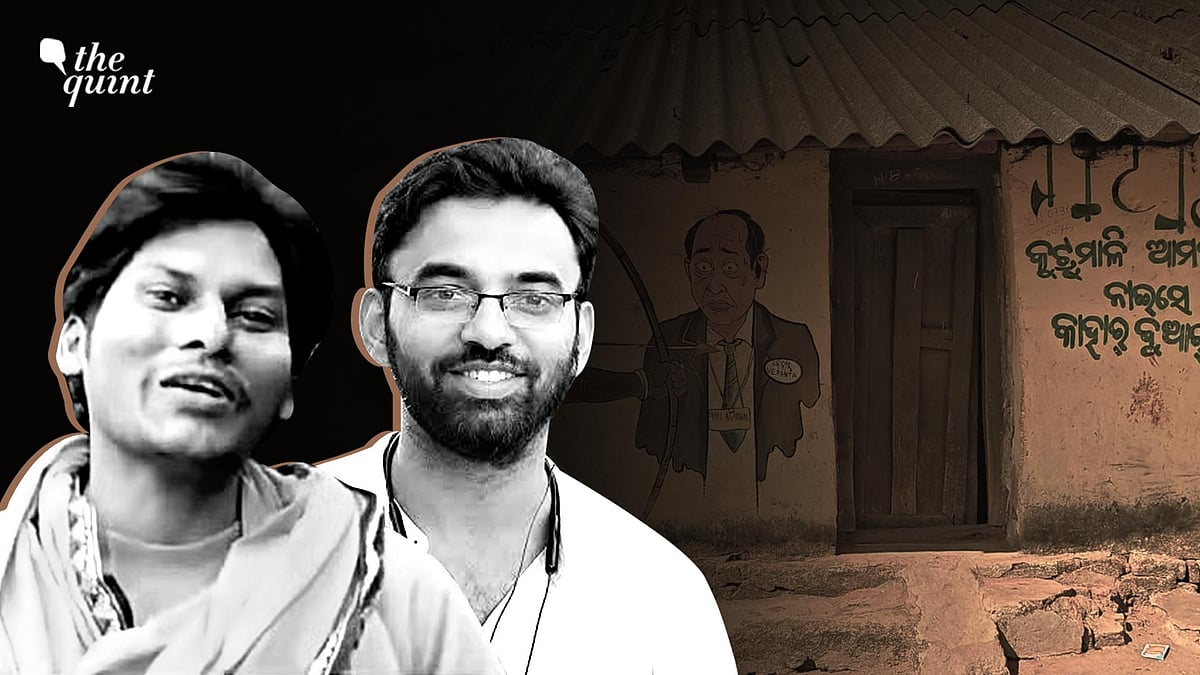
Dr Sequeira, along with anti-bauxite mining activist Laxman Naik, was arrested from his residence in Bhawanipatna, the district headquarters of Kalahandi, at around 11 pm on the night of 16 October and produced in the judicial magistrate first class (JMFC) court in Rayagada the next day.
With local courts shut for the Puja vacations, their appeal for bail can be taken up by the sessions court only after 27 October when the courts reopen.
Justifying their arrest, Akhileshwar Singh, inspector general (IG) of south-western range, has said the arrests were required to maintain law and order in the area.
Graffiti against Vedanta in the villages of Sijimali, Odisha
(Special Arrangement/The Quint)
“There are 16 cases pending against Laxman Naik,” Rayagada superintendent of police (SP) Raj Prasad further said. But the activists opposing bauxite mining in the Sijimali and Kutrumali hills have termed the allegations against Dr Sequeira and Naik as ‘laughable.’
“He has never held anything in his hands apart from a stethoscope in his life. He has been providing healthcare services free of cost to the people in remote areas where there are no hospitals and doctors. It’s a joke to accuse such a person of attempt to murder and rioting with deadly weapons. His only crime was he treated people injured in the police crackdown in our village in the wee hours of 6/7 April this year. He was not even present in the area when the incident happened,” says Subas Singh Majhi, president of the Maa, Maati, Maali Suraksha Manch, which is spearheading the movement against bauxite mining in Sijimali.
It may be mentioned here that scores of adivasis were injured when armed police swooped down on Kantamal village in Kashipur block of Rayagada district to arrest Majhi in a case. Some policemen were also injured as the villagers resisted the brutal crackdown. Majhi’s allegation is corroborated by Suna Majhi of nearby Sarambai village.
Who is Dr Randall Sequeira?
Dr Randall Sequeira
(Photo: Sandeep Sahu/ The Quint)
Originally from Mangaluru in Karnataka, Dr Sequeira grew up in Mumbai and completed his education up to higher secondary level there. He then acquired an MBBS degree from St John’s Medical College, Bengaluru and followed it up with an MD in internal medicine from Sawai Man Singh Medical College and Hospital in Rajasthan.
Unlike others with a degree in medicine, he chose to work for the tribals in one of the remotest areas in the country after witnessing first hand how difficult it is for tribals to access healthcare during a mandatory one-year stint in rural areas while pursuing his degree.
He came to Kalahandi to work as a doctor for an NGO in 2017 and hasn’t left the area.
Well known environmental activist Prafulla Samatara, convenor of Lok Shakti Abhijan and winner of Goldman Environment Award in 2017, says Dr Sequeira can at best be called a ‘sympathiser’ of the tribals’ fight to save their land, forests and sacred hills from the rapacity of the bauxite sharks.
Samantara, who played a key role in the halt to bauxite mining in Niyamgiri hills through a Supreme Court monitored Gram Sabha in 2013, told The Quint over phone:
Dr Sequeira assisting locals.
(Photo: Sandeep Sahu/ The Quint)
Persistent Persecution
The arrest of Sequeira, however, is part of a prolonged and sustained crackdown on all those who oppose mining in the bauxite rich hills of the adjacent districts of Kalahandi and Rayagada.
On 26 March, tribal rights activist Lingaraj Azad, president of the Samajwadi Jan Parishad (SJP) advisor to both Niyamgiri Suraksha Samiti (NSS) and Maa, Maati, Mali Suraksha Parishad, was arrested along with his SJP associate Suresh Sangam. Both of them have been languishing in jail ever since. On 10 September, NSS president Lada Sikaka was arrested and put behind bars on what activists say are cooked up charges.
“There is a pattern to all these arrests. For example, the FIR on the basis of which Dr Sequeira was arrested did not even have his name while he has secured anticipatory bail in the one case where he has been named. The modus operandi of the police is to leave the case open ended by naming some persons and adding ‘others.’
This ‘others’ clause comes in handy for the police when they want to arrest someone and keep him in jail,” says Narendra Mohanty, convenor of the Campaign Against Fabricated Cases (CAFC). “They use this ‘others’ part to arrest someone in another case as soon as he gets bail in one case,” he adds.
Activist Hiramal Nayak, for example, was arrested immediately after he came out of jail after securing bail in one case in another. And some of the charges pressed against activists, activists say, are a joke.
“Can you believe that one of the cases is lodged against Lingaraj Azad, who has fought relentlessly against Vedanta’s attempt to mine bauxite in the Niyamgiri hills, accuses him of taking a bribe of one lakh rupees from someone to find a job in Vedanta?” asks Samantara.
Laxman Naik
(Photo: Special Arrangement / The Quint)
Visit of Anil Agarwal
Activists on the ground are linking the renewed crackdown on those opposing bauxite mining to Vedanta Chairman Anil Agarwal’s visit to Odisha. After having a meeting with Chief Minister Mohan Charan Majhi on 26 September, Agarwal told journalists in Bhubaneswar; “I have full trust on the state government. Everything will be settled by November.”
Having burnt its fingers in the attempt to mine bauxite in the Niyamgiri hills due to a historic Supreme Court decision in 2013, he is now banking on the Sijimali hills to fulfill his ambitious plans to become a major player in the global aluminium industry.
Villages remain opposed to Vedanta.
(Photo: Special Arrangement/ The Quint)
An attempt to get a reaction from the Vedanta group on the arrest of Dr Sequeira proved futile with a company spokesperson saying; “It is strictly a matter between the protesters and the district administration. We have nothing to do with it.” Repeated calls and messages to officials in the and Home and Mines department also went unanswered.
Another flashpoint is taking shape in the Kutrumali hills, close to the Sijimali hills, where Kalinga Alumina Limited, a subsidiary of the Adani Group, has secured a mining lease over an area of 702 hectares containing 127 million tonnes of bauxite to run its 4 MTPA open cast mines.
With the state government leaving no room for doubt where its sympathies lie, the tribals opposing bauxite mining in their hills are banking on the Supreme Court to save themselves from ruin, as it did in 2013.
(The author is a senior Bhubaneswar-based journalist and has reported for the BBC for the last 20 years. He tweets @geminianguddu.)