Kharg Island Struck: US-Israel Attack Iran’s Oil Hub Ahead of Trump's Deadline
Iranian authorities confirmed the strikes and issued warnings of potential retaliation.
advertisement
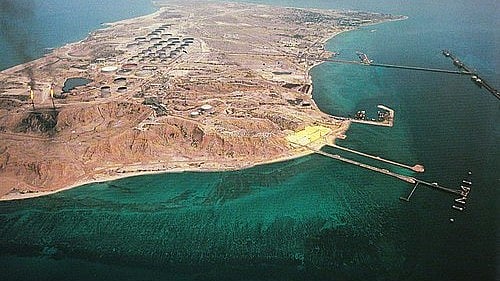
Kharg Island, Iran’s principal oil export terminal in the Persian Gulf, was reportedly struck by multiple US and Israeli military attacks on 7 April 2026.
The strikes targeted military installations and infrastructure on the island, which handles the majority of Iran’s crude oil exports.
The attacks occurred just hours before a deadline set by US President Donald Trump for Iran to reopen the Strait of Hormuz expired.
According to The Indian Express, the US military conducted strikes on military targets on Kharg Island, citing confirmation from a senior US official.
The Islamic Revolutionary Guard Corps (IRGC) responded by declaring that “restraint is over,” following Iran’s rejection of a US-backed ceasefire proposal. The strikes were described as a significant escalation in a conflict that has already lasted six weeks.
As reported by The Hindu, the attacks on Kharg Island were part of a broader wave of strikes across Iran, including infrastructure sites in multiple regions. The Israeli military confirmed targeting dozens of infrastructure sites, while Iranian state television acknowledged the strikes and indicated that further details would be released.
The IRGC warned neighbouring countries that any further escalation would prompt a response “beyond the region.”
As highlighted by Hindustan Times, Kharg Island is responsible for nearly 90 percent of Iran’s oil exports. The island’s strategic location and deep-water access make it indispensable for Iran’s energy trade.
The strikes coincided with President Donald Trump’s ultimatum to Iran to reopen the Strait of Hormuz or face destruction of critical infrastructure, including bridges and power plants. Trump stated, “A whole civilisation will die tonight, never to be brought back again. I don’t want that to happen, but it probably will.”
“They’ll have no bridges. They’ll have no power plants. They’ll have no anything,” Donald Trump said, as quoted in multiple sources.
Coverage revealed that the strikes on Kharg Island targeted radar systems, docking facilities, and military installations. The island’s oil terminals and petrochemical facilities were considered highly sensitive, with any disruption likely to impact global oil supplies.
The IRGC threatened to retaliate by disrupting energy supplies to the US and its allies, warning of long-term consequences for global markets.
The incident placed Kharg Island at the centre of the ongoing conflict, with analysts noting that sustained disruption could significantly reduce Iran’s oil revenues and affect global fuel prices.
Escalating tensions have already caused volatility in energy markets, with reporting indicating that oil prices have surged and Iran’s civilian economy has suffered.
Despite the strikes, the IRGC’s control over oil exports and domestic manufacturing has insulated its military economy, allowing continued funding for military operations.
The broader impact on ordinary Iranians includes rising inflation, job losses, and restricted access to foreign goods.
“The IRGC processed roughly half of Iran’s oil exports in 2025, worth at least $30bn,” a source familiar with the matter stated.
Trump’s approach to the crisis has involved several deadline extensions, but analysis showed that he ultimately signalled Tuesday’s deadline as final, threatening comprehensive strikes on Iran’s infrastructure if demands were not met.
Iranian officials have insisted on guarantees against further attacks as a precondition for any peace agreement, while regional and international actors continue to seek diplomatic solutions.
“Tuesday will be Power Plant Day, and Bridge Day, all wrapped up in one, in Iran. There will be nothing like it!!!” Trump posted on Truth Social.
Global oil prices have responded to the conflict, as details emerged of the strikes and ongoing hostilities. The situation remains fluid, with further developments expected as diplomatic efforts continue and both sides issue warnings of potential escalation.
Note: This article is produced using AI-assisted tools and is based on publicly available information. It has been reviewed by The Quint's editorial team before publishing.