Stock Markets Slump For The Second Day As Crude Oil Surges Past $100.
Sensex and Nifty saw sharp declines in early trade as Brent crude traded nearly 2% higher at $103.8 per barrel.
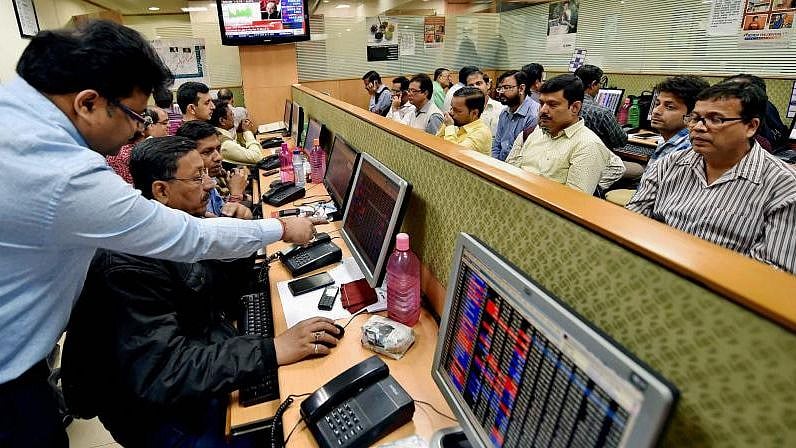
advertisement
On 23 April 2026, Indian stock markets experienced a significant decline, with the benchmark Sensex falling by 852.49 points and the Nifty dropping by 205.05 points. The downturn was primarily attributed to crude oil prices breaching the $100 per barrel mark amid ongoing geopolitical tensions and stalled negotiations between the United States and Iran. Foreign institutional investors continued to offload equities, and weak trends in Asian and European markets further contributed to the negative sentiment.
According to Deccan Herald, the Sensex closed at 77,664 after tumbling as much as 942.31 points during the session, while the Nifty ended at 24,173.05. The escalation in crude oil prices was linked to concerns over disruptions in the Strait of Hormuz, which heightened investor anxiety and led to a risk-averse market environment.
As reported by The Hindu, both Sensex and Nifty saw sharp declines in early trade as Brent crude traded nearly 2% higher at $103.8 per barrel. The market reaction was compounded by persistent foreign fund outflows and a weak trend in other Asian equities, which collectively dragged Indian indices lower.
Market analysts noted following reports that the shift in market tone reflected growing risk aversion, with domestic triggers failing to provide support amid intensifying global uncertainties. The depreciation of the rupee and higher US Treasury yields also contributed to the risk-off sentiment among investors.
"Concerns surrounding disruptions in the Strait of Hormuz have significantly dented investor confidence, introducing a fresh layer of uncertainty into global markets. This has directly translated into a spike in crude oil prices. For an import-dependent economy like India, this creates a dual pressure, rising inflation expectations and stress on corporate margins," said Hariprasad K, Research Analyst and founder, Livelong Wealth.
Foreign Institutional Investors (FIIs) offloaded equities worth Rs 2,078.36 crore on 22 April 2026, intensifying the downward pressure on the markets as details emerged. The sell-off was broad-based, with major laggards including Trent, Bajaj Finserv, Tech Mahindra, Mahindra & Mahindra, Infosys, and HDFC Bank, while select stocks such as Adani Ports and Larsen & Toubro managed to post gains.
Analysis showed that the elevated crude prices and the impasse in US-Iran negotiations continued to weigh heavily on investor sentiment. The risk-off mood was further intensified by weak global cues and a depreciating rupee, alongside higher US Treasury yields.
Coverage revealed that in Asian markets, South Korea's Kospi ended higher, but Japan's Nikkei 225, Shanghai's SSE Composite, and Hong Kong's Hang Seng indices all settled lower. European markets were also trading lower during mid-session deals, reflecting the global impact of the crude oil surge.
"Domestic equities witnessed a broad-based decline, as elevated crude prices above $100 per barrel, amid the impasse in US-Iran negotiations, continued to weigh on sentiment. The risk-off mood was further intensified by weak global cues, persistent FII outflows, and a depreciating rupee alongside higher US Treasury yields," said Vinod Nair, Head of Research, Geojit Investments Limited.
In the previous session on 22 April 2026, the Sensex had already fallen by 756.84 points, indicating a sustained period of volatility and investor caution as trading continued. The ongoing geopolitical tensions and their impact on crude oil prices remain key factors influencing the Indian stock market outlook.
Note: This article is produced using AI-assisted tools and is based on publicly available information. It has been reviewed by The Quint's editorial team before publishing.