
Sitharaman Calls UPA Oil Bonds 'Trickery'. But NDA's Tactics Are No Different
All talks of the UPA leaving unbearable burden for the Modi government is plain nonsense, says Subhash Chandra Garg.
advertisement
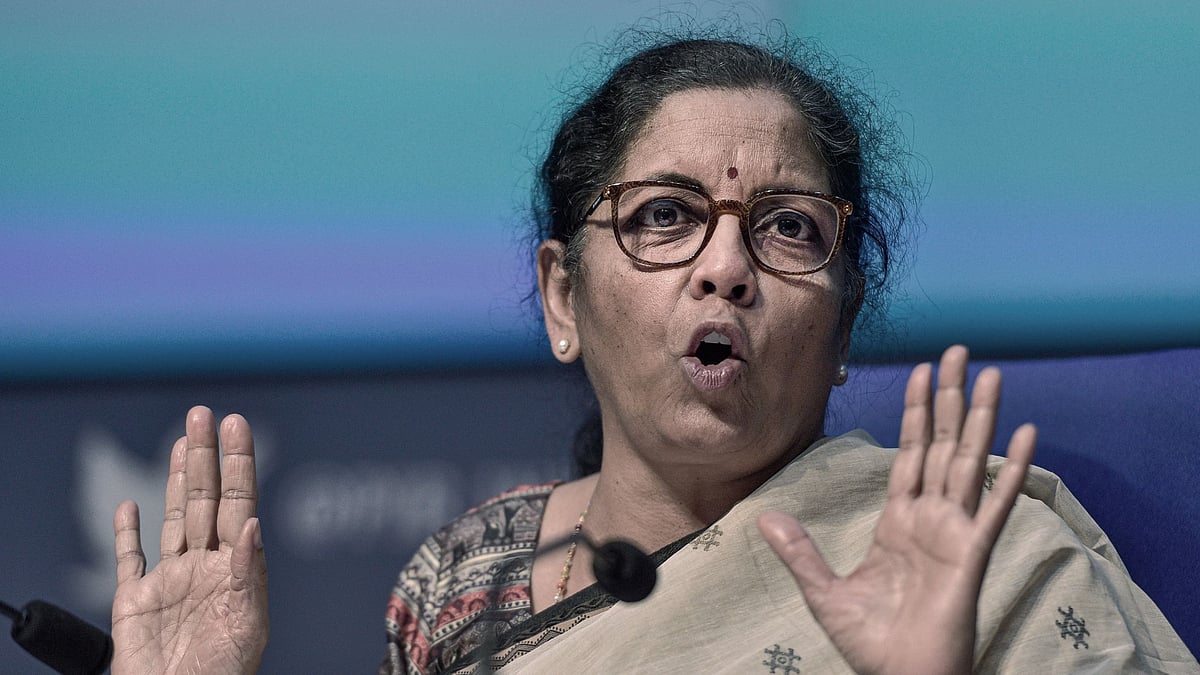
Finance Minister Nirmala Sitharaman has been going hammer and tongs at the oil bonds issued by the United Progressive Alliance (UPA) government with vehemence. Sometimes, she would term the oil bonds as:
On another occasion, she would argue, “If I did not have the burden to service the oil bonds, I would have been in a position to reduce excise duty on fuel… The previous government has made my job difficult by issuing the oil bonds."
Sitharaman has been relentless, even denouncing the UPA's oil bonds as "trickery" and "hidden borrowing".
What are these oil bonds? How much did the UPA government issue? Would it have been less "burdensome" if the UPA had paid it by raising normal borrowing?
What Are UPA-Era Oil Bonds?
When faced with mounting fiscal deficit in the wake of the global financial crisis in 2008-09, the Manmohan Singh-led UPA government decided to meet part of its subsidy obligations to OMCs and fertilisers companies (occasionally to the FCI) by issuing ‘special securities in lieu of subsidies’.
In 2008-09, total oil bonds of Rs 1.78 lakh crore were issued. In 2009-20, these oil bonds peaked at Rs 1.88 lakh crore. Oil bonds of Rs 1.66 lakh crore were outstanding in 2013-14 when the Modi government assumed power in May 2014.
There was no constraint on the UPA government’s ability to borrow and pay subsidies upfront. It could have done so quite easily.
There was a big political downside though. Normal borrowings would have increased fiscal deficit by as much as 3.4 percentage points in 2008-09 on India’s nominal GDP of Rs 52.82 lakh crore—which even otherwise was quite high at about 6 percent.
The UPA government took liberty with fiscal rectitude. It used an unconventional method to hide oil-bonds-induced fiscal deficit. The bonds issued to the OMCs and fertiliser companies were booked in the Public Account of India in place of the Consolidated Fund of India (CFI).
All borrowings made through the CFI for meeting expenditure adds to fiscal deficit, whereas borrowings made through the Public Account do not.
The UPA government started showing outstanding oil bonds liability transparently in the Budget from 2011-12 by specifically listing the bonds in the Statement of Debt and Liabilities.
Outstanding oil bonds were Rs 1.63 lakh crore at the end of 2014-15, and stayed at that level until 2020-21. Oil bonds began maturing from 2021-22.
Outstanding stock came down to Rs 1.24 lakh crore in 2021-22, Rs 1.10 lakh crore in 2022-23, Rs 0.91 lakh crore in 2023-24, and to Rs 0.47 lakh crore in 2024-25. The last outstanding stock of Rs 0.06 lakh crore was paid off in 2025-26.
The Modi Government Used Worse Tricks
Rising fiscal deficit beyond the government’s comfort level makes most governments use fiscally opaque practices. The Modi government is no different.
The Modi government adopted a fiscal glidepath in 2014-15 to bring down the fiscal deficit to 3 percent of the GDP by 2018-19. In 2016-17, the reduction trajectory appeared going out of hand.
The Modi government made two 'innovations' or 'tricks' to keep the fiscal deficit artificially depressed.
Second, it decided to take many specific revenue expenditures, like PMAY (Pradhan Mantri Awas Yojana) subsidies and Swachh Bharat Abhiyan expenditures out of the Budget—and incur these expenditures through specially designed bonds called FSBs. As per a statement placed by Sitharaman, along with her Budget speech 2021-22, the FSBs exceeded Rs 1.42 lakh crore by 2019-20.
Together, the Modi government’s off-budget borrowings of Rs 3.97 lakh crore—outstanding at end 2019-20—were more than double of peak UPA oil bonds outstanding in 2009-10.
The UPA-era oil bonds were disclosed in the Budget and were counted in the overall debt and liabilities of the government. The Modi government’s NSSF loans and the FSBs were not disclosed in the Budget until 2021-22—and never formed part of the Government of India debt and liabilities.
Much Ado About Nothing
Sitharaman makes too much of the burden of servicing the UPA-era oil bonds. This is plain chicanery.
The total oil bonds outstanding in 2013-14, of Rs 1.66 lakh crore, were only 2.92 percent of the outstanding debt and liabilities of Rs 56.69 lakh crore. The Modi government, like every successor government, was expected to service the outstanding debt and liabilities, left behind by the previous government.
Oil and fertiliser subsidy liabilties were a genuine liability of the Government of India. Whether the UPA paid it by releasing subsidies upfront or by issuing normal/special securities/oil bonds from the CFI, or through the Public Account, the liability remained the same. The method of paying it did not add any additional burden for the Modi government.
All talks of the UPA government leaving unbearable burden for the current government is, therefore, plain nonsense.
The Modi government decided to discontinue the practice of paying subsidies to the FCI through NSSF loans and the FSBs in Budget 2021-22. That was welcome as the government reverted to the right fiscal practice. In the process, the Modi government raised the fiscal deficit in 2020-21 to an unprecedented level of 9.2 percent. The UPA government could have also paid oil and fertiliser subsidies through the Budget, if it had mustered courage to raise the fiscal deficit in 2008-09 to over 9 percent.
The Modi government increased the outstanding debt and liabilities of the Government of India to Rs 169.78 lakh crore in 2023-24, 300 percent of the debt and liabilities of Rs 56.69 lakh crore left behind by the UPA government in 2013-14.
The Modi government came back to power in 2024-25. Otherwise, the debt and liabilities created by it would have been serviced by its successor government.
There is no point in making a nuisance of oneself by harping on the non-existing burden of repaying the UPA government's oil bonds.
(Subhash Chandra Garg is the Chief Policy Advisor, SUBHANJALI, and Former Finance and Economic Affairs Secretary, Government of India. He's the author of many books, including 'The $10 Trillion Dream Dented, 'We Also Make Policy', and 'Explanation and Commentary on Budget 2025-26'. This is an opinion piece, and the views expressed above are the author’s own. The Quint neither endorses nor is responsible for the same.)
- Access to all paywalled content on site
- Ad-free experience across The Quint
- Early previews of our Special Projects
Published: undefined