France’s Violent Protests Escalate: Historic Sites Burn, Over 1,000 Arrested
France faces violent nationwide protests over rising costs, with historic sites damaged and over 1,000 arrests.
advertisement
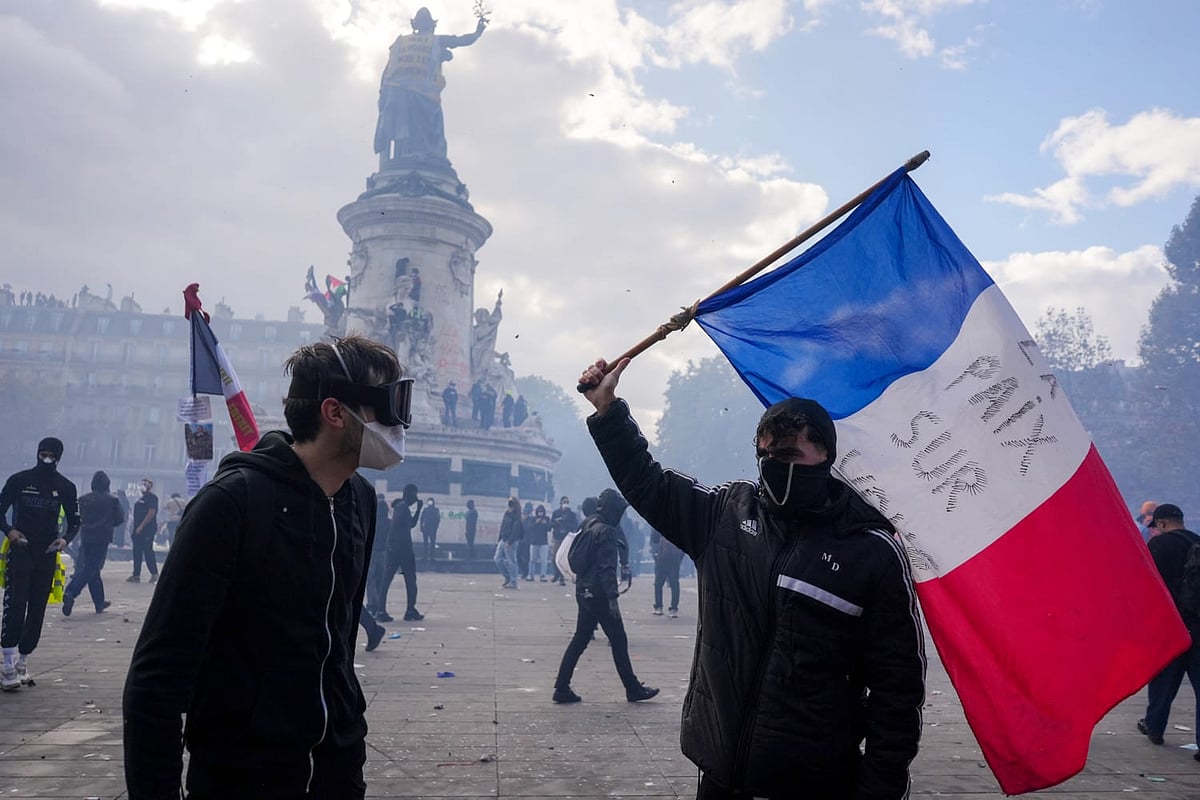
On 17 October 2026, France experienced widespread protests against rising living costs and declining public services. Demonstrations erupted in Paris and dozens of other cities, resulting in violent clashes, extensive property damage, and the destruction of historic buildings. Over 1,000 people were arrested nationwide, and both police and protesters sustained injuries. The unrest followed weeks of student-led actions and was joined by labour unions and various social groups.
According to The Hindu, cars were set on fire and shops were looted in Paris as police deployed tear gas and water cannons to disperse violent demonstrators. The protests, initially sparked by high school students’ grievances, quickly expanded to include broader frustrations over surging gasoline, energy, and food prices. The “yellow vest” movement, which began in 2018, saw a revival as demonstrators expressed anger at government policies.
As reported by Hindustan Times, violent clashes occurred in Paris, Lyon, and Limoges, with police using force against masked protesters. Fires broke out in several cities, including a tourist office in Lyon and town halls in Marseille and Lille. Dozens of shops were looted, and the unrest led to the closure of metro stations near key government buildings. The Interior Ministry reported 272 arrests by mid-afternoon, while the CGT union estimated up to 800,000 participants nationwide.
As highlighted by The Indian Express, Bally Bagayoko, mayor of St.-Denis Pierrefitte-sur-Seine, emerged as a prominent figure during the protests. Bagayoko, known for his advocacy against systemic racism and support for youth movements, was seen intervening between police and young demonstrators. His involvement drew both praise and criticism, reflecting the complex social and political dynamics underlying the unrest.
Coverage revealed that more than half a million people joined over 100 marches across France, marking the largest day of protest since the movement began a month earlier. The demonstrations represented a convergence of student-led actions and broader social discontent, with participants from various age groups and backgrounds.
“There’s a general sense of frustration and anger,” said Sonia Mabrouk, a protester from a Paris suburb, as cited in multiple reports.
In a significant escalation, reporting indicated that the 143-year-old Limoges Town Hall was largely destroyed by fire after masked protesters set a police car alight and then ignited the building. The incident was described by local officials as a “catastrophe for heritage.” Similar attacks targeted public buildings and luxury shops in cities such as Marseille, Nice, and Bordeaux, with looting and vandalism reported throughout the day.
Prime Minister Sebastien Lecornu stated that over 1,200 people had been arrested, and more than 150 police officers were injured as details emerged. The government attributed much of the violence to radical far-left groups and “ultra-left” agitators, while demonstrators blamed “troublemakers” for the destruction. President Emmanuel Macron vowed to prosecute those responsible for vandalism and looting, emphasizing that violence would not be tolerated.
“We will all stand united against the sowers of chaos, who only seek to undermine our institutions and prevent those who peacefully express their demands from doing so,” President Macron posted on X.
Student groups, who had been organizing school blockades since mid-September, played a central role in mobilizing support for the protests according to recent updates. The CGT labour union also backed the demonstrations, calling for higher wages, lower prices, and improved public services. The unrest comes as France prepares for a presidential election in six months, adding political pressure to address the cost-of-living crisis.
Police actions during the protests have faced scrutiny, with reports of injuries among teenagers and allegations of excessive force. Analysis showed that the use of riot-control weapons led to serious injuries, prompting the suspension of certain police equipment and internal investigations into alleged misconduct.
“We fight because living conditions are too harsh, the cost of gas is too high,” a 19-year-old student told Reuters, reflecting the sentiments of many participants.
In summary, the protests in France have escalated into one of the most significant episodes of civil unrest in recent years, with widespread violence, destruction of historic sites, and a complex interplay of social, economic, and political factors driving the movement as further coverage revealed.
Note: This article is produced using AI-assisted tools and is based on publicly available information. It has been reviewed by The Quint's editorial team before publishing.